Who Pays to Unlock a SoHo Artist Loft?
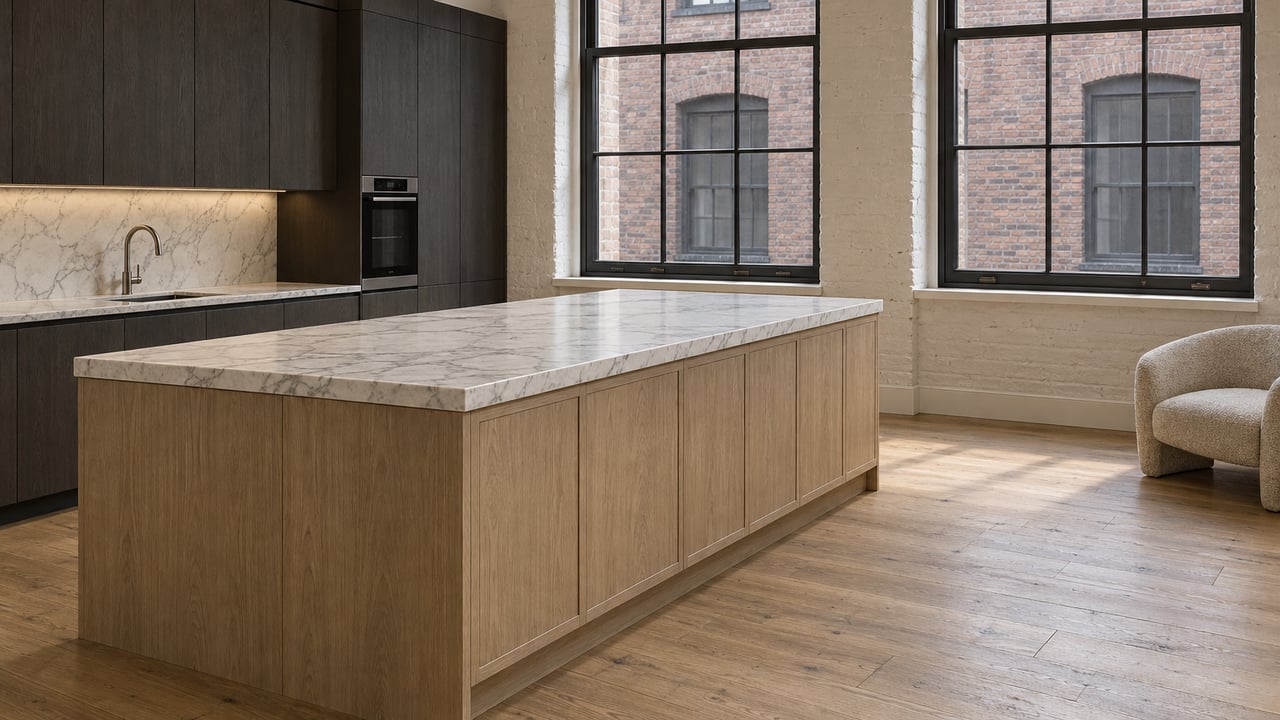
In a SoHo loft designated as Joint Living-Work Quarters for Artists, a sale to an outside buyer is what changes the unit's legal footing. The state's 2022 amnesty protects permanent non-artist occupants whose residency began on or before December 15, 2021. It does not carry over to a non-artist buyer who moves in after that owner leaves, unless the buyer is a qualifying family successor. The city's conversion fee is now listed at $115.76 per square foot. New York's highest court upheld it in January. That fee is the cost of closing the gap, and the price of a JLWQA loft has to account for it.
The JLWQA designation dates to 1971, when New York City created it to legalize artists who were already living illegally in SoHo's emptied manufacturing lofts. It was extended to NoHo in 1976. The parties in the recent litigation agreed that the designation "runs with the property."
The protections built on top of it do not. A 1986 zoning amendment gave amnesty to non-artist occupants living in JLWQA units at that time and set up succession rights for family members. It left the certified-artist requirement in place for anyone who came later. In 2022, the state extended amnesty again to permanent unauthorized occupants whose residency began on or before the rezoning date of December 15, 2021. The Court of Appeals opinion puts it plainly: both amnesties went to residents and their family successors, "and the grants of amnesty did not run with the property."
So a long-time owner can be fully compliant while the unit stays restricted underneath them. When that owner sells to a non-artist outside the family succession chain, the buyer does not inherit the owner's protection. Under the court's description of the rules, a purchaser who is not eligible to occupy under JLWQA rules must convert the unit before living there lawfully. Renting to a non-eligible tenant also requires conversion.
Certified artists are a small pool. The Real Deal reported that as of 2022, only 36 of the city's 1,636 JLWQA units were occupied by certified artists. The city had certified fewer than 100 artists in the preceding decade. The City's own figure, cited by the court, is that about 1,600 of those units were occupied by non-conforming households by 2022, and only four artists received JLWQA certification in "the last year." The rezoning also bars new JLWQA designations, so this inventory can only get smaller.
Converting to unrestricted residential use runs through the 2021 rezoning, which created the Special SoHo-NoHo Mixed Use District. The Zoning Resolution, Section 143-13, set a base contribution of $100 per square foot of converted floor area as of December 15, 2021. It adjusts every August 1 based on the Consumer Price Index, and the rate owed is the one in effect when payment is received. The Department of City Planning currently lists the rate at $115.76 per square foot. The Department of Buildings' conversion guide still shows the unadjusted $100 figure, so the City Planning rate is the one to check before any number goes into a negotiation.
Applied to typical SoHo loft sizes at the currently listed rate:
| Converted floor area | Contribution at $115.76/sq ft |
|---|---|
| 2,000 sq ft | $231,520 |
| 3,000 sq ft | $347,280 |
| 4,000 sq ft | $463,040 |
These figures are straight arithmetic on the posted rate. They do not include the work, filings, and new Certificate of Occupancy the process can also require. They are also not fixed, because the rate resets each August.
There is one more benchmark. The City defended the fee by pointing to a study, described in the dissent, which found that unrestricted units sold for an average of $189 per square foot more than JLWQA units. That is not a measure of today's market, and no public data tracks a current discount. Still, the City's own reasoning treats a converted loft as worth more per square foot than the fee costs. On a 3,000 square foot floor, that framing implies a value difference of about $567,000, compared with a fee of about $347,000. The space between those two numbers is where buyer and seller end up negotiating.
The rules do not decide who pays. In the litigation, the parties agreed that JLWQA restrictions "limit only occupancy, and not sale." Unless the parties agree otherwise, current owners are not responsible for converting before they sell to a non-artist. Sellers are also not required to ask how a buyer plans to comply.
That leaves the cost to be settled through price and contract terms. In practice, the fee can show up at several points in a deal:
The process itself works unit by unit. The Department of Buildings describes a sequence that includes City Planning certification, the Arts Fund contribution, any required work, and a Certificate of Occupancy. A unit can be converted without converting the whole building. Under the Zoning Resolution, the payment must be made before the conversion building permit can be filed or issued. The rules treat these questions as matters for each party's attorney, and the fee belongs in that conversation from the first draft.
For most of the past two years, the fee's legal status was unsettled. In December 2024, an Appellate Division panel ruled it unconstitutional. On January 13, 2026, the New York Court of Appeals reversed that ruling in a 6-1 decision. As The Real Deal reported, Judge Jenny Rivera wrote for the majority:
"Petitioners may desire a property interest in a more valuable and less restrictive form, and they may want it without strings attached, but the opportunity to relinquish one form of property to acquire another, in exchange for a monetary payment to an arts fund, is not a taking."
Judge Michael Garcia dissented. The Coalition for Fairness in SoHo and NoHo, which brought the suit, then took the case to the U.S. Supreme Court. The docket for No. 25-1187 shows the following steps:
As of today, October 11, the docket shows no grant or denial. On October 8, Pacific Legal Foundation, which represents the coalition, listed the case as "relisted after long conference." It framed the question as whether constitutional limits on permit conditions apply when the government demands money instead of land. An order could come soon. Until then, the Court of Appeals decision is the controlling ruling, and the fee stands.
The City is also continuing to administer the fund. A City Record notice published August 26, 2026 shows the Lower Manhattan Cultural Council renewed as grant administrator for the SoHo-NoHo Arts Fund for FY26–27, under the Department of Cultural Affairs. City Planning describes the fund's grants as going to artists, arts collectives, and nonprofits in SoHo, NoHo, and other neighborhoods south of 14th Street.
Does a Loft Law unit go through this process? No. The Department of Buildings says Loft Law units that have come under Loft Board jurisdiction fall outside the JLWQA conversion process and may be occupied residentially without artist certification under the applicable law.
Can a family member keep living in a loft without converting? The 1986 amendment created succession rights for family members of authorized occupants. The parties in the litigation agreed those rights still apply, whether the departing occupant was a certified artist or covered by amnesty. Succession works differently from a sale to an outside buyer.
How many owners have already paid the fee? No public count of conversions or Arts Fund receipts turned up in our review of City Planning, court, and news sources. Any figure on uptake should be treated as unverified until the City publishes one.
Has the City been enforcing the occupancy rule? The Real Deal reported that the City rarely enforced the residency requirements and that the Adams administration dropped efforts to raise penalties. Enforcement history does not change what a buyer's lawyer, lender, or co-op board may ask about during a transaction.
If you own a JLWQA loft and are planning a sale, or are considering a SoHo loft where the designation is still in place, Carol Staab can help you factor the conversion cost into pricing and negotiation from the start, and keep an eye on the Supreme Court docket while the deal moves forward.
This article is general information, not legal, tax or financial advice. Consult a qualified professional about your situation.
Carol Staab has an innovative luxury real estate practice that provides an elite level of concierge service through unparalleled world-class marketing and a hands-on business approach. Her mission is to give her clients an exceptional experience while helping them achieve the best results possible.