A Strategic Guide To Buying A Midtown Manhattan Pied-À-Terre
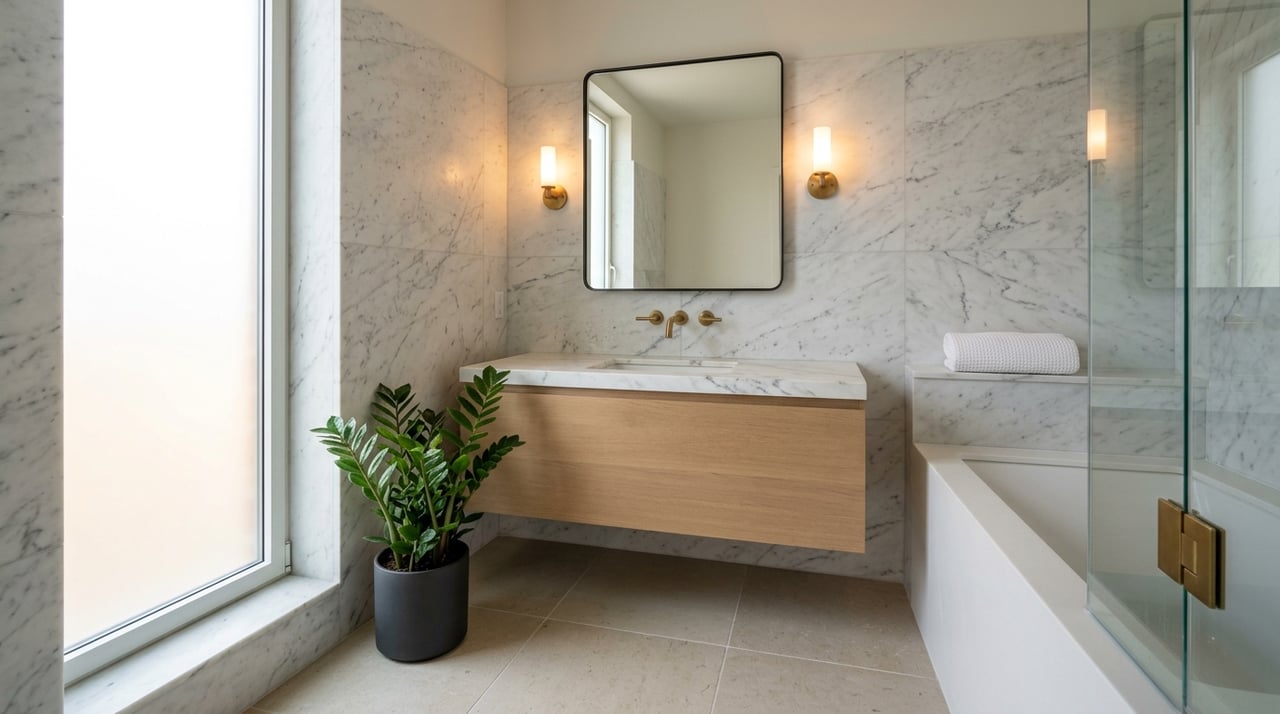
Looking for a Midtown Manhattan pied-à-terre is exciting, but the smartest buyers know it is not just about finding a beautiful apartment. In Midtown, your purchase decision also hinges on micro-location, building rules, monthly carrying costs, and New York’s current tax structure. If you want a Manhattan base that works smoothly now and holds up strategically over time, the details matter. Let’s dive in.
Midtown remains one of Manhattan’s most practical pied-à-terre locations because it combines business access, major transit, and a wide range of luxury housing. If your time in the city centers on meetings, events, dining, or quick in-and-out travel, Midtown can make that rhythm far easier.
That said, Midtown is not one market. Your experience, and your budget, can look very different depending on whether you focus on Midtown East or move toward Central Park South and the West 57th Street luxury corridor.
StreetEasy’s July 2026 data shows a sharp pricing split within Midtown. Midtown East posted a median sale price of $898,500 and an average of $1,243 per square foot, while Central Park South showed a median sale price of $3.9 million and an average of $3,725 per square foot.
That gap tells you something important. In Midtown, you are not simply paying for a general location. You are often paying for a very specific mix of park adjacency, prestige, tower inventory, views, services, and scarcity.
Midtown East tends to appeal to buyers who prioritize efficiency and access. Its draw is straightforward: proximity to Grand Central, corporate offices, and the daily convenience that comes with being in the center of Manhattan’s business core.
For a pied-à-terre buyer, this can translate into a more practical entry point. If your goal is a polished Manhattan base with strong utility rather than a trophy address, Midtown East may offer a better strategic fit.
Central Park South sits in one of Manhattan’s most elite luxury corridors. StreetEasy’s June 2026 data identified Central Park South as the second most valuable street for luxury homes on the market, with a combined value of $814 million, while West 57th Street followed closely at $811 million.
This concentration of high-value inventory helps explain why pricing in this corridor stays elevated. If you are shopping here, you are often paying an address premium tied to prestige, views, limited supply, and the kind of building profile that attracts global and executive buyers.
The broader Manhattan luxury market remains active, but it is not uniform. Corcoran’s second-quarter 2026 Manhattan report showed signed contracts up 5% year over year to 3,477 deals, active inventory down 2% to 7,182 listings, and average days on market down to 115 days.
That combination suggests a competitive environment, especially for well-positioned properties. At the same time, Corcoran noted early softness above $5 million following the announcement of the new pied-à-terre tax, which matters if you are considering the top end of Midtown’s luxury inventory.
For you as a buyer, this means strategy matters. In Midtown’s upper tier, the market can be both competitive and selective at once.
For many pied-à-terre buyers, the real strategic choice is not the finishes or the view. It is whether you buy in a co-op or a condo.
That ownership structure affects how you use the apartment, how much flexibility you have, and how much friction you may face before and after closing.
In a co-op, you are buying shares in a corporation rather than receiving a deed to real property. The New York Attorney General explains that your right to occupy the apartment comes through a long-term proprietary lease, and your maintenance is based on the number of shares allocated to the unit.
This structure also means the board plays a central role. Co-op boards operate under the building’s bylaws, proprietary lease, certificate of incorporation, and house rules, so building culture and policy can have a major impact on your ownership experience.
In a condo, ownership is deed-based. The board’s authority is generally narrower, and condo rules are governed by the declaration, bylaws, and house rules.
The New York Attorney General also notes that condo sublet provisions are generally less restrictive than in co-ops. For many pied-à-terre buyers, that added flexibility is a major reason condos command a premium.
StreetEasy’s June 2026 luxury data shows the market pricing this flexibility clearly. Luxury sponsor condos had a median asking price of $2,979 per square foot, resale luxury condos were at $2,660 per square foot, and luxury co-ops were at $2,060 per square foot.
In plain terms, co-ops can offer a lower price per square foot, but condos often offer easier part-time ownership. If you plan to use your Midtown apartment only occasionally, that tradeoff deserves close attention.
A pied-à-terre purchase should always start with one simple question: does the building actually support the way you intend to use the apartment? That answer is not always obvious from the listing.
Before you move forward, make sure you understand the building’s position on non-primary occupancy, subletting, renovations, and move-in procedures. In some cases, the building may technically permit certain uses while still making them operationally difficult.
The New York Attorney General points buyers to several core due diligence documents. These include the offering plan, board minutes, financial reports, and sponsor disclosures.
Those materials often reveal more than the marketing ever will. They can help you spot recurring capital issues, maintenance concerns, policy inconsistencies, or a stricter board posture than you might expect.
A Midtown pied-à-terre should be underwritten as a non-primary residence from the start. If you treat it like a primary home in your planning, you may underestimate the true cost of ownership.
Your total cost picture may include acquisition taxes, monthly carrying costs, financing-related taxes, and, in some cases, a new surcharge for non-primary residences.
New York State Publication 577 states that the real estate transfer tax is $2 for each $500 of consideration. The same publication states that the additional mansion tax is 1% on residential conveyances when the consideration is $1 million or more.
These are not minor line items in Manhattan. Even before you account for monthly expenses, closing costs can materially affect your all-in budget.
If you finance the purchase, New York City may also impose mortgage recording tax when the mortgage is recorded. The Department of Finance states that the combined state-and-city mortgage recording tax rates depend on the mortgage amount.
That means financing can change your cost structure in a meaningful way. It can also affect how attractive certain buildings or deal structures feel once the full math is on the table.
For pied-à-terre buyers, one common misunderstanding involves the co-op and condo property tax abatement. NYC311 states that eligibility generally requires the unit to be the owner’s primary residence, and the Department of Finance says unit owners and shareholders must certify primary residency for the applicable tax years.
If the apartment will be your second home, you should not assume those primary-residence benefits will be available. That is a key point when comparing one ownership scenario to another.
This is one of the most important issues for Midtown pied-à-terre buyers right now. Under the current New York City Administrative Code and Department of Finance rules, a surcharge applies to certain qualifying non-primary residences.
For fiscal years beginning on or after July 1, 2026 and before July 1, 2028, the phase-one threshold is $1 million for condominium and cooperative units and $5 million for class-one homes. For fiscal years beginning on or after July 1, 2028, the phase-two threshold is $5 million.
In Midtown’s luxury corridor, many properties already fall within the relevant price bands. StreetEasy reported June 2026 median asking prices of $9.4415 million for Central Park South luxury inventory and $13 million for West 57th Street.
If you are targeting trophy inventory in these areas, the surcharge may not be a side issue. It may be a core part of your ownership cost analysis.
The strongest pied-à-terre purchases in Midtown usually come from a planning-first approach. Instead of starting with finishes or views alone, begin with the structure that best supports your intended use.
A smart framework includes:
This is especially important in Midtown, where two apartments with similar square footage can produce very different ownership experiences.
A Midtown Manhattan pied-à-terre can be a highly effective purchase if the property aligns with how you actually live and travel. The right apartment is not always the one with the flashiest address. It is the one where location, governance, carrying costs, and tax treatment all work together.
In a market as layered as Midtown, careful planning protects both convenience and value. If you want experienced guidance on navigating Manhattan luxury co-ops, condos, and board-sensitive buildings, work with Carol Staab.
Carol Staab has an innovative luxury real estate practice that provides an elite level of concierge service through unparalleled world-class marketing and a hands-on business approach. Her mission is to give her clients an exceptional experience while helping them achieve the best results possible.