How Chelsea's Creative Energy Shapes Its Luxury Condo Market
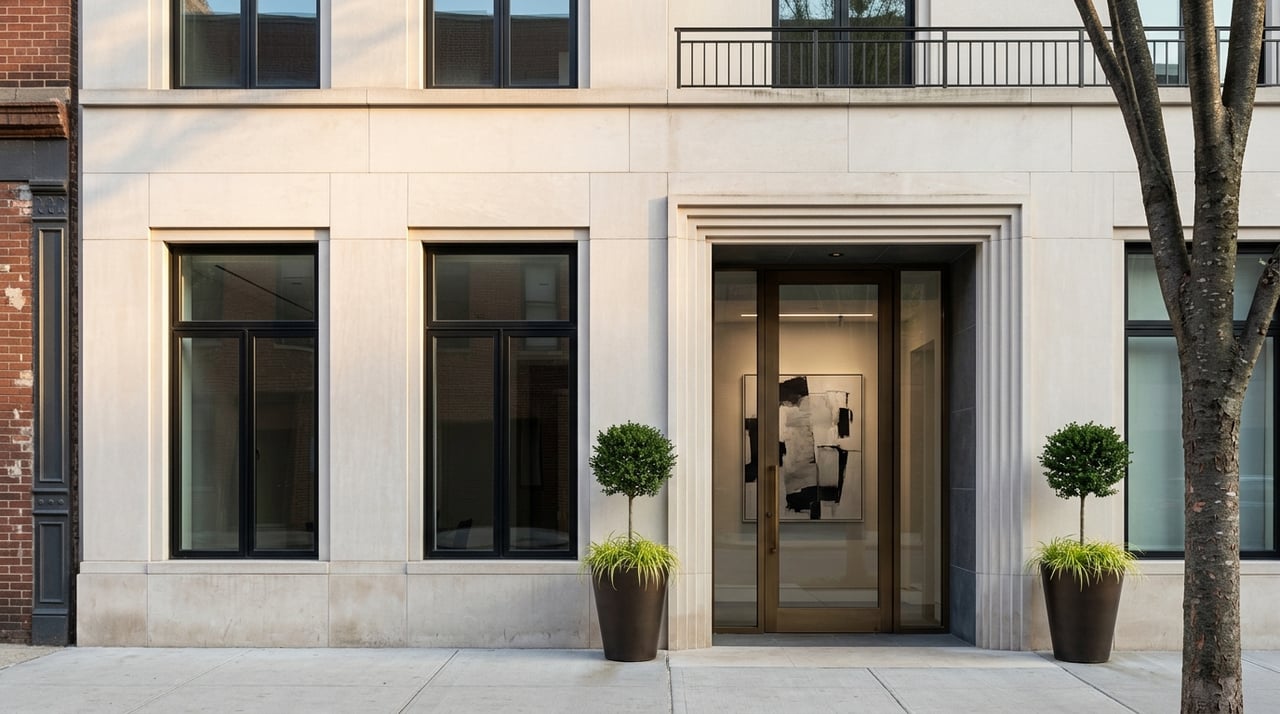
If you have ever wondered why Chelsea commands such a wide range of luxury condo pricing, the answer is not just square footage or finishes. In this part of Manhattan, creative energy directly shapes demand, buyer perception, and value. When you understand how art, design, office growth, and waterfront access work together, Chelsea’s pricing starts to make much more sense. Let’s dive in.
Chelsea’s luxury market is closely tied to its cultural footprint. The neighborhood’s gallery concentration, especially in West Chelsea, helped create a distinct identity that still influences how buyers view the area today.
Many galleries moved to Chelsea from SoHo and 57th Street in the 1990s, and West Chelsea remains closely associated with exhibition spaces and design-led destinations. That long-standing creative presence gives the neighborhood a sense of authorship and relevance that many luxury buyers value.
This matters because buyers in Chelsea are often purchasing more than a residence. They are also buying into a built environment shaped by galleries, adaptive-reuse architecture, and a highly walkable west-side lifestyle.
Chelsea’s appeal is reinforced by a dense cluster of destination amenities. The High Line, Chelsea Market, Hudson River Park, Chelsea Waterside Park, Chelsea Piers, and the Whitney Museum all contribute to a connected lifestyle experience along the west side.
That combination helps explain why homes with light, views, and strong walkability often command a premium. In Chelsea, value is not only about what is inside the apartment. It is also about how quickly you can move between culture, recreation, dining, and open space.
The waterfront also plays a meaningful role in the neighborhood’s luxury profile. Chelsea Waterside Park, Pier 57, and Chelsea Piers create a recreational and public-space network that strengthens the appeal of west-facing and park-adjacent homes.
Chelsea’s market is also shaped by how people work. New York State Comptroller data show double-digit growth in office market values in the Chelsea, Hudson Yards, Koreatown, and Chelsea, West Village ZIP codes since fiscal year 2020, with part of that growth linked to the information sector.
That trend matters for housing demand near the west-side corridor. Office reuse and expansion, including office use at Chelsea Market and Pier 57, likely increase interest from buyers who want shorter commutes and full-service buildings near work.
For executive buyers, founders, and professionals tied to these office nodes, Chelsea offers a practical luxury equation. You can pair proximity with design, culture, and waterfront access in a way few neighborhoods can match.
Chelsea remains one of Manhattan’s higher-priced neighborhoods, but headline numbers vary depending on the source and product mix. As of mid-2026, Realtor.com reports a median listing price of $1.88 million and 557 homes for sale, while Redfin shows a median sale price of $1.879 million over the last three months with 121 median days on market.
PropertyShark reports a June 2026 median sale price of $1.5 million overall, with a median of $1,697 per square foot across 38 transactions. StreetEasy shows a $1.7 million median sale for the neighborhood, while its Chelsea condo page shows 169 condo listings for sale and its broader sales page shows 322 active listings.
The takeaway is simple. Chelsea pricing depends heavily on whether you are looking at listings or closed sales, and whether co-ops are grouped together with condos.
For a luxury condo discussion, the condo and co-op split matters. PropertyShark’s June 2026 snapshot shows a median condo sale price of $2.3 million across 18 condo transactions, compared with a $1 million median for co-ops across 20 transactions.
That gap helps define where Chelsea’s luxury conversation lives. If you are focused on the $2 million and up segment, condos are doing much of the heavy lifting.
This is especially relevant for sellers and buyers trying to benchmark value accurately. A broad neighborhood median can understate the pricing reality for well-positioned condo product.
Market pace in Chelsea remains healthy, but not effortless. Realtor.com characterizes Chelsea as a buyer’s market in June 2026, with homes selling at 98% of asking and a median of 53 days on market.
Redfin’s broader three-month view is slower, with 121 days on market and 113 homes sold in May 2026 versus 165 a year earlier. That does not suggest a weak market. It suggests a market where pricing discipline and presentation matter more than neighborhood reputation alone.
For sellers, this means strong product still needs sharp positioning. For buyers, it means there may be room to act selectively, especially when inventory is deep and product types vary widely.
The clearest expression of Chelsea’s luxury premium is found along the High Line. StreetEasy notes that some of the neighborhood’s steepest pricing is especially evident there, and current inventory supports that view.
One High Line at 500 West 18th Street shows how far the top of the market can stretch. Current price bands range from about $2.65 million to $3.175 million for one-bedrooms, $4.495 million to $6.01 million for two-bedrooms, $6.455 million to $16.5 million for three-bedrooms, and $9.4 million to $26.6 million for residences with four or more bedrooms.
That pricing reflects more than size. It reflects design, views, branding, amenity depth, and hotel-style service, all layered onto one of Manhattan’s most recognizable park corridors.
StreetEasy listings show the same upper-end pattern across Chelsea. Current asks include listings at $3.36 million on West 19th Street, $24.6 million at 500 West 18th Street, $23 million at 555 West 22nd Street, and $11.75 million on West 17th Street.
Not every luxury buyer in Chelsea wants a new glass tower. For many, the neighborhood’s most compelling homes are loft conversions and prewar condominiums that preserve the architectural character Chelsea is known for.
In the gallery-district segment, loft buildings often pair generous square footage with dramatic proportions. Listings and building profiles in this category highlight features such as 10.5- to 16-foot ceilings, oversized windows, original columns, and layouts that can support work-from-home needs.
Buildings such as Loft 25, Chelsea Mercantile, 121 West 20th Street, 120 West 18th Street, and The O’Neill Building reflect that formula. These properties often capture the Chelsea aesthetic buyers want, but with a different value proposition than front-row new development.
In practical terms, this is where many buyers find stronger relative value. You may be a step off the High Line, but still close to the gallery district, Chelsea Market, Chelsea Piers, and Hudson River Park, often with more interior volume and a more distinctive architectural identity.
Chelsea is not one uniform luxury market. If you move away from the avenues and park frontage, the neighborhood shifts in tone.
StreetEasy notes that Chelsea’s side streets reveal historic townhouses and a larger share of traditional prewar housing stock. These blocks can appeal to buyers who value a quieter setting and a more residential rhythm.
The tradeoff is straightforward. You may give up some immediate High Line energy and some new-construction amenities, but you can gain a calmer block and, in some cases, better value for the dollar.
Chelsea’s creative energy does not lift every property equally. Instead, it supports a clear value hierarchy across product types.
At the top are High Line-adjacent new developments, where branding, park frontage, views, and amenities create the highest pricing ceiling. Just below that are authentic loft conversions and well-located prewar condos that still benefit from Chelsea’s design culture without paying the full marquee premium.
Then there are quieter side-street properties, where the value proposition may lean more toward scale, character, or privacy. Understanding that hierarchy is essential if you want to buy strategically or bring a luxury listing to market with the right expectations.
Based on the current inventory mix and recent market activity, the broadest liquidity likely sits in correctly priced one- to three-bedroom condos and lofts in roughly the $2 million to $5 million range. That is where inventory is deep enough to create choice, but demand remains meaningful.
The top end can still trade, especially for exceptional homes, but buyers at that level tend to be more selective. In a market with wide pricing dispersion, precision matters.
For sellers, this reinforces the importance of exact pricing and narrative framing. For buyers, it means the best opportunities are often found by comparing product type, location within Chelsea, and the quality of the building, not just the asking price.
If you are buying in Chelsea, it helps to think beyond the neighborhood label. A High Line tower, a gallery-district loft, and a side-street prewar condo may all sit within Chelsea, but they serve different priorities and trade at different levels.
If you are selling, Chelsea’s name alone is not enough to maximize value. In a market where homes are selling near ask on average but product varies widely, the strongest results usually come from disciplined pricing, refined presentation, and a clear story about where your property sits within Chelsea’s hierarchy.
That micro-market lens is especially important in Manhattan luxury. Buyers at this level are not just comparing neighborhoods. They are comparing exact building types, lifestyle tradeoffs, and how convincingly a property justifies its premium.
Chelsea remains one of Manhattan’s most distinctive luxury condo markets because its creative identity is real, visible, and deeply tied to the way people live there. When that identity is paired with intelligent pricing and sharp positioning, it can translate into real market power for both buyers and sellers.
If you are considering a Chelsea condo purchase or preparing a luxury property for sale, working with a broker who understands Manhattan’s micro-markets, pricing discipline, and presentation strategy can make a meaningful difference. To start a private conversation, connect with Carol Staab.
Carol Staab has an innovative luxury real estate practice that provides an elite level of concierge service through unparalleled world-class marketing and a hands-on business approach. Her mission is to give her clients an exceptional experience while helping them achieve the best results possible.