SoHo's New Storefronts Are Making Two Different Bets
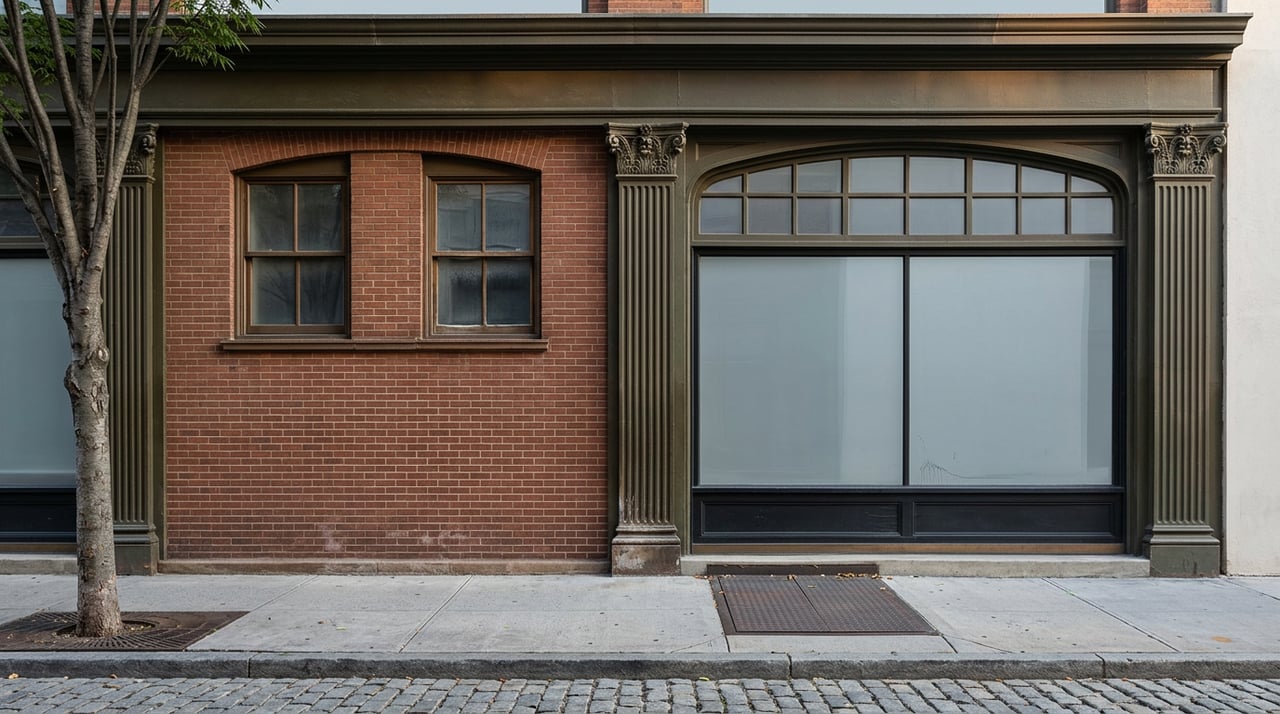
Walk down Prince Street this month and you will pass a wine bar that only sells bottles, a sandwich shop that just added its third address, and a French-Mediterranean restaurant tucked inside a courtyard that predates most of the buildings around it. Keep going toward Broadway and you will hit a Nike store that opened four months ago with an expiration date built into its design.
That last detail is the one worth sitting with. SoHo's restaurant scene is expanding with the confidence of operators who plan to be here in five years. Its retail anchors are doing the opposite: treating the neighborhood as a stage for a moment, not a home for a decade. Both things are happening on the same four blocks right now, and the difference tells you more about how this neighborhood actually works than either trend does on its own.
For years, the Nike store at 529 Broadway was a fixture of the Spring Street corridor, the kind of address that showed up in sneaker culture the way a subway stop shows up on a map. It closed, and in April 2026 Nike and Jordan Brand reopened a few blocks away at 611 Broadway, but not as a replacement flagship. The new space was built explicitly to shift its layout throughout the year, tracking global sporting moments starting with the World Cup and moving into the US Open and the New York City Marathon.
That is a different commitment than the one the old store made. A flagship that plants itself on a corner for a decade is a bet on the corner. A store designed to reconfigure around a sporting calendar is a bet on attention, renewed every few months rather than locked in with a long lease. Cartier's four-floor boutique a few blocks over on Greene Street, built inside a landmark cast-iron building with the original 1960s entrance door preserved, represents the older model. The Nike format represents something newer: national retail treating SoHo as a rotating platform rather than fixed territory.
Set that against what has opened in food and hospitality over the same stretch, and the contrast sharpens.
In late July, the Broome Hotel on Broome Street opened its own restaurant inside a nearly 200-year-old building built around a courtyard, with Chef Moshe Masarty running a French-Mediterranean menu of dishes like branzino with dill beurre blanc. The restaurant is only the first phase of a larger relaunch. The hotel's 14 guest rooms are being redesigned and are not expected to reopen until January 2027. That is a multi-year renovation timeline for a single address, not a pop-up.
Director of operations Liron Sanado described the goal as building around
"a rare sense of calm, intimacy, and understated luxury"
that holds regardless of what is happening on the street outside the courtyard. That kind of design language does not belong to a business planning to rotate out in a season.
A few blocks away, Sandwell opened its third New York location on August 5, an 800 square foot, 12 seat shop at 157 Prince Street. That is a small footprint, but it is the third one, joining locations already running on the Upper West Side and in Gramercy. A sandwich counter does not expand to a third address unless the first two are working. Meanwhile the team behind The Corner Store, which turned into one of SoHo's hardest reservations after opening in 2024, has planted a second project directly across the street in the old Principe space: a two-floor, live-fire Mediterranean restaurant called Or'esh, built around coal-grilled seafood and meats. And next door to Dame, the British seafood spot that opened in 2021, the same team is bringing a second coastal British restaurant called Dean's, close enough to share foot traffic with its sibling.
None of these are speculative bets from outsiders testing the market. They are proven operators redeploying capital into the same handful of blocks they already know.
| Business | Type | Address | What It Signals |
|---|---|---|---|
| Broome | French-Mediterranean restaurant | 431 Broome St | Multi-year hotel relaunch, phase one of a longer plan |
| Sandwell | Sandwich shop, third location | 157 Prince St | Proven format expanding, not testing |
| Or'esh | Live-fire Mediterranean, two floors | Former Principe space | Second project from an operator with a hit next door |
| Dean's | Coastal British restaurant | Next to Dame | Expansion from an existing SoHo team |
| Maayan's | Wine bar, bottles only | SoHo | Niche pricing model, $60 flat per bottle, no by-the-glass |
| Nike / Jordan Brand | Retail, temporary format | 611 Broadway | Rotating concept tied to sporting calendar, not a fixed flagship |
For a resident, the practical effect is a neighborhood where the food options are getting deeper and more specific while the big retail names get less permanent. Maayan's, the new wine bar, only sells full bottles at a flat $60, no by-the-glass pours, which is its own small bet that a SoHo crowd will commit to a bottle rather than split a couple of glasses. Dean's is releasing reservations two weeks out at 9am, with eight bar seats and most tables held for walk-ins, which means the easiest way in some nights is still to show up. Or'esh takes reservations through DoorDash exactly seven days ahead, and its limited walk-in seats go to whoever lines up outside by 4pm.
These are not casual openings. They are calibrated the way a business calibrates when it plans to still be answering the phone in three years. Compare that to the Nike store, which was designed from day one to look different by next summer.
If you have lived here through a few retail cycles, you already know that national brands come and go on their own clock, tied to global attention rather than neighborhood loyalty. What is less obvious, until you look at the addresses side by side, is that the restaurant and hospitality side of SoHo is currently moving in the opposite direction, with proven local operators doubling and tripling down on blocks they already understand. That is not a coincidence of timing. It is two different kinds of businesses reading the same real estate and drawing different conclusions about what is worth committing to.
The next few months will test which read is right. A hotel restaurant with a January 2027 renovation deadline and a sandwich shop opening its third location are both, in their own way, wagers on SoHo behaving the same way a year from now as it does today. A temporary sports retail concept is wagering on the opposite: that attention, not geography, is the asset worth chasing. Watching which bet plays out is one more reason a walk down Prince Street means something different this month than it did last spring.
If you are the kind of SoHo neighbor who tracks these shifts block by block, that same instinct for reading a building or a corridor accurately is what Carol Staab brings to clients navigating this market from the inside. Work With Carol.
Carol Staab has an innovative luxury real estate practice that provides an elite level of concierge service through unparalleled world-class marketing and a hands-on business approach. Her mission is to give her clients an exceptional experience while helping them achieve the best results possible.