What Life Above The Park Is Like On Billionaire's Row
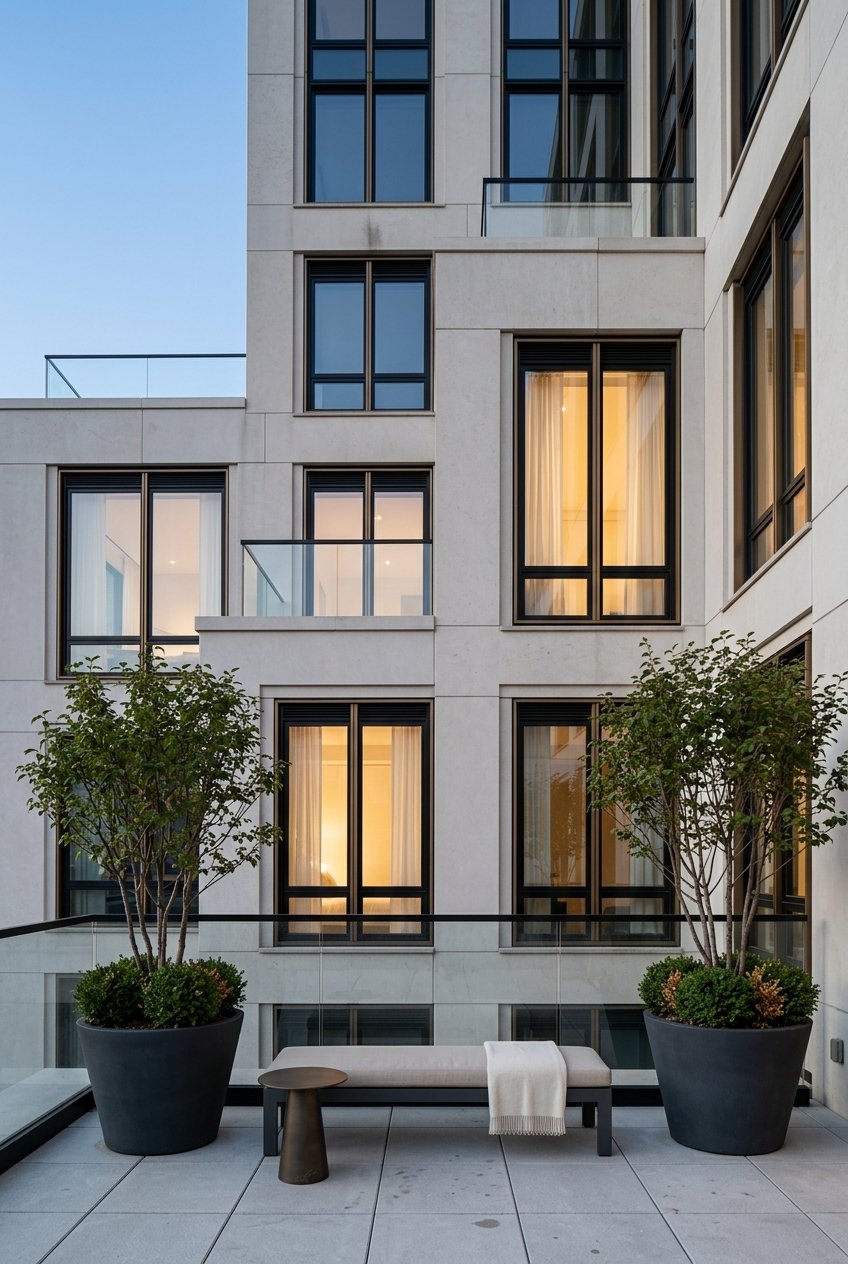
If you have ever wondered what it actually feels like to live above Central Park on Billionaire’s Row, the answer is simpler and more practical than the headlines suggest. Life here is not just about height, views, or prestige. It is about having one of the world’s most recognized parks at your doorstep, while your building handles much of the friction of daily living. Let’s dive in.
For residents along West 57th Street and Central Park South, Central Park is not an occasional destination. It functions more like an everyday extension of home. According to the Central Park Conservancy, the park spans 843 acres from 59th to 110th Street and welcomes about 42 million visits each year.
That scale matters because it gives you options. A quick morning walk, a run before work, a dog outing, or a quiet hour on a bench can all fit into your day without planning around a major excursion. The park’s south end begins right where this residential corridor meets Midtown, which makes spontaneous use part of the appeal.
The south end of Central Park is especially relevant if you live on Billionaire’s Row. The Central Park Conservancy identifies Columbus Circle as the park’s southwest gate and Merchants’ Gate Plaza as its most popular entrance. Its South End Tour covers a half-mile route with stops that include Wollman Rink, The Pond, Hallett Nature Sanctuary, and the Dairy.
In practice, that means you are close to a section of the park that supports short, repeatable routines. Sheep Meadow offers a 15-acre lawn used for relaxing, reading, and picnicking. The Pond provides a quieter landscaped setting near Fifth Avenue, while Wollman Rink brings seasonal activity from October through April.
What sets Billionaire’s Row apart is not only the location. It is the way the buildings are designed to support privacy, convenience, and service. Across the major towers in this corridor, official materials repeatedly highlight controlled access, separate residential entrances, private dining spaces, wellness areas, concierge teams, and off-street arrival.
The result is a lifestyle built around ease. You can often exercise, host guests, receive deliveries, or arrange services without leaving the building. For many buyers, that combination of park access outside and operational calm inside is the real draw.
Not every tower on Billionaire’s Row feels the same. Each one creates a different kind of daily experience, even when they share similar luxury standards.
220 Central Park South is the most park-oriented expression of the group. Vornado describes park views from every residence, along with a secured off-street motor court, private dining and entertaining spaces, and an expansive athletic club and spa.
Its overall identity is more classic than flashy. The architecture is framed as a Villa-and-Tower composition inspired by historic New York residences, which gives the building a more intimate and traditional tone than some of its peers.
One57 leans into a hotel-linked way of living. Official materials describe Park Hyatt services, a private residential entrance, 24-hour doorman and concierge coverage, room service, in-residence catering, housekeeping, dry cleaning, and valet parking.
That creates a highly serviced environment for owners who value convenience and support. The building also includes spaces like a screening room, library, fitness center, and yoga studio, reinforcing a full-service residential experience.
432 Park Avenue presents a more formal and service-driven model. Official materials describe a team of more than 40 professionals, over 30,000 square feet of amenities, a private restaurant, outdoor terrace, pool, boardroom, billiards room, and library.
Its tone is polished and structured. If you are drawn to a tower where staffing, concierge access, and a calm sense of order define the experience, 432 Park Avenue stands out in that direction.
111 West 57th Street feels more boutique and discreet. Official materials emphasize a private porte-cochère, 24-hour doorman, dedicated concierge, an 82-foot pool, sauna and treatment rooms, a double-height fitness center, and club dining and meeting spaces.
It also adds uncommon lifestyle details, including a golf simulator, private padel court, and daily breakfast catered by Le Bilboquet. Compared with some larger towers, the feeling here is more controlled, private, and design-focused.
Central Park Tower is the most club-centric of the group. Official press materials say the Central Park Club spans about 50,000 square feet across three floors and includes a 100th-floor private dining and entertainment club, a grand ballroom, wine and cigar lounges, a 60-foot outdoor pool, and extensive fitness and spa facilities.
This is a building where amenities become a private social world of their own. For some owners, that means less need to leave home for dining, entertaining, or wellness.
53 West 53 offers a more culture-oriented identity. Located above the Museum of Modern Art, it gives residents priority access to the 53 restaurant and pairs that with a 15,000-square-foot wellness center.
Its appeal is tied closely to Midtown’s architectural and cultural energy. If you value being near museum programming and a strong design-forward setting, this building occupies a distinct niche within the corridor.
Living above the park also means living in one of Manhattan’s most efficient lifestyle zones. The Shops at Columbus Circle reports more than 40 specialty retailers, more than 10 restaurants and bars, a 59,000-square-foot Whole Foods Market, and a 40,000-square-foot Equinox Fitness Club.
That concentration makes the neighborhood useful in a very practical way. Daily errands, a quick grocery run, a dinner reservation, or a workout can all happen within a compact radius of home.
This part of Midtown also offers unusual cultural density. MoMA is at 11 West 53rd Street, Carnegie Hall is at 154 West 57th Street, and Lincoln Center’s Josie Robertson Plaza is at 10 Lincoln Center Plaza.
For residents, that means a park walk can easily lead into a concert, museum visit, or performance night. You are not choosing between green space and city culture here. You have both within the same core area.
Even in a market where many residents use drivers or car services, transit still matters. MTA materials show that the 57 St-7 Av station is ADA accessible and near Carnegie Hall. The 59 St-Columbus Circle station is also accessible and serves the A, B, C, D, and 1 trains.
That gives you practical access across Manhattan without relying entirely on a car. It also makes the area more functional for staff, guests, and day-to-day movement through the city.
The biggest misconception about Billionaire’s Row is that it is all spectacle. In reality, the strongest appeal is often the opposite. The park gives you open air, movement, and visual relief, while the buildings provide privacy, service, and routine.
Each address interprets that formula differently. Some feel classic and park-first, others feel more like private clubs, boutique retreats, or hotel residences. The common thread is curated convenience in one of Manhattan’s most recognizable locations.
For buyers, that means the right fit is less about choosing the tallest tower and more about matching your lifestyle to the building’s operating style. For sellers, it is a reminder that these properties are not interchangeable. Building identity, service model, and position within the corridor all shape how a residence should be presented and marketed.
If you are considering a purchase or sale on Billionaire’s Row or along Central Park South, working with someone who understands the nuances between buildings can make a meaningful difference. Carol Staab brings a discreet, building-sensitive approach to Manhattan luxury, with the strategic perspective these high-stakes properties require.
Carol Staab has an innovative luxury real estate practice that provides an elite level of concierge service through unparalleled world-class marketing and a hands-on business approach. Her mission is to give her clients an exceptional experience while helping them achieve the best results possible.