Why Billionaires' Row Resales Don't Move Together
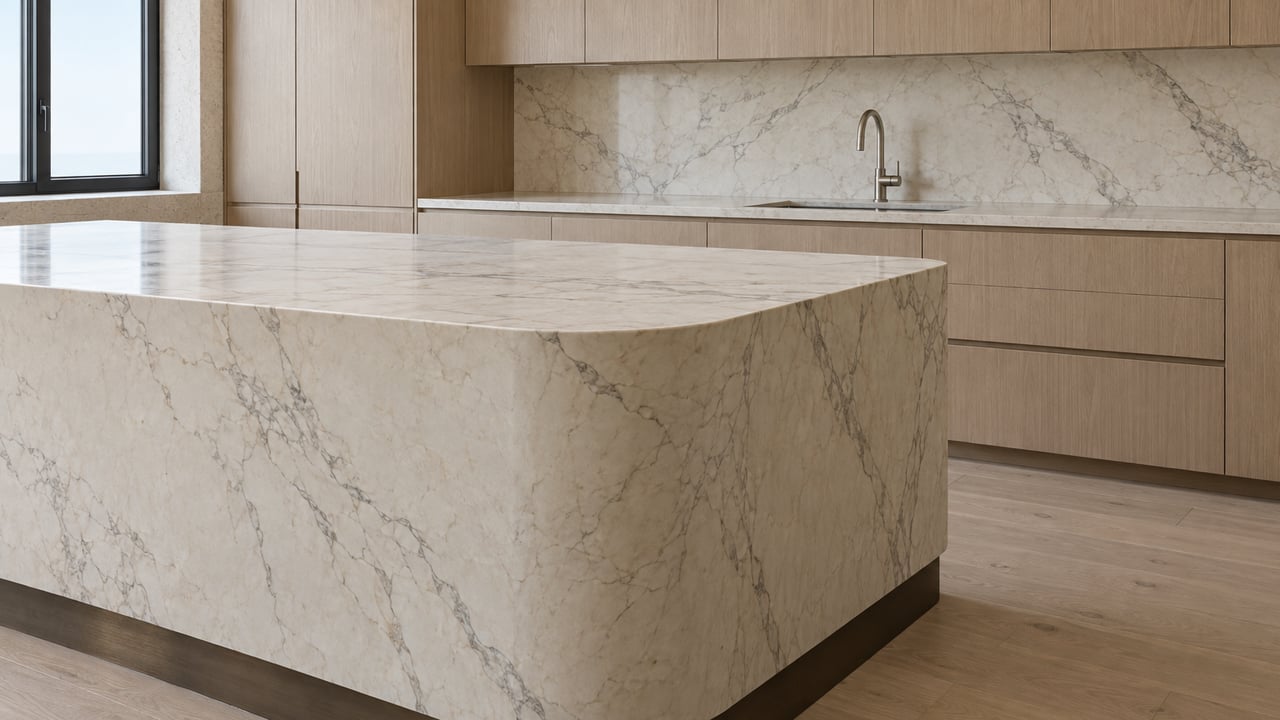
In 2019, a trust paid $31.5 million for Unit 94A at 432 Park Avenue. It's a penthouse of almost 4,000 square feet with four bedrooms and a library. The unit came to market in 2024 at $33 million. Its last ask was $25.8 million, and public records show it sold for $22 million, according to a report published in August 2026.
That is a loss of about 30% on a high-floor penthouse in one of the best-known towers in the world. A few blocks west, at 220 Central Park South, The Real Deal's public-records analysis found that original buyers who resold had not taken a loss. Both buildings are on the same corridor, sold to the same kind of buyer, and opened in the same decade. On Billionaires' Row, the address tells you very little about the resale price. The building's own sales history and the developer units it still has to sell tell you much more.
The first problem shows up before anyone makes an offer. In most Manhattan buildings, a recorded sponsor sale is a fair comparable. On this corridor it often is not. Donna Olshan of Olshan Realty called concessions "the elephant in the room" when judging how these towers perform: "A sponsor might also hang on to a price, but there might be a lot of givebacks at the end of the deal. Very often, the price that's recorded is not the actual price."
The best-known example is at 432 Park. Its priciest penthouse sold for $88 million in 2016, but only after co-developer CIM Group gave the buyer a $56 million loan.
This matters to both sides of a resale. A seller who prices off the recorded sponsor sale is pricing off a number that may include financing or credits no resale buyer will receive. A buyer who reads a resale "loss" as a bargain may be comparing it with a figure the first owner never truly paid. Some of the losses below are smaller than they look. Some of the asking prices are higher than they should be.
The clearest view comes from comparing each unit's first sponsor sale with the first time its original owner resold. The Real Deal ran that analysis across five towers in August 2025.
| Building | Average change, first resale vs. sponsor price | What the record shows |
|---|---|---|
| 220 Central Park South | +43% | No first-time seller loss recorded; +36% without the $188 million Och-to-Tsai penthouse |
| 432 Park Avenue | +2.3% | 10 of 16 first resales since 2021 sold at a loss |
| 217 West 57th, Central Park Tower | -9.7% | Only three resales, still selling sponsor units |
| 111 West 57th | -16.6% | Only two original-owner resales |
| 157 West 57th, One57 | -24.2% | 32 of 35 original-owner sales after the first two sold at a loss |
Each tower's record depends on when it launched. One57 started selling in 2011 and was briefly in a class of its own. Its first two original-owner resales, in 2014 and 2015, made 11% and 21%. Those came just as a wave of new inventory arrived and buyers started looking at 432 Park and 220 Central Park South. One seller who had paid $55.5 million listed an 81st-floor unit at $42 million in April 2021 and sold it for $35.5 million later that year.
Appraiser Jonathan Miller explained the pattern: "The whole premise of it was based on a mistaken assumption that the market was wide enough and deep enough for a lot of buildings to come on simultaneously." The towers that came later drew buyers away from the earlier ones. Each new launch became the next set of competition for every owner already in the market.
432 Park is the clearest current case, because its record kept moving in 2026. Its early resales, in 2017 and 2018, mostly sold for more than the first buyer paid. A 53rd-floor two-bedroom went for $10.8 million, up 80%. Since 2021, original buyers have sold, on average, for almost 1% less than they paid.
The 2026 sales continue that trend. In March 2026, Unit 52B sold for $8.7 million against a $9.9 million purchase in 2016. In August 2025, Unit 52C sold for $14.7 million against $16.4 million paid in 2016. The one gain reported was unusual. Two 78th-floor units that Harry Macklowe bought for $47 million went to CIM Group through a foreclosure process, then closed early this year for $53 million.
The building is also in litigation. The condo board sued the developers in 2021, alleging leaks, noise and broken elevators, and residents sued again in 2025. The developers deny the claims. For a buyer, that becomes part of due diligence, not a footnote. Lenders, attorneys and future buyers will all ask about it.
Central Park Tower and 111 West 57th show the same problem from another side. Both launched in 2018. In both, the developer is still selling units while original owners try to sell theirs.
That makes the sponsor's price cuts the ceiling for every resale in the building. At Central Park Tower, Unit 120 resold for $39.5 million in June 2025, $6 million below what the seller had paid Extell just six months earlier. The tower is known for steep sponsor discounts. The discounting continued this summer. Unit 68E went to contract on August 25, 2026 at $20.5 million, 18% below its original ask. Unit 68N followed on August 18 at $8.8 million, 14% below.
At 111 West 57th, sales of the final units moved after aggressive price cuts. One original owner who paid $26 million in 2022 listed at $24.5 million and sold for $20.4 million in June 2025. An owner selling in a building that is still in sponsor sell-out is not only competing with other owners. They are competing with a seller who has more units to move and a different reason for pricing.
220 Central Park South is the one tower on the corridor where neither problem shows up. Its sales team raised prices a dozen times between 2015 and 2018, which could have made later resales harder. Even so, first-time sellers had not recorded a loss as of the August 2025 analysis. One 45th-floor full-floor unit shows the trend. It was bought from the sponsor for $55.5 million in 2019, resold for $75 million in October 2023, and resold again for $82.5 million in 2025.
The brokers quoted credit the building itself: an 80-story limestone tower designed by Robert A.M. Stern, often compared to 15 Central Park West. What a buyer can actually check is the condition behind those results. The building's sponsor sales were finished well before its resales started, so original owners have not had to compete with developer inventory.
The broader $5M+ market is tight, but the top tier on this corridor is not. Corcoran's August 2026 luxury report counted 737 active Manhattan listings above $5 million. That is the lowest August level in 12 years and the 25th straight month of year-over-year declines. Over the same period, listings above $30 million rose 47%, "led by more than double the number of active listings along Billionaire's Row."
Deals are getting done, but slowly and below original asks. In Q3 2026, Corcoran's $5M+ tier averaged 113 days on market. In the week of September 28 to October 4, 2026, Olshan logged 30 contracts at $4 million and up, with an average of 633 days on market and an average 5% cut from original to last ask.
The Real Deal reports that the city's new pied-à-terre surcharge took effect July 1, 2026 and adds an annual cost that buyers will price in. It applies to condo and co-op units valued at more than $1 million by the city. In Phase 1 the rate starts at 4% and rises to 6.5% annually. The Wall Street Journal, as cited by the Post, reported that at least a third of units at 432 Park would be subject to it.
The rollout is still in court. A judge ordered the city to cancel mailed notices and take down a surcharge tax roll. A separate suit brought by three plaintiffs has oral argument scheduled for November 30. No source so far ties a specific price cut in these towers to the tax, and buyers should not assume one.
Is a large resale discount a sign of value? Sometimes. A few buyers who bought discounted resales at One57 have since sold for a profit. One such buyer sold for $39 million in 2024, a 21% gain over the 2021 purchase price. What decided it was the price he paid, not the original sponsor's price.
How should holding period factor in? Corcoran's Kane Manera has argued that any purchase on 57th Street should be held for five to seven years, not two to four. This post offers market context only, not financial advice.
If you own on this corridor, or are weighing a purchase there, the most useful starting point is a building-by-building review of resale history, unsold sponsor inventory and recorded concessions. Carol Staab prepares that analysis privately for sellers and buyers before a price is ever set. Work With Carol.
Carol Staab has an innovative luxury real estate practice that provides an elite level of concierge service through unparalleled world-class marketing and a hands-on business approach. Her mission is to give her clients an exceptional experience while helping them achieve the best results possible.