11 Interior Design Inspiration Ideas for Your Home in West Village NYC
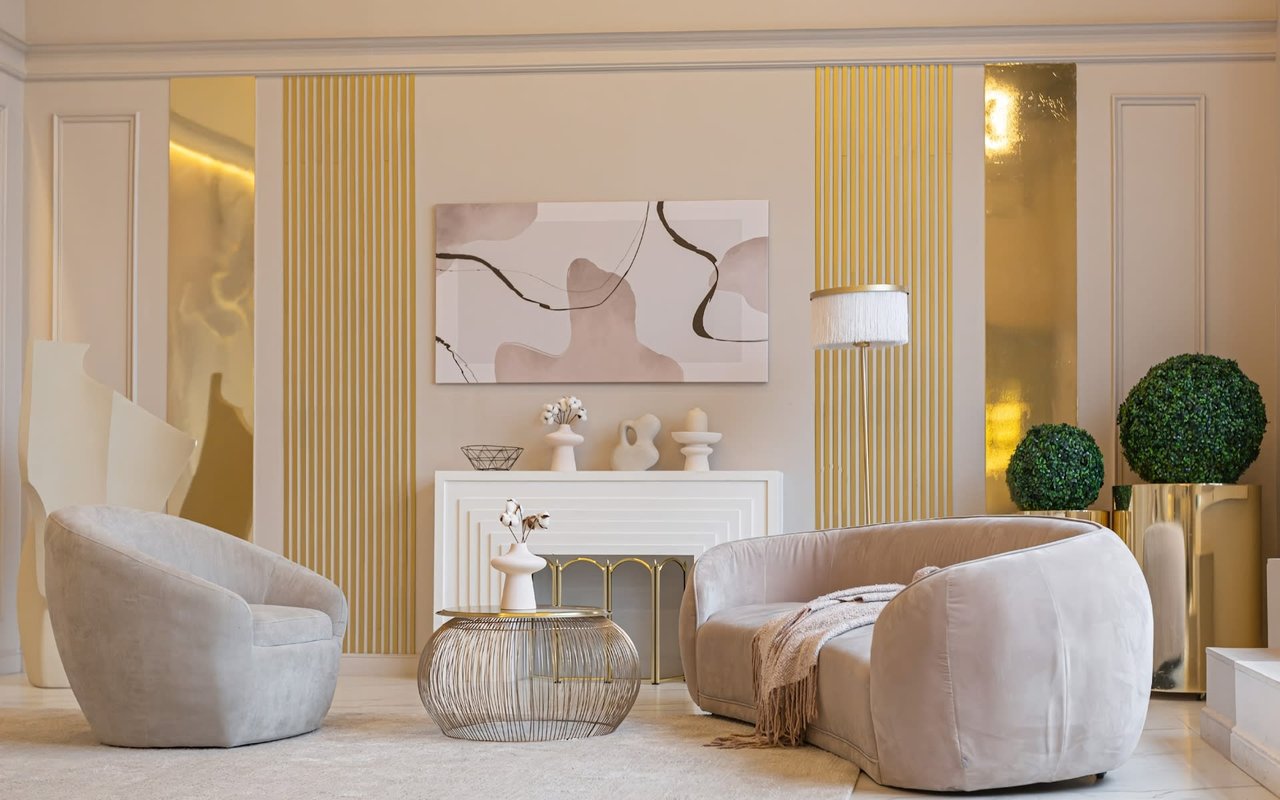
Famous for its artistic spirit, cobblestone streets, and some of Manhattan's most coveted historic homes, the West Village is unlike any other neighborhood in New York City. While the rest of Manhattan submitted to the Commissioner's Grid of 1811, the West Village refused — its narrow, angled streets and irregularly shaped lots creating a "village" feel that is rare in a city of rectangles. That same character lives inside its homes.
Most West Village residential buildings were constructed between 1820 and 1920, spanning Federal, Greek Revival, and Italianate styles. Brownstones, pre-war co-ops, converted carriage houses, and hidden mews homes all carry two centuries of architectural detail — sloping floors, plaster ceilings, original hardwood, and ornate moldings that no modern building can replicate. Designing for these spaces isn't just about decorating. It's about problem-solving with heritage.
Whether you've owned your West Village home for years or just moved in, here are 11 interior design ideas to help you make the most of it.
The most defining feature of a West Village home is what's already there. Federal-style fanlights, Greek Revival double parlors with mahogany pocket doors, Italianate cornices, original wide-plank Oak and Heart Pine floors, ornate moldings, and working fireplaces — these are the details that make a West Village home irreplaceable.
Rather than covering them up, make them the centerpiece of your design. Refinish original hardwood floors using hardwax oils like Rubio Monocoat or Osmo, which penetrate the wood fibers and allow the material to breathe — critical in pre-war buildings that expand and contract more than modern construction. Restore original moldings rather than replace them. Let the fireplace anchor the room.
One important note for renovators: nearly the entire West Village falls within the Greenwich Village Historic District, regulated by the NYC Landmarks Preservation Commission (LPC). While the LPC generally does not regulate interior work, any renovation requiring a Department of Buildings permit also triggers an LPC permit. Exterior modifications — windows, facades, rooftop additions — are strictly controlled. Window replacements must use wood frames matching the original muntin profile exactly. Budget for the process: LPC approvals can add three to twelve months to a project timeline and approximately 36% to total construction costs.
Unlike a modern apartment with flat walls and right angles, West Village homes regularly feature walls that meet at 85 or 95 degrees, narrow staircases that off-the-shelf furniture won't fit through, and an almost complete absence of closets — which were rarely built in 19th-century construction.
Custom millwork is less a luxury here and more a necessity. Designers use it to "square off" rooms with angled walls, build storage where closets don't exist, and turn dead corners into functional space. A hallway becomes a library. A closet becomes a "cloffice." A non-parallel wall gets a floor-to-ceiling built-in that makes the room feel intentional rather than awkward.
Budget-wise, custom cabinetry and millwork in NYC runs $1,500–$3,000 per linear foot — but in a West Village home, it often delivers more value per dollar than almost any other upgrade.
Renovating the lighting in a West Village home requires understanding its constraints first. Most historic apartments were originally outfitted with 60-amp or 30-amp electrical service — far below the 100–150 amps a modern home requires. Knob-and-tube wiring and cloth-jacketed cables are common in homes that haven't been fully updated. Opening a wall for a minor repair can trigger an NYC code requirement to bring the entire room to current standard, turning a simple fix into a $15,000 full-room rewire.
For recessed lighting specifically, West Village plaster ceilings present real challenges: cutting holes risks cracking large fragile sections, fire-rating requirements in multi-family buildings limit how much of the ceiling can be pierced, and non-uniform joist spacing (a product of hand-built 19th-century construction) frequently places a structural beam exactly where you wanted a fixture.
The 2026 design response has largely moved away from recessed cans in favor of layered, period-appropriate lighting:
For finish, unlacquered brass patinas naturally with the age of a brownstone. Warm LED cove lighting at 2,400K–2,700K mimics the glow of the gas lamps that once lit these streets.
Natural light in the West Village behaves differently than almost anywhere else in Manhattan. Streets like Gay Street and Charles Street can be as narrow as 30–40 feet, creating a canyon effect on lower floors even though buildings are only 4–5 stories tall. The parlor floor receives significant bounce-light from the street. Garden-level units can be perpetually dim. The top floor is often the only level with direct, unobstructed sky-view light.
The neighborhood's dense tree canopy — London Planes and Ginkgo trees among the oldest in Manhattan — filters direct sun into soft, dappled light from May through October, which can make north-facing apartments feel significantly darker in summer.
The 2026 color direction works with this light rather than against it:
Material selection in a West Village home is as much a technical decision as an aesthetic one. Pre-war buildings breathe differently than modern construction — they expand and contract with humidity and temperature changes. Using rigid or non-breathable finishes can lead to cracking and moisture damage.
On walls, avoid standard latex paint on older brick. Mineral or lime-wash paints — Romabio and Portola are two strong options — are naturally antimicrobial and vapor-permeable, essential for historic brick walls that may harbor trapped moisture. Roman Clay and hand-applied plaster, which run $15–$30 per square foot due to skilled labor requirements, have become the signature wall treatment of the 2026 West Village interior.
On floors, hardwax oils over polyurethane allow original Oak and Heart Pine to breathe and make localized repairs possible without a full sand-and-refinish. When bonding new materials to old subfloors, elastic resin-based adhesives accommodate the natural swelling and shrinkage of historic hardwoods.
For countertops and surfaces, IceStone — manufactured at the Brooklyn Navy Yard from 100% recycled glass and cement — is both locally sourced and historically sympathetic in tone. Calacatta Viola marble, with its bold purple veining, is replacing plain white Carrara as the statement stone of choice in West Village kitchens for 2026.
The West Village has been an arts neighborhood since the late 1800s, when the "Tile Club" — a group including Winslow Homer and William Merritt Chase — gathered in studios near 10th Street. Edward Hopper painted the light of Washington Square Park from his studio at 3 Washington Square North. Diane Arbus worked at 222 West 10th Street. Jackson Pollock and the Abstract Expressionists, the Beat Generation writers at the San Remo — the Village's bohemian DNA runs deep.
The design expression of that legacy is the Eclectic Bohemian interior: layering modern elements with vintage pieces, mixing bold prints and textures, incorporating art at every scale. The key is that it feels collected rather than decorated — one-of-a-kind vintage pieces (designer Ksenya Malina of Time & Place Interiors built her practice around sourcing these for Village apartments), handcrafted ceramics, gallery walls that mix mediums and eras.
Support local artists by visiting the Washington Square Outdoor Art Exhibit (May and September 2026), New York Art Week gallery crawls (May 13–17, 2026), or Jane's Walk NYC (May 2026), which features guided art and architecture tours through the West Village's hidden mews and artist studios.
Natural materials create warm, character-rich interiors that complement rather than compete with West Village architecture. Leather, reclaimed wood, stone, unlacquered brass, and hand-forged bronze all age in ways that feel native to a 19th-century home.
For sourcing locally: Build It Green! NYC (Big Reuse) salvages old-growth heart pine beams, vintage doors, and hardware directly from NYC demolition sites — materials that often match the original species found in West Village homes. M. Fine Lumber in Brooklyn specializes in reclaimed flooring salvaged from old Manhattan and Brooklyn warehouses.
Natural fiber composites are also trending for 2026 — materials derived from hemp, flax, and jute are increasingly used in home furnishings and acoustic wall panels for their texture and low environmental impact.
In a West Village home, art isn't decoration — it's architecture. The 2026 trend for art integration moves away from standard recessed lighting toward discreet magnetic track systems that let residents rearrange collections with the same flexibility as a professional gallery. Over-picture slim LEDs provide focused task lighting that feels like a gallery rather than a living room.
For gallery walls, mix mediums — paintings, photographs, prints, sculptural objects — and let the arrangement feel organic rather than symmetrical. The West Village's artistic heritage gives you permission to go bold. Floor-to-ceiling books, vinyl collections, ceramics on open shelving — the "Artist's Loft" aesthetic featured recently in Elle Decor near the Meatpacking/West Village border represents the maximalist end of this spectrum.
Architectural Digest's feature on a "Sliver" house on West 4th Street — only 13 feet wide — is worth studying for how art and objects can give a tiny, irregular home enormous visual presence.
After years out of fashion, wallpaper has made a full comeback — and it suits the West Village particularly well. A bold graphic or textured wallpaper in a guest bathroom, a bedroom, or on a single statement wall transforms a space in a way that paint alone cannot.
In 2026, the trend pairs wallpaper with the neighborhood's love of texture: Roman Clay and lime-wash finishes on adjacent walls, with a single dramatically papered surface as the focal point. This approach works especially well in narrow rooms — the visual depth of a patterned wall can make a railroad-layout room feel wider than it is.
The "Anti-Renovation" look — deliberately preserving original imperfections like scarred brick and original plaster — is also peaking. Layering vintage finds and textured fabrics like velvet and mohair in jewel tones over raw, aged surfaces is the aesthetic that most authentically captures what the West Village is in 2026.
West Village studios average 450–460 square feet — roughly 15–20% smaller than the citywide average — and at $2,100+ per square foot, every inch carries real cost. Efficient design is essential.
Proportion is the governing principle. Large, bulky furniture swallows a West Village room. The "petite but premium" approach — smaller, more refined furniture frames in high-end fabrics — makes a room feel generous rather than cramped. For garden-level units with 7.5–8-foot ceilings, low-profile furniture like a Togo sofa or a platform bed makes the ceiling feel significantly higher than a traditional high-backed sofa would.
Vertical space is underused in most West Village homes. Floating shelves near the ceiling around the perimeter of a living room provide storage and display without consuming floor area. Interior transom windows — glass panels above interior doors — share light between rooms in narrow, deep floor plans, a signature West Village move for brightening dark middle rooms with no direct window access.
For open-concept layouts, use furniture to define zones — a sofa or bookshelf as a room divider — without interrupting the flow.
For a contemporary approach to a West Village home, New Minimalism works well precisely because it addresses the neighborhood's greatest design challenge: the absence of storage and the presence of "dead" space. Clean lines, intentional furniture selection, and a "less is more" philosophy turn a small, irregular pre-war apartment into something that feels curated rather than constrained.
The key distinction from generic minimalism is that in the West Village, it must coexist with character. You aren't stripping a room — you're editing it. Keep the original moldings. Keep the fireplace. Keep the wide-plank floor. Then bring in a smaller number of exceptionally well-crafted pieces that earn their place: high-end fabrics on refined furniture frames, statement hardware in unlacquered brass, and one or two pieces of art that anchor the room.
Tina Ramchandani's "Soulful Minimalism" approach — balancing art collections with custom millwork that absorbs the clutter of modern life behind seamless surfaces — is the West Village's most refined expression of this idea.
Putting these ideas into practice starts with finding the right space. Carol Staab is a Manhattan luxury real estate broker at Sotheby's International Realty, ranked in the top 1.5% of agents nationally by RealTrends, with 28 years in the Manhattan luxury market and over $190M in solo closed sales. Whether you're buying, selling, or exploring what's possible in the West Village, reach out to Carol for a private conversation.
Carol Staab has an innovative luxury real estate practice that provides an elite level of concierge service through unparalleled world-class marketing and a hands-on business approach. Her mission is to give her clients an exceptional experience while helping them achieve the best results possible.