Explore West Village, NY Homes for Sale and Lifestyle
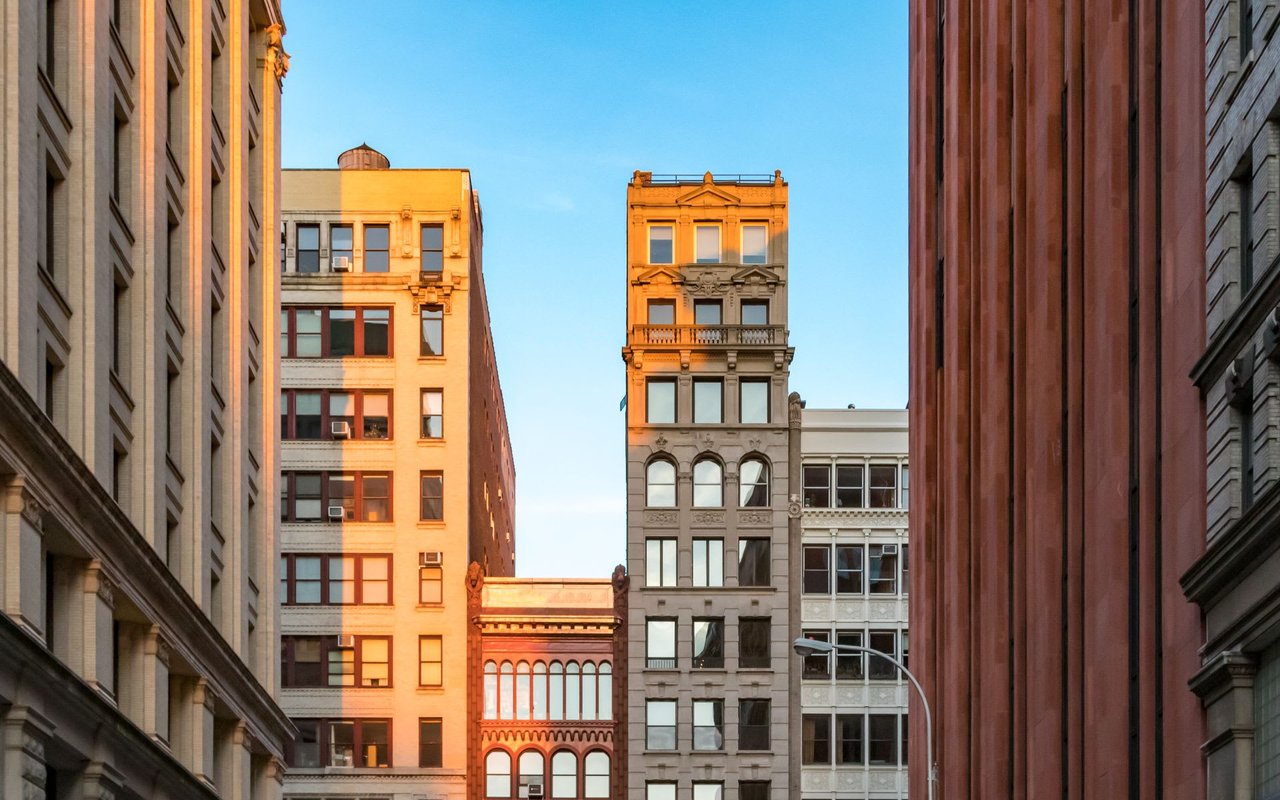
Charmingly reminiscent of the London streets, West Village is an exclusive luxury community that brings a certain cool to the luxury lifestyle.
Charmingly reminiscent of the London streets, West Village is an exclusive luxury community that brings a certain cool to the luxury lifestyle.
32,518 people live in West Village, where the median age is 42 and the average individual income is $164,566. Data provided by the U.S. Census Bureau.
Total Population
Median Age
Population Density Population Density This is the number of people per square mile in a neighborhood.
Average individual Income
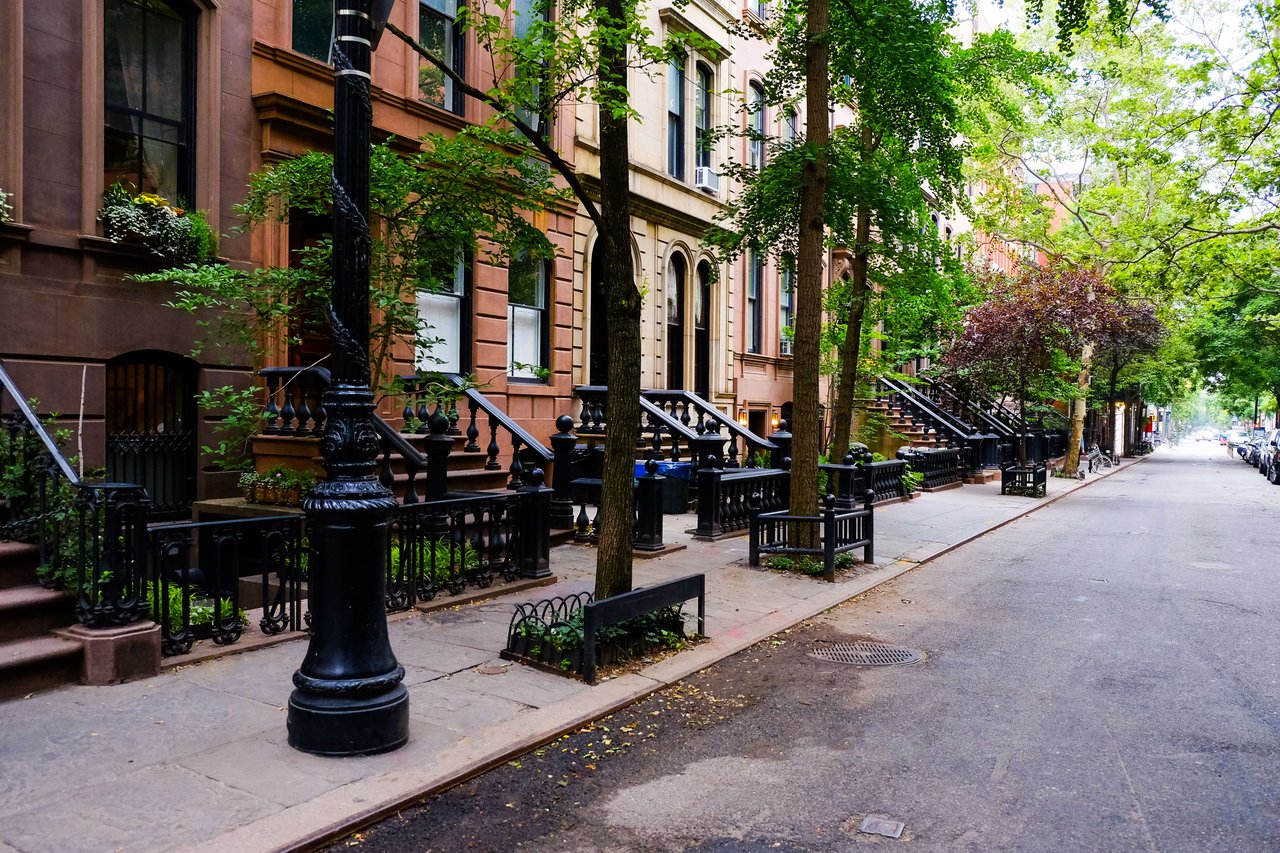
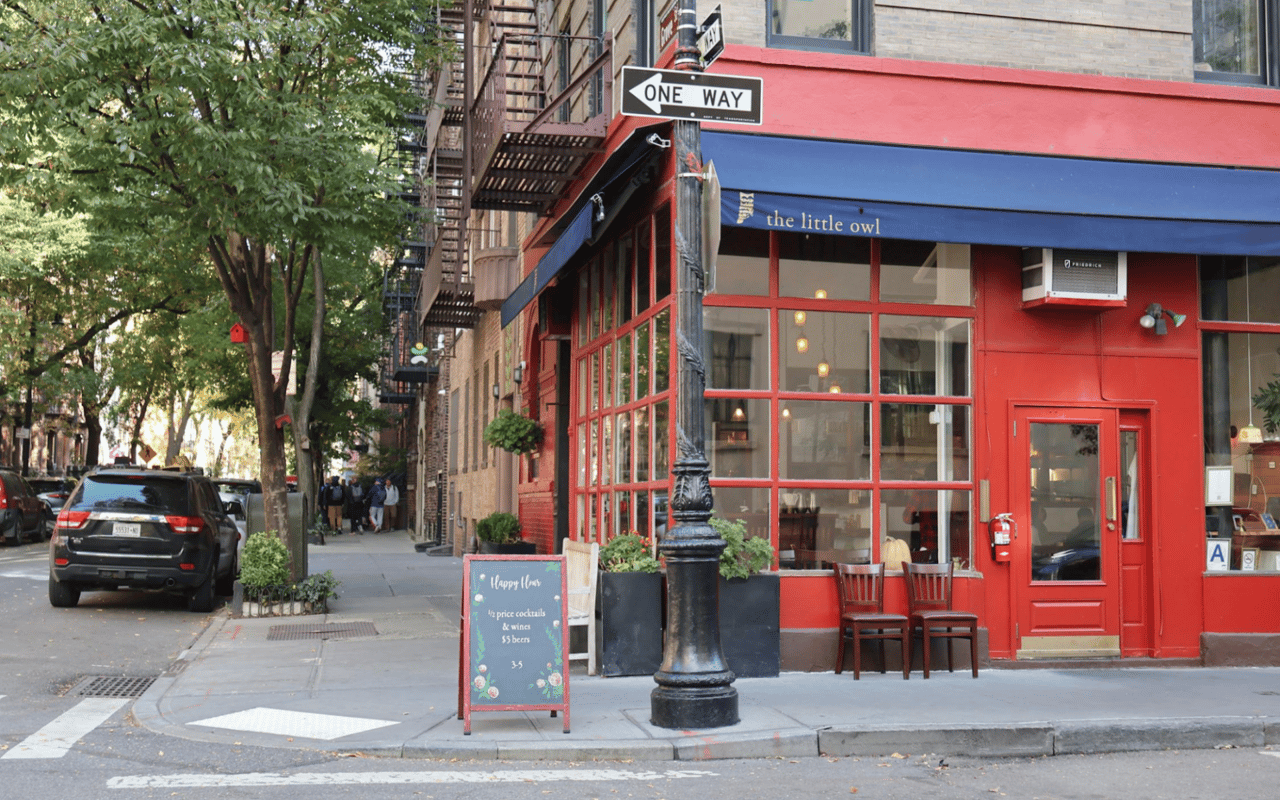
The West Village is one of the few places in Manhattan where the city seems to slow down. Streets bend instead of following the grid. Townhouses are three and four stories high, not forty. A morning espresso, a walk to the Hudson River, and dinner at a corner bistro can all happen within a few blocks.
The neighborhood feels like a small village, but it sits minutes from Midtown, the Financial District, and Brooklyn. That combination is why demand rarely softens. Buyers here usually aren't looking for amenity towers or skyline views. They want character: a parlor floor with original moldings, a garden behind a brownstone, a block where neighbors know one another.
Some trade-offs come with that. Inventory is tight, co-op boards are selective, and prime townhouses can be scarce for months. This guide covers what the West Village offers, how its housing market works, and what to know before you buy or sell here.
The West Village is on Manhattan's Lower West Side. It is commonly defined by these borders:
What sets the West Village apart is its street plan. Most of Manhattan follows the 1811 Commissioners' Plan grid, but the West Village kept its older, irregular layout. That is why West 4th Street crosses West 10th, 11th, and 12th Streets, which confuses first-time visitors and charms longtime residents. For homeowners, the irregular grid means less through-traffic and quieter residential blocks, and that quiet is part of the market value.
Before European settlement, the Lenape people called the area Sapokanikan and used the marshy shoreline for fishing and trade. In the 1630s, Dutch Director Wouter van Twiller established a tobacco plantation here. For more than a century afterward, the area stayed rural, a country village well north of the city at Manhattan's southern tip.
That changed with disease. Yellow fever outbreaks in lower Manhattan in the late 1790s and early 1800s, especially the 1822 epidemic, sent residents and businesses north to Greenwich Village for cleaner air. Bank Street takes its name from the Bank of New York, which opened an office here during the 1798 outbreak. Builders laid streets along old farm and property lines, which created the angled layout that still defines the neighborhood.
In the early 20th century, inexpensive rents in subdivided rowhouses drew writers, artists, and political radicals. Eugene O'Neill, Edna St. Vincent Millay, and later Dylan Thomas and James Baldwin all became part of the Village's story, and the neighborhood earned its name as the center of American bohemian life.
The 1960s shaped the West Village we know today. Jane Jacobs, who lived on Hudson Street, led residents in defeating a 1961 city plan to declare part of the West Village an urban renewal area, and she later joined the fight that ended Robert Moses' Lower Manhattan Expressway. In June 1969, the Stonewall uprising on Christopher Street launched the modern LGBTQ+ rights movement. That same year, the city designated the Greenwich Village Historic District, protecting the low-rise streetscape that buyers pay a premium for today.
The West Village is one of Manhattan's most supply-constrained markets. Landmark protections limit new construction, so the housing stock grows very little, and well-priced homes on the best blocks tend to move quickly.
Recent market snapshots place the median sale price at roughly $1.8 million to $2.4 million, with average pricing around $2,300 to $2,500 per square foot. That puts the West Village among the most expensive neighborhoods in New York City on a per-foot basis. Those medians hide a wide range, though. A one-bedroom co-op in a walk-up and a 25-foot-wide restored townhouse are different markets entirely.
A few patterns define how the market behaves:
Co-ops dominate the inventory. Roughly 60 percent of listings are co-ops. They tend to offer lower prices per square foot than condos, but they come with board review and stricter rules.
Condos carry a premium. Condos make up about a fifth of the market and often trade above $3 million. Buyers pay more for flexibility in subletting, financing, and ownership structure.
Townhouses are their own category. Single-family homes on prime blocks commonly trade in the eight figures, and the best examples rarely reach the open market.
Rentals stay competitive. Median rents generally run $5,500 to $6,500 per month. Studios start around $3,800 and two-bedrooms often exceed $7,500, with low vacancy throughout the year.
Prices and inventory shift week to week. For current figures in the $4M-and-up segment, Carol Staab's weekly market report, The Pulse, tracks Manhattan luxury contracts and supply.
West Village buyers usually choose between three ownership types. Each fits a different kind of buyer.
Property Type | Share of Market | Typical Price Range | Best For |
|---|---|---|---|
Co-ops | About 60% | Entry-level to multi-million | Primary residents planning to stay long term |
Condos | About 20% | Often $3M+ | Investors, pied-à-terre buyers, international buyers |
Townhouses | About 17% (incl. multi-family) | Commonly $10M to $30M+ | Buyers who want privacy, outdoor space, and land ownership |
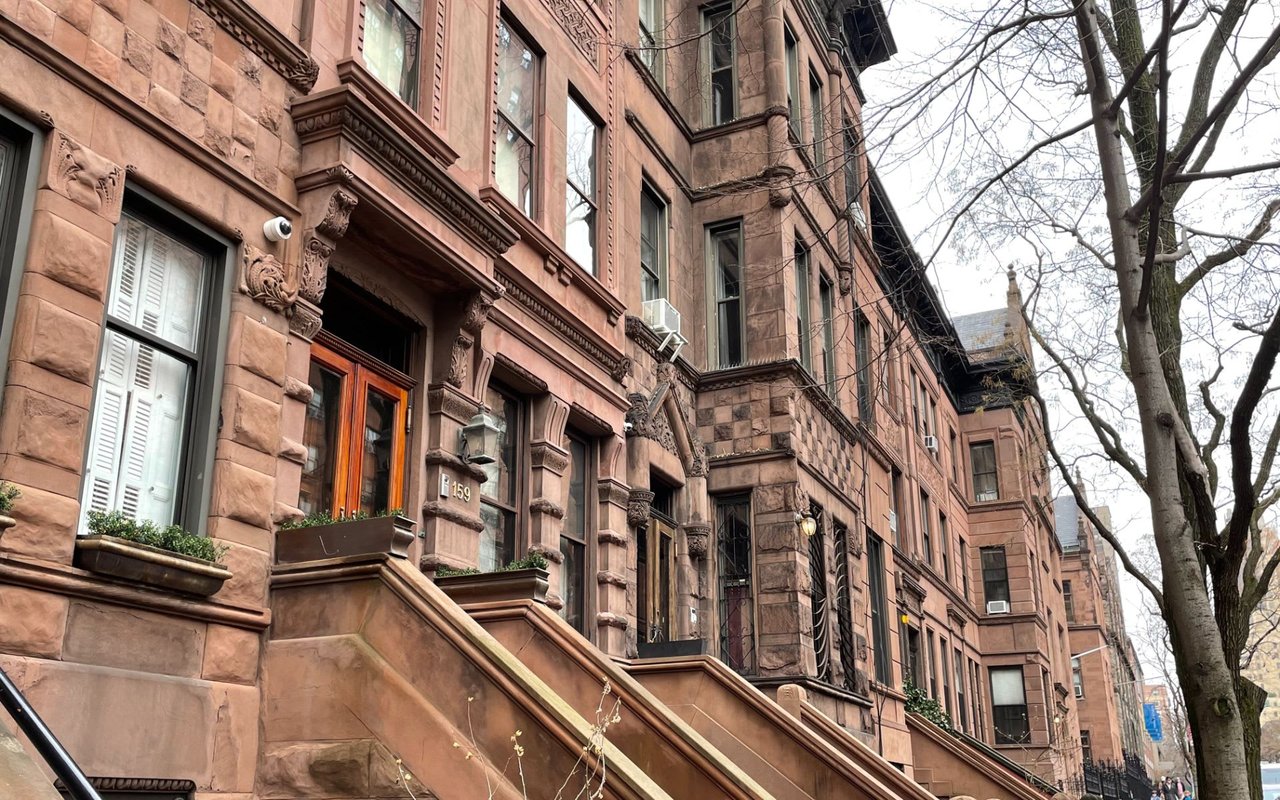
Townhouses are the West Village's signature property. Most are three to five stories with fireplaces, high-ceilinged parlor floors, private rear gardens, and sometimes roof decks. Buyers own both the building and the land under it. Value depends on width, block, how much original detail survives, and the quality of any renovation. Since these homes sit in a historic district, any exterior work must go through the Landmarks Preservation Commission, so buyers should factor that timeline into renovation plans.
Co-op buyers purchase shares in a corporation that owns the building and receive a proprietary lease for their unit. Most West Village co-ops are in prewar walk-ups, prewar elevator buildings, or converted industrial buildings. Boards usually expect 20 to 30 percent down or more, a detailed financial package, and an in-person interview. Many limit subletting and purchases through trusts or LLCs. The board process is where a deal is most likely to stall, so buyers benefit from an advisor who knows how boards read a package.
Condo buyers own their unit outright, plus a share of the common areas. West Village condos range from boutique conversions of historic buildings to the glass towers along the waterfront, including the Richard Meier buildings on Perry Street. Purchases are simpler, rental rules are more relaxed, and there is no board interview. That flexibility is why condos command higher prices per square foot.
Much of the West Village falls within the Greenwich Village Historic District, designated in 1969 and expanded since. The district protects more than 2,000 buildings, which explains why the neighborhood looks much as it did a century ago.
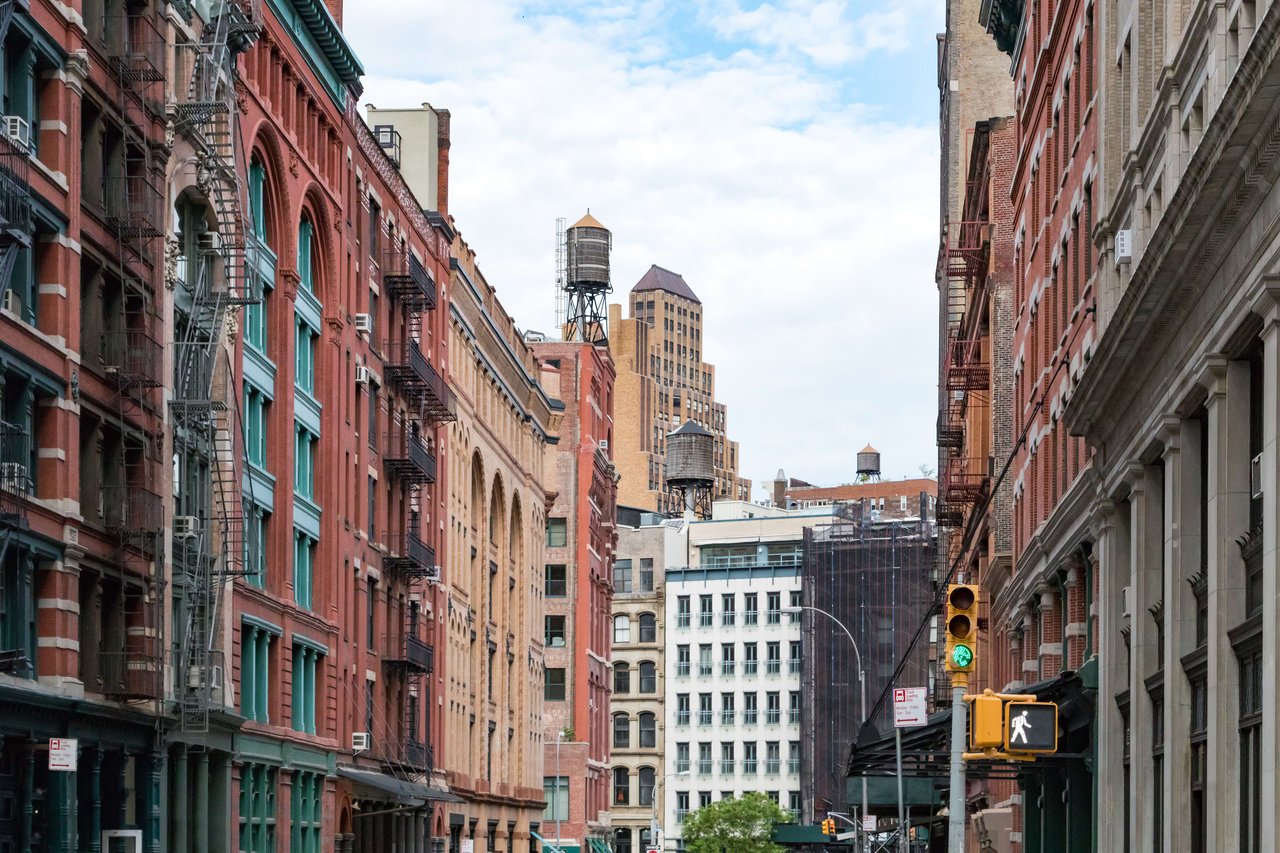
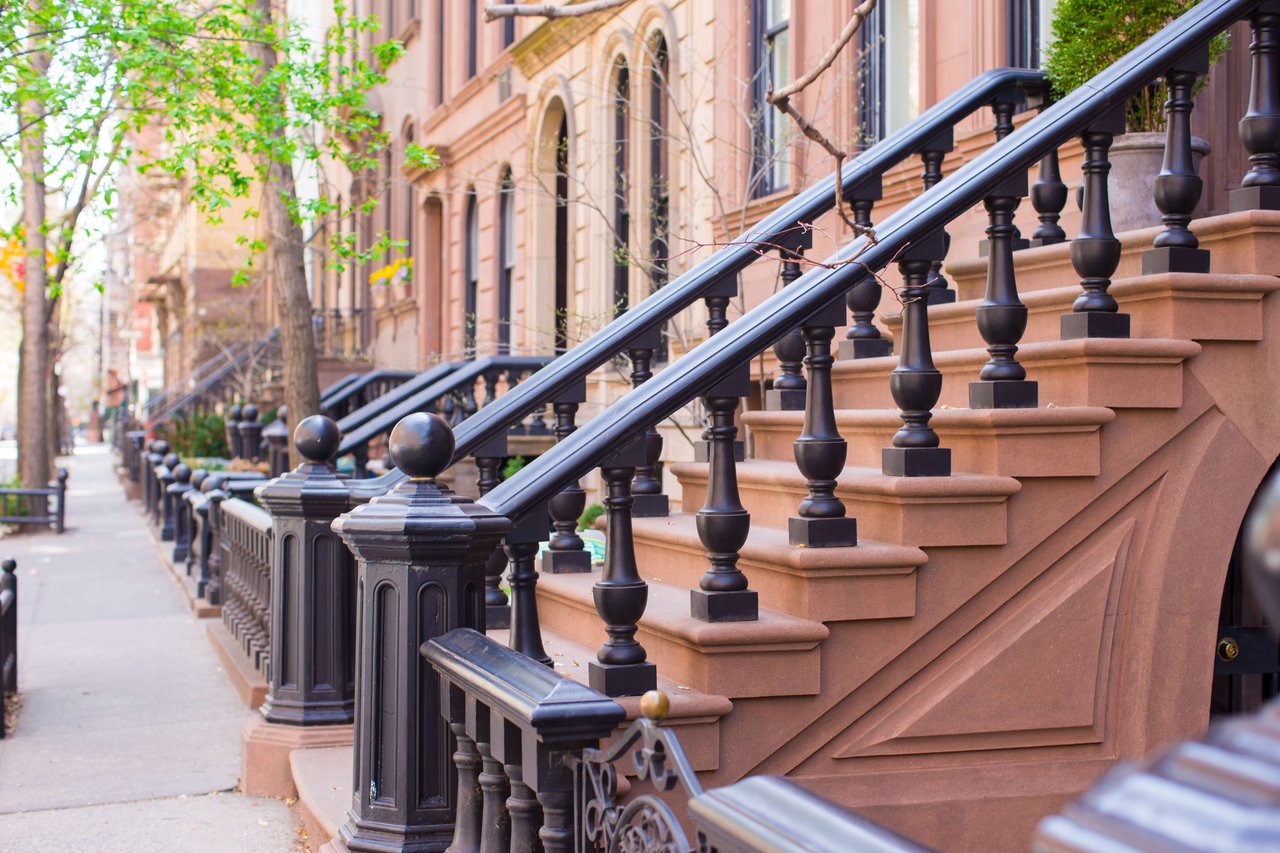
You can read the neighborhood's growth in its facades. Federal-style houses from the 1820s and 1830s are modest, with low brick fronts, peaked roofs, dormer windows, and simple ironwork. The wood-frame house at 17 Grove Street is a rare survivor from this era. Greek Revival rowhouses from the 1830s and 1840s added grand entrances framed by pilasters and heavy cornices. Italianate brownstones from the 1850s onward introduced high stoops, tall parlor windows, and bracketed rooflines, as seen on stretches of Perry Street. Industrial buildings have been converted too. Westbeth, the former Bell Telephone Laboratories complex on West Street, became one of the country's first subsidized artist housing communities.
Owning in the historic district protects your block's character, but it also limits what you can change. Visible exterior work requires Landmarks Preservation Commission approval. That includes windows, masonry repointing, paint colors, doors, and rooftop additions. Restorations generally must match historic materials. Rooftop and rear additions are typically allowed only if they are minimally visible from the street. Plan extra time and budget for approvals before buying a property you intend to renovate.
Every block here has a personality, but four streets explain the neighborhood best.
Bleecker is the West Village's main commercial street. Near Sixth Avenue it is lined with long-running food shops. Heading west toward Abingdon Square, it shifts to designer boutiques, fragrance shops, and sidewalk cafés. John's of Bleecker Street, Murray's Cheese, and Magnolia Bakery all sit along it.
Perry Street is often called one of Manhattan's prettiest blocks. It has heavy tree cover, Greek Revival and Italianate rowhouses, and well-kept stoops. The stoop at 66 Perry Street became known worldwide as Carrie Bradshaw's front steps in Sex and the City. At the river end, the Richard Meier glass towers mark the neighborhood's modern edge.
Bank Street is quiet, low-rise, and shaded by mature trees. It has a strong literary past, and Willa Cather lived at 5 Bank Street for years. The Waverly Inn, at 16 Bank Street, has served neighborhood regulars for generations.
Christopher Street is the center of the neighborhood's LGBTQ+ history. The Stonewall Inn, at 53 Christopher Street, faces Christopher Park, which holds George Segal's Gay Liberation sculpture and forms part of the Stonewall National Monument, the first U.S. national monument dedicated to LGBTQ+ history. The street runs west from Sixth Avenue to Pier 45 and has bars, shops, and the Christopher Street PATH station.
The West Village has one of the city's strongest dining scenes per square block. Many of the best places are small, so planning ahead matters.
Restaurant | Address | Known For |
|---|---|---|
Via Carota | 51 Grove St | Tuscan cooking, seasonal vegetables, fresh pasta |
Buvette | 42 Grove St | French small plates, wine, all-day café service |
John's of Bleecker Street | 278 Bleecker St | Coal-fired pizza since 1929, whole pies only |
Don Angie | 103 Greenwich Ave | Modern Italian-American cooking, pinwheel lasagna for two |
4 Charles Prime Rib | 4 Charles St | Intimate steakhouse, among the hardest reservations in the city |
The Waverly Inn | 16 Bank St | Classic American dishes, fireplaces, longtime neighborhood favorite |
Café culture defines West Village mornings. Bar Pisellino, on Grove Street, serves espresso and pastries by morning and spritzes by afternoon. Sant Ambroeus on West 4th Street is a Milanese café that works for breakfast or a long lunch. Sogno Toscano on Perry Street pairs a Tuscan market with an espresso bar. Magnolia Bakery's original Bleecker Street shop still draws lines for its banana pudding.
Bleecker Street went from a bohemian strip in the mid-20th century to one of Manhattan's best-known shopping streets, and each stretch has a different character.
Between Sixth Avenue and Christopher Street, food shops lead the way. Murray's Cheese, specialty bakeries, and longtime Italian businesses anchor this section. From Christopher Street toward Hudson Street, the mix moves to contemporary fashion, designer labels, niche fragrance studios, and jewelry boutiques. Closer to Abingdon Square, smaller shops sell home goods, gifts, and accessories.
For residents, Bleecker covers daily errands and special-occasion shopping alike. It is also one reason West Village homes command a premium: little in daily life requires leaving the neighborhood.
The West Village's western edge opens onto Hudson River Park, which stretches about four miles along Manhattan's West Side. For residents, the river acts like a backyard.
Pier 45, at the foot of Christopher Street, has lawns and a long wooden deck that fill up at sunset. Pier 46 has a turf sports field. Pier 51, near Jane Street, has a water-themed playground popular with families. The Hudson River Greenway bike and running path runs along the whole waterfront, connecting the neighborhood north to Chelsea and south to Battery Park City. Little Island, the park built on pilings at Pier 55, is just north of the neighborhood near 13th Street.
Away from the river, smaller parks serve as neighborhood gathering spots. Abingdon Square Park, at Hudson and Bleecker Streets, is one of the city's oldest public parks and hosts a Saturday greenmarket. Christopher Park, opposite the Stonewall Inn, is part of the national monument. Jefferson Market Garden, next to the Gothic Jefferson Market Library on Sixth Avenue, is a quiet garden tended by volunteers.
The neighborhood's cultural legacy still shows up in nightlife. Jazz is a big part of it. The Village Vanguard, on Seventh Avenue South, has operated since 1935 and has hosted landmark live recordings by John Coltrane and Bill Evans. On West 10th Street, Smalls and Mezzrow offer intimate late-night sets.
Theater has deep roots here too. The Lucille Lortel Theatre on Christopher Street and the Cherry Lane Theatre on Commerce Street, founded in the 1920s by a group that included Edna St. Vincent Millay, are both landmarks of Off-Broadway history.
Historic bars complete the picture. The Stonewall Inn is a National Historic Landmark. Julius', on West 10th Street, is one of the city's oldest gay bars and the site of the 1966 "Sip-In" protest. The White Horse Tavern, on Hudson Street since the 1880s, was a regular haunt of Dylan Thomas. Just east of the neighborhood, the Comedy Cellar on MacDougal Street remains one of the country's best-known comedy clubs.
West Village families are in NYC's Community School District 2, one of the city's most sought-after public school districts, and the area also has several well-regarded independent schools.
Public schools include P.S. 41 Greenwich Village on West 11th Street and P.S. 3 Charrette School on Hudson Street, both serving pre-K through fifth grade. P.S. 3 is known for an arts-integrated, progressive approach. M.S. 297, at 75 Morton Street, serves middle school students.
Independent schools include Village Community School on West 10th Street (K–8), City and Country School on West 13th Street, a progressive school founded by Caroline Pratt in 1914, and St. Luke's School on Hudson Street (pre-K–8), an Episcopal day school.
School zoning lines can change, and zoning varies even within the neighborhood. Families should confirm the zoned school for a specific address with the NYC Department of Education before committing to a purchase.
The West Village has excellent transit. Most homes are within a short walk of several subway lines.
The 1 train stops at Christopher Street and Houston Street, and the 1, 2, and 3 trains stop at 14th Street and Seventh Avenue. West 4th Street–Washington Square, on the eastern edge, is a major hub for the A, C, E, B, D, F, and M lines. The 14th Street and Eighth Avenue station connects to the A, C, E, and the L, which runs crosstown to Union Square and into Brooklyn. PATH trains at Christopher Street, 9th Street, and 14th Street connect directly to Hoboken and Jersey City.
Destination | Approximate Commute | Main Lines |
|---|---|---|
Financial District | 10–15 minutes | 1, 2, 3, A, C |
Midtown | 10–15 minutes | 1, 2, 3, B, D, F, M |
Williamsburg | 12–18 minutes | L |
JFK Airport | 45–60 minutes | A to AirTrain |
Newark Airport | 40–50 minutes | PATH or NJ Transit connection |
Many residents don't own a car. Street parking is hard to find, and garage spaces typically cost $600 to more than $1,000 a month.
The West Village is part of the larger Greenwich Village area. Greenwich Village proper centers on Washington Square Park and NYU, east of Sixth Avenue. The West Village sits to the west, extending to the Hudson River, and is more residential, with fewer institutional buildings and quieter streets.
The West Village is generally considered one of Manhattan's safer neighborhoods. Steady foot traffic, well-lit streets, and an active residential community contribute to that. As anywhere in the city, conditions vary by block and time of day.
It depends on the block. Residential streets like Bank Street, Commerce Street, and St. Luke's Place are notably quiet. Seventh Avenue South, Sixth Avenue, 14th Street, and the blocks around Christopher Street are busier, especially at night. Buyers should visit a property at different times before deciding.
Co-ops usually cost less per square foot and suit buyers who plan to live in the home long term. Condos cost more but offer flexibility in renting, financing, and ownership structure, which matters for investors and part-time residents. Your timeline and plans for the property should drive the choice.
Yes. Interior work goes through the Department of Buildings, but any visible exterior change in the historic district needs Landmarks Preservation Commission approval. Budget extra time for that process, and work with architects who have LPC experience.
Very much so. Hudson River Park has dedicated dog runs, including the Leroy Street dog run, and many shops along Bleecker and Hudson Streets set out water bowls for passing dogs.
Buying or selling in the West Village means working within co-op boards, landmark rules, and a market where the best homes rarely sit for long. Carol Staab, Senior Global Real Estate Advisor and Licensed Associate Real Estate Broker at Sotheby's International Realty, brings 28 years of Manhattan luxury real estate experience to every transaction. RealTrends ranks her among the top 1.5 percent of real estate professionals nationwide, and she has closed more than $190 million in solo sales, including representing both buyer and seller in the $28.4 million sale at The Ritz-Carlton Residences, Central Park South. As a former long-time co-op board member at 1049 Fifth Avenue, Carol understands how boards evaluate buyers, which is a real advantage in a neighborhood where co-ops make up most of the inventory. She also writes The Pulse, her weekly report on Manhattan's $4M-and-up market. Whether you're looking for a historic townhouse, preparing a co-op board package, or positioning a West Village home for sale, contact Carol for a private consultation.
There's plenty to do around West Village, including shopping, dining, nightlife, parks, and more. Data provided by Walk Score and Yelp.
Explore popular things to do in the area, including Pizza Lucca, Vic Sam Restaurant, and Cafe Nakazawa.
| Name | Category | Distance | Reviews |
Ratings by
Yelp
|
|---|---|---|---|---|
| Dining | 0.04 miles | 3 reviews | 1.7/5 stars | |
| Dining | 0.17 miles | 0 reviews | 0/5 stars | |
| Dining | 0.26 miles | 0 reviews | 0/5 stars | |
| Shopping | 0.18 miles | 0 reviews | 0/5 stars | |
| Shopping | 0.42 miles | 0 reviews | 0/5 stars | |
| Shopping | 0.43 miles | 1 review | 5/5 stars | |
| Beauty | 0.38 miles | 14 reviews | 3.7/5 stars | |
|
|
||||
|
|
||||
|
|
||||
|
|
||||
|
|
||||
|
|
West Village has 18,891 households, with an average household size of 2. Data provided by the U.S. Census Bureau. Here’s what the people living in West Village do for work — and how long it takes them to get there. Data provided by the U.S. Census Bureau. 32,518 people call West Village home. The population density is 83,673 and the largest age group is Data provided by the U.S. Census Bureau.
Total Population
Population Density Population Density This is the number of people per square mile in a neighborhood.
Median Age
Men vs Women
Population by Age Group
0-9 Years
10-17 Years
18-24 Years
25-64 Years
65-74 Years
75+ Years
Education Level
Total Households
Average Household Size
Average individual Income
Households with Children
With Children:
Without Children:
Marital Status
Blue vs White Collar Workers
Blue Collar:
White Collar:
Carol Staab | October 21, 2026
Match Your Taste to the Architecture of Your Manhattan Home.
October 8, 2026
Pulse
Carol Staab | August 31, 2026
August 13, 2026
August 27, 2026
September 17, 2026
October 1, 2026
September 24, 2026
October 15, 2026
August 20, 2026
September 10, 2026
September 3, 2026
Pulse
Carol Staab | October 14, 2026
Pulse
Carol Staab | October 7, 2026
May 21, 2026
Pulse
Carol Staab | September 16, 2026
May 14, 2026

Carol Staab | September 9, 2026
Understanding Mortgage Pre-Approval Before You Buy in the Manhattan Real Estate Market.

Carol Staab | April 17, 2024
‘80s throwback design and natural materials are just two exciting trends to try out in your New York City home.
Pulse
Carol Staab | September 8, 2026
Carol Staab | October 4, 2024
The strategic tips for your success.
Carol Staab | September 2, 2026
On Manhattan’s Most Interesting Art Museums and Galleries.

Carol Staab | August 26, 2026
Green Space Becomes the Ultimate Manhattan Luxury: How Outdoor Gardens and Rooftops Shape Life in Manhattan Homes.
Pulse
Carol Staab | August 24, 2026
Pulse
Carol Staab | August 18, 2026
Pulse
Carol Staab | August 9, 2026
Carol Staab | August 10, 2026
A Loose Outline of How You Might Spend a Day Here.

Carol Staab | August 10, 2026
Simple Color Choices That Reshape How Your Space Feels.
August 6, 2026

August 6, 2026

Carol Staab | August 5, 2026
Design a Reading Retreat That Fits Your Manhattan Home.
Pulse
Carol Staab | July 24, 2026
Carol Staab | July 23, 2026
Manhattanites Have a Special Relationship with Space and Time.

Carol Staab | October 4, 2024
Discover the excitement.
July 23, 2026
Carol Staab | May 5, 2025
Scouring Manhattan’s cafes, from corner shops to well-known chains.
July 16, 2026
July 9, 2026
Carol Staab | July 8, 2026
Your Insider Guide to Buying One of New York City's Most Coveted Properties.

Carol Staab | July 8, 2026
Preserving the Past While Living in the Present.
Pulse
Carol Staab | July 8, 2026

Carol Staab | May 5, 2025
Accomplish your fitness goals efficiently at a Manhattan gym near you.
July 2, 2026
Pulse
Carol Staab | July 1, 2026
Carol Staab | May 5, 2025
Delve into nine of Manhattan’s world-class residential areas.
June 25, 2026

Carol Staab | April 16, 2024
Where you should go when you feel the need for retail therapy.
Pulse
Carol Staab | June 15, 2026
June 18, 2026
Pulse
Carol Staab | June 11, 2026
June 11, 2026
June 4, 2026

Carol Staab | October 4, 2024
Planning your timeline effectively.
Pulse
Carol Staab | May 29, 2026
May 28, 2026
Pulse
May 18, 2026
Pulse
Carol Staab | April 30, 2026
Carol Staab | October 30, 2024
Experience the melting pot of structural design in Manhattan.
Blog
Carol Staab | May 8, 2026
Setting the Stage for a Faster, More Profitable Sale.
Pulse
Carol Staab | April 30, 2026

Pulse
Carol Staab | March 31, 2026
Pulse
Carol Staab | March 23, 2026

Pulse
Carol Staab | February 19, 2026
Pulse
Carol Staab | February 11, 2026
Pulse
Carol Staab | September 3, 2025

Pulse
Carol Staab | September 15, 2025
Pulse
Carol Staab | September 25, 2025
Carol Staab | April 17, 2024
Read on to learn more about creating a compelling space in preparation to sell.
Carol Staab | April 17, 2024
Plan for your retirement with sound real estate and financial choices today.

Carol Staab | October 4, 2024
A Culinary Journey Through Manhattan's Finest Dining Establishments.
Pulse
Carol Staab | September 9, 2025
Pulse
Carol Staab | August 27, 2025

Pulse
Carol Staab | July 29, 2025
Pulse
Carol Staab | August 2, 2025
Pulse
Carol Staab | August 17, 2025
Pulse
Carol Staab | August 10, 2025
Pulse
Carol Staab | July 7, 2025
Pulse
Carol Staab | June 16, 2025

Pulse
Carol Staab | June 18, 2025

Pulse
Carol Staab | June 10, 2025
Pulse
Carol Staab | June 3, 2025
Pulse
Carol Staab | May 14, 2025

Pulse
Carol Staab | May 28, 2025
Pulse
Carol Staab | May 8, 2025

Carol Staab | May 5, 2025
Manhattan’s real estate market offers high potential, but smart investing requires solid strategy, research, and the right connections.
Carol Staab | May 5, 2025
Transform your Manhattan home into a space that blends style and function effortlessly.
Carol Staab | May 5, 2025
Your next chapter awaits.
Carol Staab | May 5, 2025
2025 is your chance to reimagine luxury living in Manhattan. What will your dream space look like?
Carol Staab | May 5, 2025
Your dream Manhattan home awaits.

Carol Staab | May 5, 2025
Winter in Manhattan is just the beginning of your adventure — get ready to embrace the magic.

Carol Staab | May 5, 2025
Breathe easier and live better in your Manhattan home by making air quality a top priority.
Pulse
Carol Staab | April 2, 2025

Pulse
Carol Staab | February 18, 2025

Pulse
Carol Staab | December 30, 2024

Pulse
Carol Staab | December 23, 2024
Pulse
Carol Staab | December 18, 2024

Pulse
Carol Staab | December 10, 2024
Pulse
Carol Staab | December 3, 2024

Pulse
Carol Staab | November 26, 2024

Pulse
Carol Staab | November 20, 2024
Carol Staab has an innovative luxury real estate practice that provides an elite level of concierge service through unparalleled world-class marketing and a hands-on business approach. Her mission is to give her clients an exceptional experience while helping them achieve the best results possible.