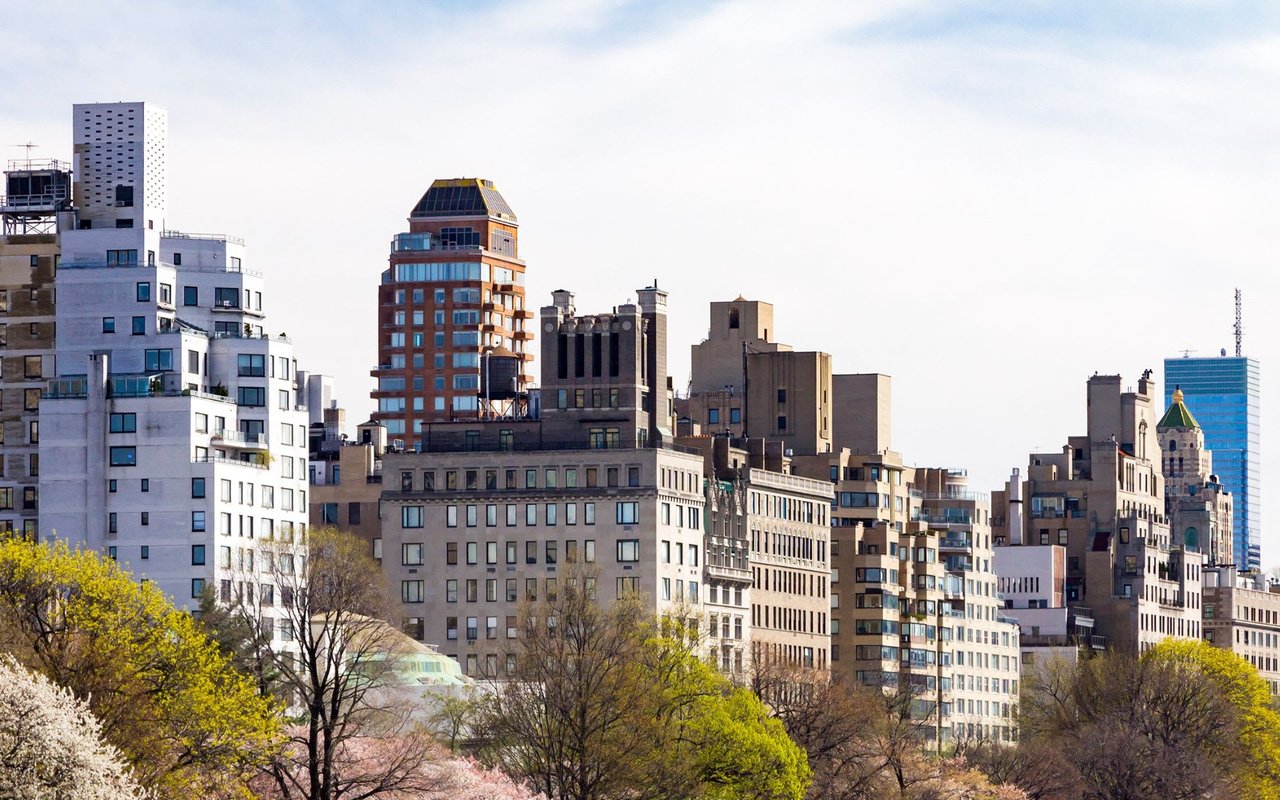
Explore Tribeca Real Estate and Homes for Sale
Made famous for its annual Tribeca Film Festival and being just off-center from NYC's City Hall and financial district.
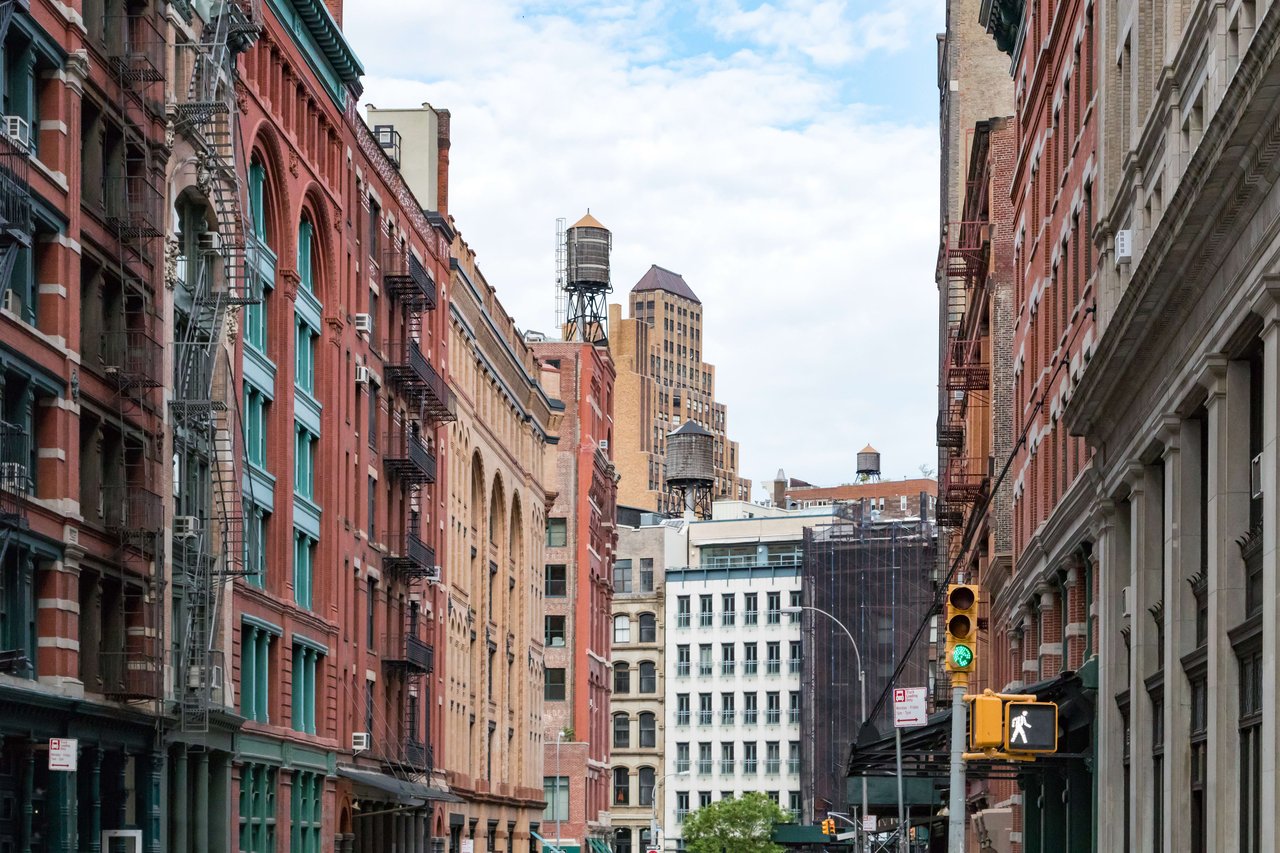
Made famous for its annual Tribeca Film Festival and being just off-center from NYC's City Hall and financial district.
19,698 people live in Tribeca, where the median age is 41 and the average individual income is $216,472. Data provided by the U.S. Census Bureau.
Total Population
Median Age
Population Density Population Density This is the number of people per square mile in a neighborhood.
Average individual Income
TriBeCa is the neighborhood that taught Manhattan a lesson about scale. In an island where square footage is rationed and ceiling heights are negotiated in inches, TriBeCa offers 3,000-square-foot single-floor lofts with 14-foot ceilings and windows the size of storefronts — because the buildings were never designed for people in the first place. They were designed for freight, textiles, and dry goods.
That accident of industrial history is the reason TriBeCa consistently posts the highest median sale price of any Manhattan neighborhood, and the reason its buyers tend to be people who have already lived somewhere else in the city and decided they wanted more room and fewer eyes on them.
This guide covers what the neighborhood actually is, what the housing stock looks like, what your budget buys, and the details that matter once you're past the listing photos.
TriBeCa sits in southwestern Lower Manhattan, on the Hudson River. The name is an acronym — Triangle Below Canal Street — coined by residents and artists in the 1970s, though the neighborhood's actual footprint is closer to a trapezoid than a triangle.
The generally accepted boundaries are Canal Street to the north, where TriBeCa gives way to SoHo; Broadway to the east, bordering Chinatown and the Civic Center; and the Hudson River and West Street to the west. The southern edge is the only genuinely contested one — most brokers and residents draw it at Vesey Street, though Murray Street is also used, with the transition running into the Financial District and Battery Park City.
Practically speaking, this means TriBeCa is bounded on two sides by things that generate almost no residential foot traffic: a river and the office towers of FiDi. That geography is doing a lot of work in explaining why the neighborhood feels the way it does.
The most useful comparison is SoHo, one block north. Both neighborhoods were built from the same industrial stock and converted in the same era. But SoHo's ground floors went to international fashion retail, and the neighborhood now absorbs tourist traffic all day, every day. TriBeCa's ground floors went to restaurants, galleries, design showrooms, and pediatric dentists.
The result is a neighborhood that empties out at night rather than filling up. Weekday evenings on Harrison or Staple Street are quiet enough that you can hear your own footsteps on the Belgian block paving. That quality — genuine residential privacy inside a downtown neighborhood — is why TriBeCa has drawn a specific mix of families, executives, and high-profile residents who value not being observed.
The other defining physical characteristic is scale. Strict landmark protections across most of the neighborhood have preserved a mid-rise profile of five- to twelve-story buildings, which means light reaches street level and the canyon effect of the Financial District never sets in. When new towers do appear — 56 Leonard being the obvious example — they read as exceptions against a low horizon rather than as part of a wall.
What you trade for that is a certain lack of spontaneity. TriBeCa is not a neighborhood where you stumble into things. It rewards residents who know it, not visitors passing through.
TriBeCa is the most expensive residential neighborhood in New York City by median sale price, and the mechanics behind that are structural rather than cyclical.
Median sale prices typically run in the $3.8M to $4.5M range, with price per square foot generally between $2,000 and $2,500 and new development and penthouse product regularly clearing $3,000/SF. Active inventory tends to sit in the range of roughly 120 to 170 listings at any given time — a genuinely thin number for a neighborhood of this profile, and the single most important fact about the market here.
That scarcity is not a temporary supply cycle. Four landmark historic districts cover most of TriBeCa, which caps new ground-up construction almost entirely. The buildings that exist are, in effect, the buildings that will exist. When a large loft in a desirable building comes to market, its true competitive set may be a handful of comparable homes across the entire neighborhood.
Days on market typically runs 60 to 80 days, but that average conceals a split. Well-priced homes in the $2M–$6M range move quickly, sometimes with competition. Ultra-luxury listings above $15M behave differently — they trade on a small, international, opportunistic buyer pool and can sit for a year or more without meaning anything is wrong with the property.
The buyer profile skews heavily toward high-net-worth individuals: finance principals, tech founders, C-suite executives, entertainment figures, and international purchasers. A meaningful share buy through LLCs or trusts, which matters for how you position a listing and which buildings will actually approve a deal.
The housing stock breaks into three categories, and they behave like three separate markets.
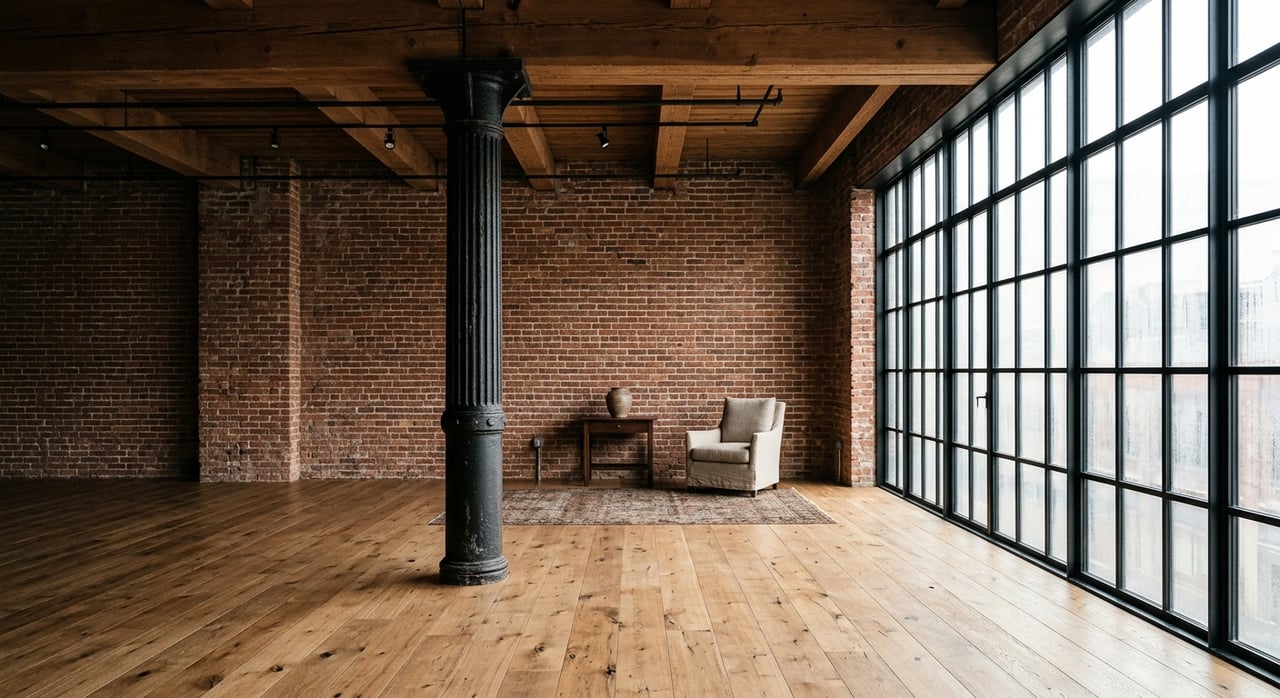
Loft conversions are TriBeCa's signature product and the reason most buyers come here. These are late-nineteenth-century warehouse and store-and-loft buildings converted to residential use from the 1970s onward. The hallmarks are 12- to 15-foot ceilings, exposed brick and heavy timber, cast-iron columns, oversized street-facing windows, and often key-locked elevators opening directly into the apartment. They span condo and co-op ownership, and quality varies enormously depending on when the conversion happened and how much the building has invested since.
New development condominiums are the second category — full-service buildings, both ground-up towers and boutique infill, with amenity packages that go well beyond the Manhattan norm. Underground drive-in motor courts, private pools, screening rooms, and staffed lobbies are standard at the top of this segment. These homes command the highest price per square foot in the neighborhood and appeal to buyers who want loft proportions without loft compromises.
Townhouses are the rarest and most coveted. TriBeCa has very few, most of them converted or heavily reconstructed historic structures. They typically deliver several thousand square feet across multiple floors, internal elevators, private gardens, and in the best cases a curb cut and garage — an amenity that barely exists anywhere else downtown. These trade rarely, often quietly, and pricing on them is more a negotiation than a market.
Four historic districts, designated by the New York City Landmarks Preservation Commission in the early 1990s with a later extension, cover most of the neighborhood. Understanding which one a building sits in tells you a great deal about what you're buying.
The Tribeca West Historic District is the largest, defined by nineteenth-century commercial warehouses, masonry store-and-loft buildings, and the cobblestone corridors most people picture when they picture TriBeCa. Tribeca East, concentrated near Broadway, has the most ornate architecture — cast-iron facades, white marble mercantile palaces, and Italianate detailing. Tribeca North holds the heaviest structures: dry-goods warehouses and waterfront produce buildings with intact loading docks, wrought-iron marquees, and broad brick facades. Tribeca South and its Extension is dominated by five-story Italianate cast-iron store-and-loft buildings dating to the 1850s.
For a buyer, landmark designation cuts two ways. It is the reason the neighborhood looks the way it does and the reason values have been so durable. It is also the reason exterior work — windows, facades, storefronts, rooftop additions — requires LPC approval and takes longer and costs more than it would elsewhere. If you're planning a renovation that touches the building envelope, that timeline needs to be in your underwriting from day one.
Why the floorplates are so large. In the mid-to-late nineteenth century, TriBeCa was New York's principal hub for produce markets, textiles, and dry-goods storage. Warehouses were built on combined, long municipal lots specifically to hold enormous volumes of bulk inventory without interruption. To carry that weight, builders used cast-iron, heavy timber, and later steel structural grids, so loads rested on slender load-bearing columns rather than interior walls.
When these buildings were converted to residential use starting in the 1970s, those unbroken spans translated directly into single-floor layouts of 2,000 to more than 8,000 square feet. It is the closest thing Manhattan has to a suburban footprint stacked vertically — and it cannot be replicated, because nobody builds like that anymore and the zoning wouldn't allow it if they tried.
A handful of buildings set the tone for the market and function as reference points for pricing across the neighborhood.
443 Greenwich Street is an 1882 book-bindery warehouse converted in 2016, and it has become the neighborhood's most discreet address. The building wraps a private interior courtyard and offers an underground drive-in motor court, which means residents can arrive and depart without ever appearing on the sidewalk. That single feature explains most of its appeal to its high-profile owner base.
56 Leonard Street, completed in 2017, is the Herzog & de Meuron tower known universally as the "Jenga building" — sixty stories of cantilevered glass volumes with an Anish Kapoor sculpture at its base. It is the neighborhood's most visible piece of contemporary architecture and the primary source of high-floor river-and-skyline views in TriBeCa.
70 Vestry Street (2018) is Robert A.M. Stern's boutique limestone condominium on the waterfront, with private motor-court access and direct Hudson frontage — a more traditional counterpoint to 56 Leonard's glass.
108 Leonard Street, the former New York Life Insurance Building of 1898, was restored and converted in 2021. It occupies a full city block and retains its McKim, Mead & White Italian Renaissance Revival detailing, making it one of the few buildings in the city offering landmark-quality architecture with full new-development systems and amenities.
30 Park Place (2016), also Stern, is an 82-story limestone tower on TriBeCa's southern edge pairing Four Seasons Private Residences with hotel service. It sits at the boundary with the Financial District, which shows up in its pricing relative to comparable product deeper into the neighborhood.
Pricing in TriBeCa sorts into fairly consistent bands based on building age, service level, and finish quality. This is the most useful frame I can give a buyer before we start touring.
Budget Tier | Typical Range | Average $/SF | What It Buys |
|---|---|---|---|
Entry-level / pre-war co-op | $1.5M – $2.5M | $1,500 – $1,800 | A modest one-bedroom or smaller loft in an authentic, self-managed historic co-op — often minimal amenities or a walk-up |
Mid-tier classic loft | $3.5M – $6.0M | $2,000 – $2,400 | A genuine 2–3 bedroom converted loft of roughly 2,000–2,800 SF, high ceilings, key-locked elevator |
Prime new development | $7.0M – $15.0M | $2,500 – $3,200 | A 3–4 bedroom in a full-service doorman building with real amenities, parking, and views |
Trophy penthouse or townhouse | $20M – $50M+ | $3,500 – $5,000+ | Multi-story townhouses or penthouses with private outdoor pools, wrap terraces, direct river views |
The gap between the second and third tiers is where most buyers make their real decision, and it's less about size than about service. A $5M classic loft and an $8M new-development three-bedroom may deliver similar square footage. What separates them is a doorman, a gym, a package room, functioning central air, and a building that will handle a leak at 2 a.m. Whether that's worth three million dollars depends entirely on how you live.
The entry-level tier deserves a caution. Sub-$2.5M product in TriBeCa is almost always in older self-managed co-ops, and the low purchase price frequently reflects deferred capital work. Assessments in these buildings can be substantial, and the reserve fund is more important to read carefully than the offering plan.
This is where TriBeCa diverges most sharply from the classic Manhattan neighborhoods, and it's a distinction that materially changes who can buy here.
On the Upper East Side and Upper West Side, cooperatives account for roughly 70–75% of the housing stock. In TriBeCa, that ratio is inverted: condominiums make up roughly 60–65% of the market. The reason is chronological. TriBeCa's residential transformation happened primarily in the late twentieth and early twenty-first centuries, by which point developers were converting industrial buildings directly into condos and building new condo towers, rather than forming co-ops.
The practical consequences are significant. Condos permit straightforward subletting, flexible financing, and purchase through LLCs, trusts, or foreign entities without a board interview and without opening your personal finances to a committee of neighbors. That makes TriBeCa accessible to international buyers, investors, pied-à-terre purchasers, and anyone whose wealth is structured in ways a co-op board would find inconvenient — buyers who are effectively screened out of much of uptown Manhattan.
TriBeCa's remaining co-ops are mostly early artist-loft conversions from the 1970s and 1980s. They typically trade at a 15–20% discount per square foot relative to comparable condos, which can represent real value for a primary-residence buyer with clean, documentable finances. But they often carry stricter liquidity requirements post-closing, tighter sublet rules, and in some cases lingering artist-in-residence certification quirks from the original conversion. If you're considering one, that discount needs to be weighed against your own flexibility, not just your budget.
TriBeCa's food scene reflects the neighborhood's temperament: serious restaurants, almost no clubs.
The Odeon, open on West Broadway since 1980, is the anchor and the origin story. Its red neon and steak frites defined the neighborhood's artistic golden age and it remains a genuine local institution rather than a nostalgia exercise. Frenchette, from Riad Nasr and Lee Hanson, is the James Beard-winning modern French bistro that reestablished TriBeCa as a destination for serious diners — natural wine list, high-energy room, hard reservation. Locanda Verde, Andrew Carmellini's Italian tavern inside Robert De Niro's Greenwich Hotel, runs from breakfast through dinner and is the neighborhood's default for both a business lunch and a Sunday with kids. Bubby's on Hudson Street has been serving buttermilk biscuits and pie for over three decades and reliably has a weekend line out the door.
Evenings run through hotel bars and intimate rooms rather than volume venues — the Drawing Room at the Greenwich Hotel, Brandy Library and Django for cocktails, Smith & Mills and the Roxy Bar for something closer to a neighborhood bar. If you want a club, you go to the Meatpacking District. If you want a martini and a conversation you can hear, you stay in TriBeCa.
Retail here is boutique-scaled and mostly clustered on Franklin Street and Hudson Street — independent apparel, interior design showrooms, galleries, and labels like Nili Lotan and Jacadi. There is no mall, no flagship-chain corridor, and no equivalent to SoHo's Broadway. That is a feature for residents and a shock for anyone expecting downtown to mean shopping.
For daily logistics, the Whole Foods Market at Greenwich and Warren is the neighborhood's main grocery anchor — multi-level and large enough to handle a real household shop. Beyond it, residents use Gourmet Garage, the year-round Tribeca Greenmarket at Greenwich and Chambers, and Eataly just south in the Financial District.
For genuine luxury retail, Brookfield Place sits directly across West Street in Battery Park City, with Gucci, Louis Vuitton, and Bottega Veneta alongside the Hudson Eats dining concourse. It's a ten-minute walk and functions as TriBeCa's de facto shopping annex — close enough to use constantly, far enough that its crowds never reach the neighborhood.
TriBeCa's western border is a park, which is a rare thing to be able to say about a Manhattan neighborhood.
Hudson River Park runs the length of West Street with paved running and cycling paths, lawns, and open river views west toward New Jersey. Pier 25, at 985 feet the longest pier in the park, is the recreational center of gravity: Manhattan's only 18-hole miniature golf course, sand volleyball courts, a skate park, a turf field, a playground, and historic vessel moorings, plus the seasonal Grand Banks oyster bar aboard a schooner. Pier 26 takes an ecological approach with a tide deck and eco-habitat landscape, a sports field, and City Vineyard's rooftop terrace.
Inland, Washington Market Park at Greenwich and Chambers is a 1.6-acre park that functions as the neighborhood's living room — playground, gazebo, community garden, and the site of most local seasonal events. Just south, Rockefeller Park in Battery Park City adds nine acres of lawn, duck ponds, art installations, and children's play areas.
The combined effect is that TriBeCa families have more accessible outdoor space per household than almost anywhere else below 59th Street, without needing to cross a major avenue to get to it.
The Tribeca Festival was founded in 2002 by Robert De Niro, Jane Rosenthal, and Craig Hatkoff explicitly to bring life back to Lower Manhattan after September 11th. It has since grown into a major international film and culture event held each spring, drawing premieres, panels, and global press to venues throughout the neighborhood. For residents it means a busy, high-visibility couple of weeks; for the neighborhood's identity, it has been the single most effective piece of place-making in downtown Manhattan.
Less widely known is that TriBeCa has quietly reemerged as one of New York's most significant contemporary art districts. Over the past several years, dozens of established galleries — Bortolami, Alexander Gray Associates, P.P.O.W., among many others — have moved into ground-floor loft spaces along Walker, White, and Franklin Streets, drawn by the same high ceilings and column-free spans that attract residential buyers. The gallery scene here now rivals Chelsea's in quality if not in scale, and it happens at street level, woven directly into residential blocks.
The BMCC Tribeca Performing Arts Center on Chambers Street houses two theaters programming dance, music, and theater year-round, and serves as a festival screening venue.
School quality is one of the primary reasons families choose TriBeCa over comparable downtown neighborhoods, and it's worth being precise about the options.
P.S. 234 Independence School on Greenwich Street is the neighborhood's flagship zoned public elementary (K–5), known for an inquiry-based curriculum, an unusually active parent association, and strong outcomes. Its zone is a real driver of value on certain blocks. P.S. 150, the TriBeCa Learning Center (3-K–5), is a small, boutique public elementary with notably small class sizes and a tight community feel — a genuine alternative rather than a fallback.
On the private side, The Washington Market School operates two neighborhood facilities as a Montessori- and Reggio Emilia-influenced preschool and kindergarten, and functions as the default early-childhood pipeline for much of the neighborhood.
Stuyvesant High School sits on Chambers Street at the Hudson — one of the city's specialized public high schools, admission by SHSAT, and globally recognized for STEM. Being zoned near it confers no admissions advantage, but having it in the neighborhood shapes the local culture in ways families notice.
If you are buying with school zoning in mind, verify the current zone lines against the specific address before you go into contract. Zones are redrawn, and a building's school zone is not always what a listing says it is.
What does "TriBeCa" stand for? Triangle Below Canal Street. The name was coined by residents in the 1970s, though the actual boundaries form more of a trapezoid.
Where is TriBeCa located? Lower Manhattan, bounded by Canal Street to the north, Broadway to the east, the Hudson River to the west, and Vesey or Murray Street to the south.
Why is TriBeCa real estate so expensive? Supply. Four landmark historic districts sharply restrict new construction, so inventory can't expand to meet demand. Combine fixed, thin supply with a housing stock nobody can replicate — 2,000-to-8,000-square-foot single-floor lofts with 14-foot ceilings — plus top-tier school zoning and waterfront access, and you get the highest median price in the city.
Is TriBeCa good for families? Yes, and it's one of the strongest options in Manhattan. Highly regarded zoned public elementary schools, low-traffic cobblestone side streets, low crime, and direct access to Hudson River Park, Pier 25, and Washington Market Park make it unusually workable with children. The main constraint is price per bedroom.
What's the difference between living in TriBeCa and SoHo? Foot traffic. SoHo's ground floors are international fashion retail, and the neighborhood absorbs tourist volume all day. TriBeCa's are restaurants, galleries, and services. Same architecture, opposite street life.
Are there more condos or co-ops in TriBeCa? Condos, at roughly 60–65% of the housing stock — the reverse of the Upper East and Upper West Sides. This makes TriBeCa considerably more accessible to LLC purchasers, international buyers, and investors.
Is TriBeCa a good investment? The supply constraint that drives pricing also supports durability, and the condo-heavy stock allows for straightforward subletting and resale. That said, the ultra-luxury tier above $15M is a genuinely different market with a small buyer pool and longer marketing times — how you underwrite depends heavily on which tier you're entering.
If you're considering a move into or out of TriBeCa, the specifics matter more here than almost anywhere else in Manhattan — which historic district a building sits in, how a 1970s conversion was actually executed, whether a co-op's reserve fund can absorb the facade work it's been deferring, and what a column-free 3,000-square-foot floorplate is genuinely worth against a serviced new-development three-bedroom.
I'm Carol Staab, a Senior Global Real Estate Advisor and Licensed Associate Real Estate Broker with Sotheby's International Realty, with 28 years advising buyers and sellers in Manhattan's luxury market. My practice spans the city's premier corridors — Central Park, the Upper East Side, Fifth Avenue, Billionaires' Row, and prime downtown Manhattan — with a specialization in $4M+ and ultra-luxury co-ops and condominiums. RealTrends ranks me among the top 1.5% of real estate professionals nationwide, #48 among individual brokers in New York City by sales volume, and #5 among Sotheby's International Realty individual brokers in New York City. I've represented more than $200 million in Manhattan luxury sales, including both seller and buyer in the $28.4 million all-cash sale at The Ritz-Carlton Residences on Central Park South, which went from launch to contract in 45 days.
Clients call me the Real Estate Doctor because my approach starts with diagnosis rather than marketing. Every property has its own architecture, history, buyer profile, and competitive position, and understanding those differences before a home reaches the market is what separates selling a property from maximizing its value. That work is particularly relevant for distinctive, difficult-to-position, or previously unsold homes — the kind TriBeCa produces regularly.
I also write The Pulse, a market intelligence report on Manhattan's $4M+ luxury market followed by founders, global investors, attorneys, wealth advisors, and family offices. It's a good place to start if you want to understand what's actually happening in this market before you make a decision.
Whether you're evaluating a specific TriBeCa loft, weighing the neighborhood against other downtown options, or preparing to bring a home to market, you're welcome to reach out for a private conversation. Every client works with me directly, from initial analysis through closing.
There's plenty to do around Tribeca, including shopping, dining, nightlife, parks, and more. Data provided by Walk Score and Yelp.
Explore popular things to do in the area, including Dyer Heights GM, Control Theory Jiu Jitsu, and Vince Trained You.
| Name | Category | Distance | Reviews |
Ratings by
Yelp
|
|---|---|---|---|---|
| Shopping | 0.05 miles | 0 reviews | 0/5 stars | |
| Active | 0.26 miles | 0 reviews | 0/5 stars | |
| Active | 0.29 miles | 0 reviews | 0/5 stars | |
| Active | 0.31 miles | 0 reviews | 0/5 stars | |
| Active | 0.36 miles | 0 reviews | 0/5 stars | |
| Active | 0.37 miles | 0 reviews | 0/5 stars | |
| Active | 0.47 miles | 0 reviews | 0/5 stars | |
| Beauty | 0.34 miles | 1 review | 5/5 stars | |
| Beauty | 0.37 miles | 0 reviews | 0/5 stars | |
|
|
||||
|
|
||||
|
|
||||
|
|
||||
|
|
||||
|
|
Tribeca has 8,819 households, with an average household size of 2. Data provided by the U.S. Census Bureau. Here’s what the people living in Tribeca do for work — and how long it takes them to get there. Data provided by the U.S. Census Bureau. 19,698 people call Tribeca home. The population density is 64,728 and the largest age group is Data provided by the U.S. Census Bureau.
Total Population
Population Density Population Density This is the number of people per square mile in a neighborhood.
Median Age
Men vs Women
Population by Age Group
0-9 Years
10-17 Years
18-24 Years
25-64 Years
65-74 Years
75+ Years
Education Level
Total Households
Average Household Size
Average individual Income
Households with Children
With Children:
Without Children:
Marital Status
Blue vs White Collar Workers
Blue Collar:
White Collar:
October 1, 2026
September 24, 2026
Pulse
Carol Staab | September 16, 2026
May 14, 2026
September 17, 2026

Carol Staab | September 9, 2026
Understanding Mortgage Pre-Approval Before You Buy in the Manhattan Real Estate Market.

Carol Staab | April 17, 2024
‘80s throwback design and natural materials are just two exciting trends to try out in your New York City home.
September 10, 2026
Pulse
Carol Staab | September 8, 2026
Carol Staab | October 4, 2024
The strategic tips for your success.
September 3, 2026
Carol Staab | September 2, 2026
On Manhattan’s Most Interesting Art Museums and Galleries.
Pulse
Carol Staab | August 31, 2026
August 27, 2026

Carol Staab | August 26, 2026
Green Space Becomes the Ultimate Manhattan Luxury: How Outdoor Gardens and Rooftops Shape Life in Manhattan Homes.
Pulse
Carol Staab | August 24, 2026
August 20, 2026
Pulse
Carol Staab | August 18, 2026
Pulse
Carol Staab | August 9, 2026
August 13, 2026
Carol Staab | August 10, 2026
A Loose Outline of How You Might Spend a Day Here.

Carol Staab | August 10, 2026
Simple Color Choices That Reshape How Your Space Feels.
August 6, 2026
August 6, 2026

Carol Staab | August 5, 2026
Design a Reading Retreat That Fits Your Manhattan Home.
Pulse
Carol Staab | July 24, 2026
Carol Staab | July 23, 2026
Manhattanites Have a Special Relationship with Space and Time.

Carol Staab | October 4, 2024
Discover the excitement.
July 23, 2026
Carol Staab | May 5, 2025
Scouring Manhattan’s cafes, from corner shops to well-known chains.
July 16, 2026
July 9, 2026
Carol Staab | July 8, 2026
Your Insider Guide to Buying One of New York City's Most Coveted Properties.
Carol Staab | July 8, 2026
Preserving the Past While Living in the Present.
Pulse
Carol Staab | July 8, 2026

Carol Staab | May 5, 2025
Accomplish your fitness goals efficiently at a Manhattan gym near you.
July 2, 2026
Pulse
Carol Staab | July 1, 2026
Carol Staab | May 5, 2025
Delve into nine of Manhattan’s world-class residential areas.
June 25, 2026

Carol Staab | April 16, 2024
Where you should go when you feel the need for retail therapy.
Pulse
Carol Staab | June 15, 2026
June 18, 2026
Pulse
Carol Staab | June 11, 2026
June 11, 2026
June 4, 2026

Carol Staab | October 4, 2024
Planning your timeline effectively.
Pulse
Carol Staab | May 29, 2026
May 28, 2026
May 21, 2026
Pulse
May 18, 2026
Pulse
Carol Staab | April 30, 2026
Carol Staab | October 30, 2024
Experience the melting pot of structural design in Manhattan.
Blog
Carol Staab | May 8, 2026
Setting the Stage for a Faster, More Profitable Sale.
Pulse
Carol Staab | April 30, 2026

Pulse
Carol Staab | March 31, 2026
Pulse
Carol Staab | March 23, 2026

Pulse
Carol Staab | February 19, 2026
Pulse
Carol Staab | February 11, 2026
Pulse
Carol Staab | September 3, 2025
Pulse
Carol Staab | September 15, 2025
Pulse
Carol Staab | September 25, 2025
Carol Staab | April 17, 2024
Read on to learn more about creating a compelling space in preparation to sell.
Carol Staab | April 17, 2024
Plan for your retirement with sound real estate and financial choices today.

Carol Staab | October 4, 2024
A Culinary Journey Through Manhattan's Finest Dining Establishments.
Pulse
Carol Staab | September 9, 2025
Pulse
Carol Staab | August 27, 2025
Pulse
Carol Staab | July 29, 2025
Pulse
Carol Staab | August 2, 2025
Pulse
Carol Staab | August 17, 2025
Pulse
Carol Staab | August 10, 2025
Pulse
Carol Staab | July 7, 2025
Pulse
Carol Staab | June 16, 2025

Pulse
Carol Staab | June 18, 2025
Pulse
Carol Staab | June 10, 2025
Pulse
Carol Staab | June 3, 2025
Pulse
Carol Staab | May 14, 2025

Pulse
Carol Staab | May 28, 2025
Pulse
Carol Staab | May 8, 2025

Carol Staab | May 5, 2025
Manhattan’s real estate market offers high potential, but smart investing requires solid strategy, research, and the right connections.
Carol Staab | May 5, 2025
Transform your Manhattan home into a space that blends style and function effortlessly.
Carol Staab | May 5, 2025
Your next chapter awaits.
Carol Staab | May 5, 2025
2025 is your chance to reimagine luxury living in Manhattan. What will your dream space look like?
Carol Staab | May 5, 2025
Your dream Manhattan home awaits.

Carol Staab | May 5, 2025
Winter in Manhattan is just the beginning of your adventure — get ready to embrace the magic.
Carol Staab | May 5, 2025
Breathe easier and live better in your Manhattan home by making air quality a top priority.
Pulse
Carol Staab | April 2, 2025

Pulse
Carol Staab | February 18, 2025

Pulse
Carol Staab | December 30, 2024

Pulse
Carol Staab | December 23, 2024
Pulse
Carol Staab | December 18, 2024

Pulse
Carol Staab | December 10, 2024
Pulse
Carol Staab | December 3, 2024
Pulse
Carol Staab | November 26, 2024
Pulse
Carol Staab | November 20, 2024
Pulse
Carol Staab | November 12, 2024
Pulse
Carol Staab | November 5, 2024
Carol Staab | October 30, 2024
Elevate your Manhattan condo with thoughtful upgrades that blend style, function, and urban sophistication.
Carol Staab | October 30, 2024
Achieve homeownership in the West Village with confidence.
Carol Staab | October 30, 2024
Elevate your living experience with a high-rise condo in Manhattan.
Carol Staab has an innovative luxury real estate practice that provides an elite level of concierge service through unparalleled world-class marketing and a hands-on business approach. Her mission is to give her clients an exceptional experience while helping them achieve the best results possible.