Chelsea, NY Homes for Sale in a Vibrant Manhattan Enclave
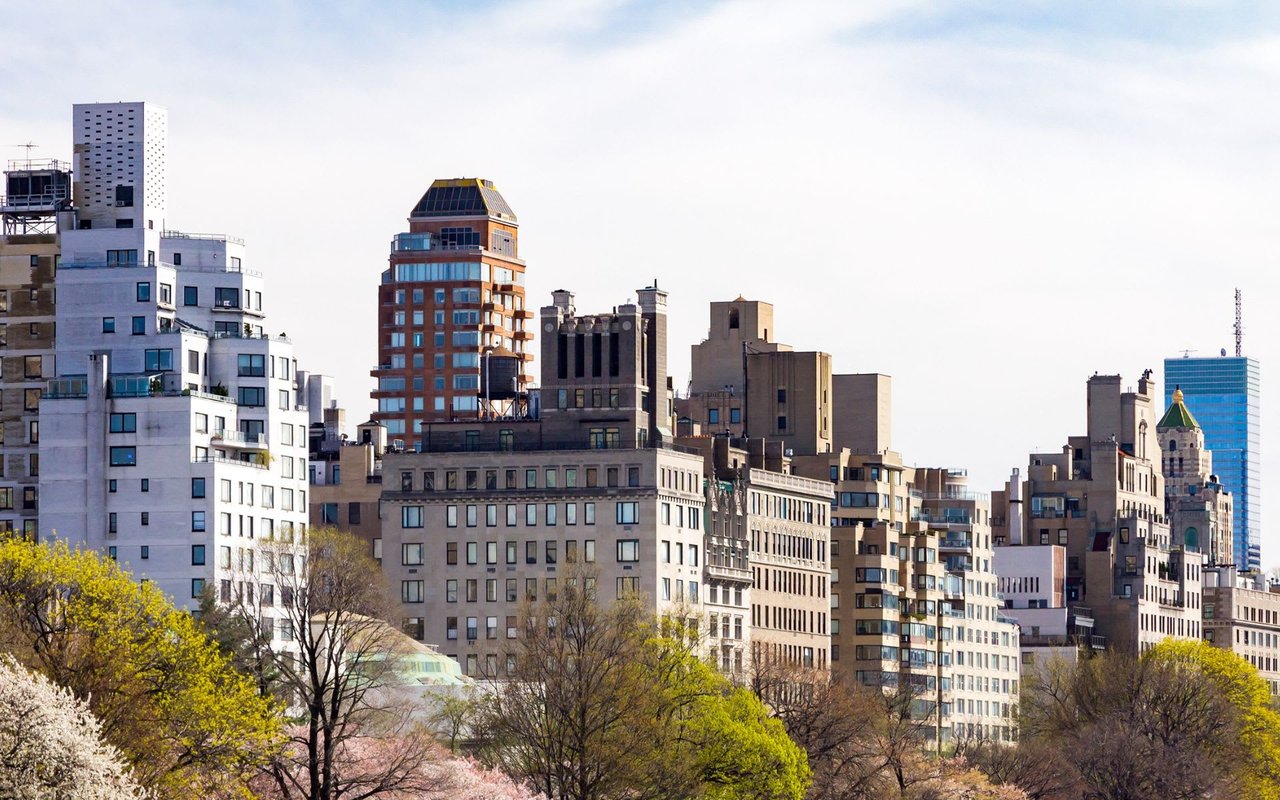
This incredibly artsy and hip NYC enclave has a diverse range of contemporary architecture, making for an urban playground.
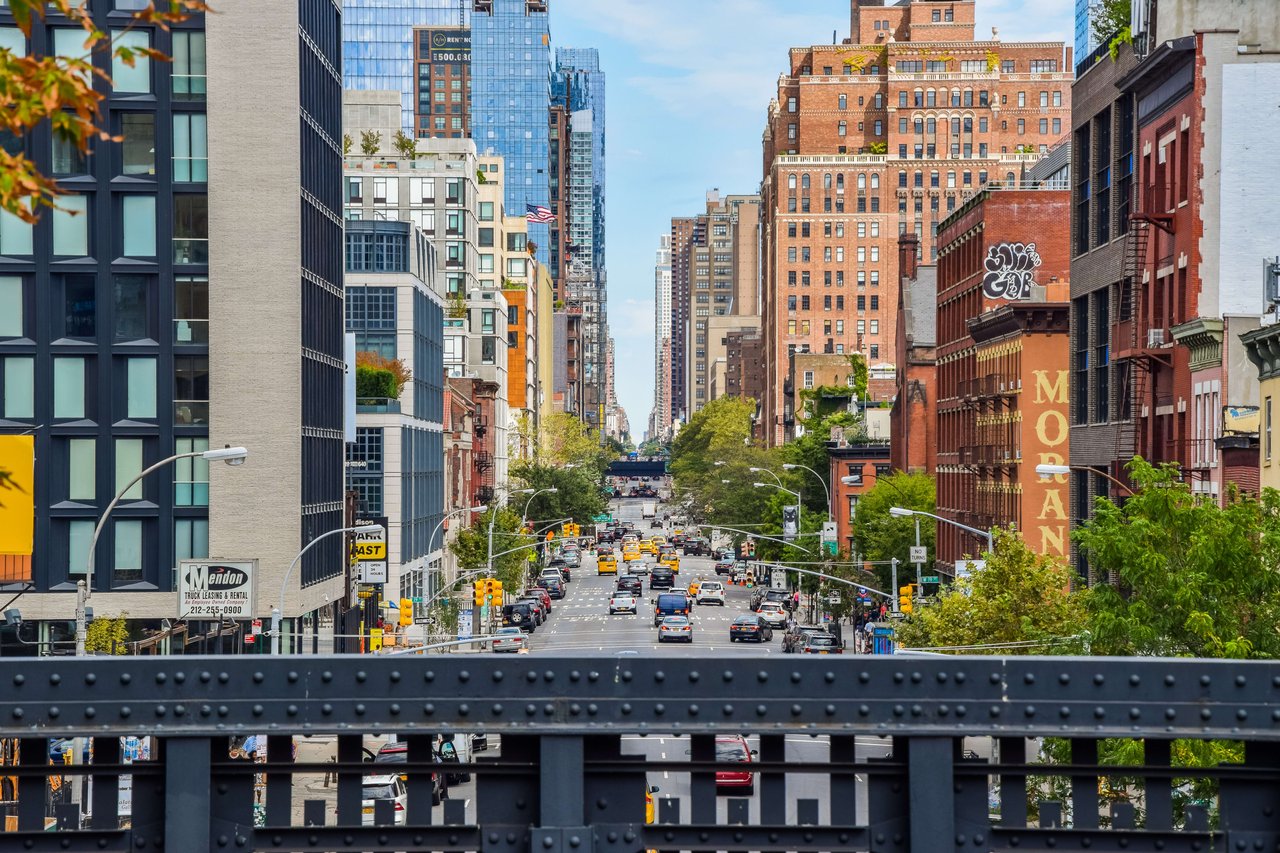
This incredibly artsy and hip NYC enclave has a diverse range of contemporary architecture, making for an urban playground.
56,634 people live in Chelsea, where the median age is 42 and the average individual income is $131,882. Data provided by the U.S. Census Bureau.
Total Population
Median Age
Population Density Population Density This is the number of people per square mile in a neighborhood.
Average individual Income
Chelsea is one of the few Manhattan neighborhoods where you can buy a 1840s Greek Revival townhouse, a 1920s loft with cast-iron columns, or a Zaha Hadid–designed condominium within a ten-minute walk of each other. That range is the whole story of the neighborhood, and it's the reason buyers who tour Chelsea often end up recalibrating what they thought they wanted. What follows is a working guide to how the neighborhood is actually organized, what it costs, and how the sub-markets differ from one another.
Chelsea occupies the West Side of Manhattan between the Meatpacking District and Hudson Yards. Its southern edge is 14th Street, where the neighborhood meets the Meatpacking District and the West Village. Its eastern boundary is Sixth Avenue, beyond which you're in Flatiron, NoMad, or Gramercy. The Hudson River and West Street form the western edge. The northern boundary is the one people argue about — some draw it at 30th Street, others push it to 34th Street, where Hell's Kitchen and Hudson Yards begin. For practical purposes, expect listings north of 28th Street to be marketed as either Chelsea or Hudson Yards depending on which sounds better for the price.
Within those boundaries, Chelsea functions as four distinct markets rather than one.
West Chelsea, west of Tenth Avenue between roughly 18th and 28th Streets, is the gallery district and the newest-money part of the neighborhood. More than 300 contemporary art galleries operate here alongside glass residential towers that went up after the High Line opened. This is where Chelsea's ceiling prices live.
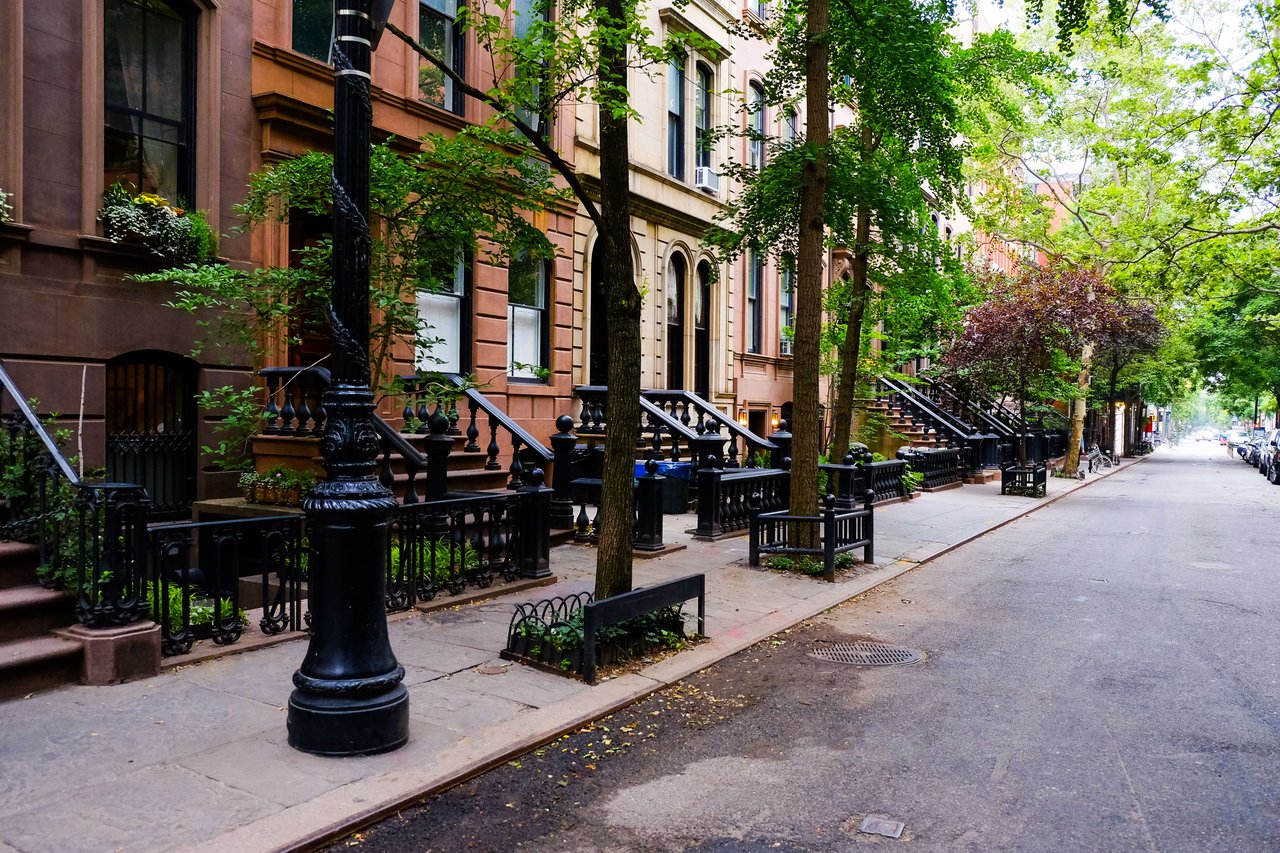
The Chelsea Historic District sits inland, bounded loosely by 20th and 23rd Streets between Eighth and Tenth Avenues. Preserved mid-19th-century Greek Revival and Italianate rowhouses, deep front yards, and tree canopy — it feels more like Brooklyn Heights than Midtown.
Central and East Chelsea runs along Seventh and Eighth Avenues and is the neighborhood's residential and commercial core. Mixed-use prewar apartment buildings, co-ops, and street-level retail. This is where the majority of Chelsea's inventory actually sits, and where the most attainable pricing is found.
The Flower and Fur District in northeast Chelsea, along Sixth and Seventh Avenues near 28th Street, is the neighborhood's most transitional pocket — historically wholesale floral markets and commercial lofts, increasingly residential conversions.
Which of these four you buy in matters more than the Chelsea label itself. A block west of Tenth Avenue can trade at nearly double the price per square foot of a block east of Eighth.
Chelsea is a high-value, high-turnover market with unusual internal spread. Median sales prices generally run between $1.6 million and $1.9 million, with median price per square foot in the $1,600 to $1,750 range. Median rents land between $5,500 and $6,100 per month, and the neighborhood skews heavily rental at roughly 68% renters to 32% owners — a mix that shapes everything from building policies to weekday street activity.
Days on market typically run around 70 to 80 days. That's a reasonable pace for Manhattan and reflects a market with real depth on both sides rather than one dominated by bidding wars. Sale prices average roughly 3% below asking, which means buyers here have modest negotiating room — more than in tighter downtown submarkets like the West Village, less than in soft new-development inventory.
The single most important thing to understand about Chelsea's numbers is that the median is misleading. Inventory splits into two tiers that barely overlap: prewar co-ops with median entry points under $1 million, and West Chelsea glass condominiums regularly trading from $2 million into the $5 million-plus range. There isn't much of a middle. Buyers who come in with a $1.5 million budget often find themselves choosing between the top of the co-op market and the bottom of the condo market, and those are very different ownership experiences.
Rental demand stays consistently strong, supported by proximity to Midtown South's tech corridor — Google's campus among others — and by the Hudson River waterfront. For investors, that combination of high rents and stable absorption is the draw, though co-op sublet restrictions rule out much of the inventory.
Because Chelsea's price tiers diverge so sharply by ownership structure, this is one place where a side-by-side view genuinely helps:
Property Type | Median Sales Price | Median $/Sq. Ft. | What to Expect |
|---|---|---|---|
Condominiums | $2.2M – $2.9M | $1,600 – $1,800 | Flexible sublet policies, full-service amenities, investor-friendly. West Chelsea trophy product pushes past $2,500/sq. ft. |
Co-operatives | $900K – $1.1M | $1,100 – $1,300 | The neighborhood's value entry point. Board approval, primary-residence rules, and 20–30%+ down payments apply. |
Townhouses | $5M – $12M+ | $1,800 – $2,500+ | Historic single- and multi-family structures, concentrated in the Historic District. Inventory is genuinely scarce. |
The co-op discount is the story here. You are paying roughly $500 to $600 less per square foot for co-op ownership, and in exchange you accept a board process, restrictions on renting, and a cap on how quickly you can exit. For a primary-residence buyer planning to stay five-plus years, that trade is often the best value in the neighborhood. For anyone who needs optionality — a possible relocation, a pied-à-terre, an eventual rental — the condo premium buys something real.
Townhouse pricing is the least predictable category because each sale is essentially a one-off. Condition, whether the building is single-family or has been carved into units, and whether it sits on a landmarked block all move the number by millions.
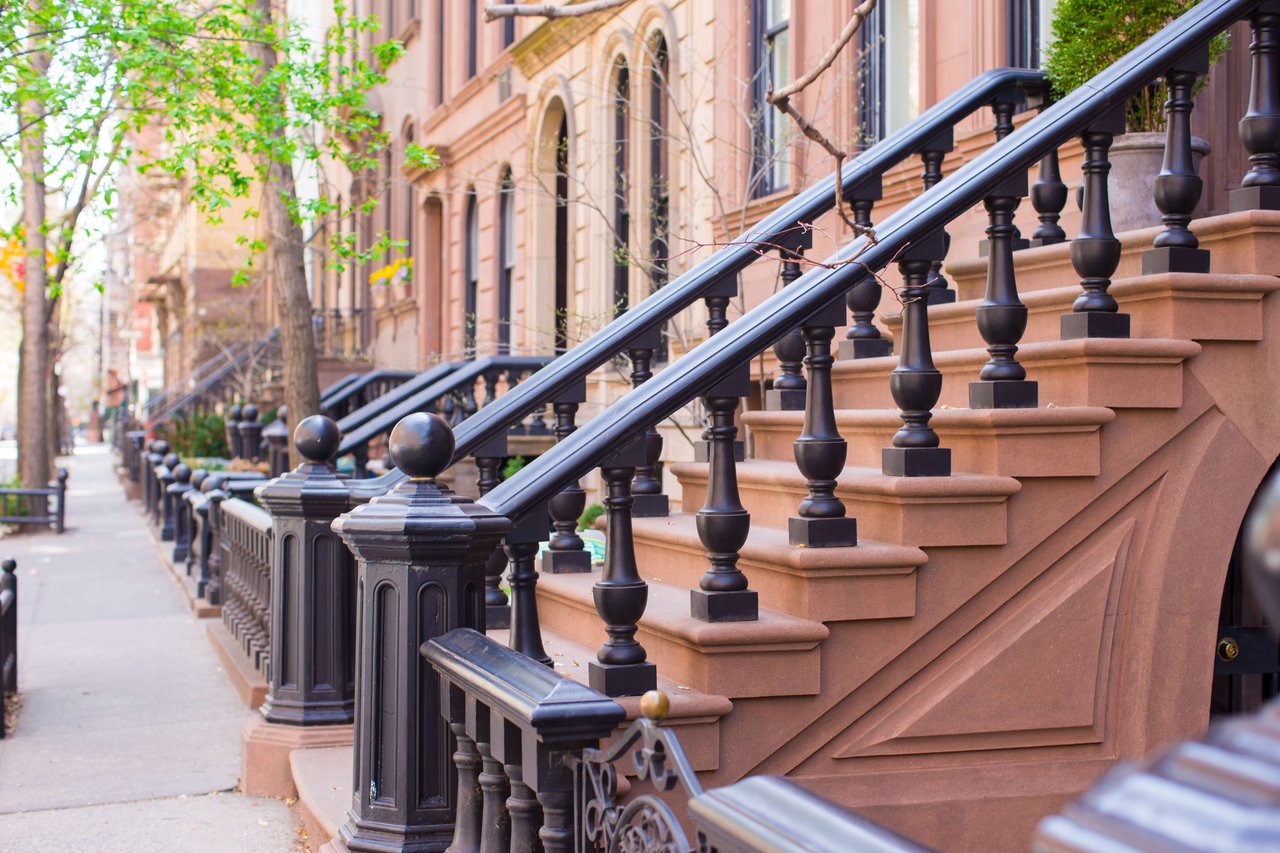
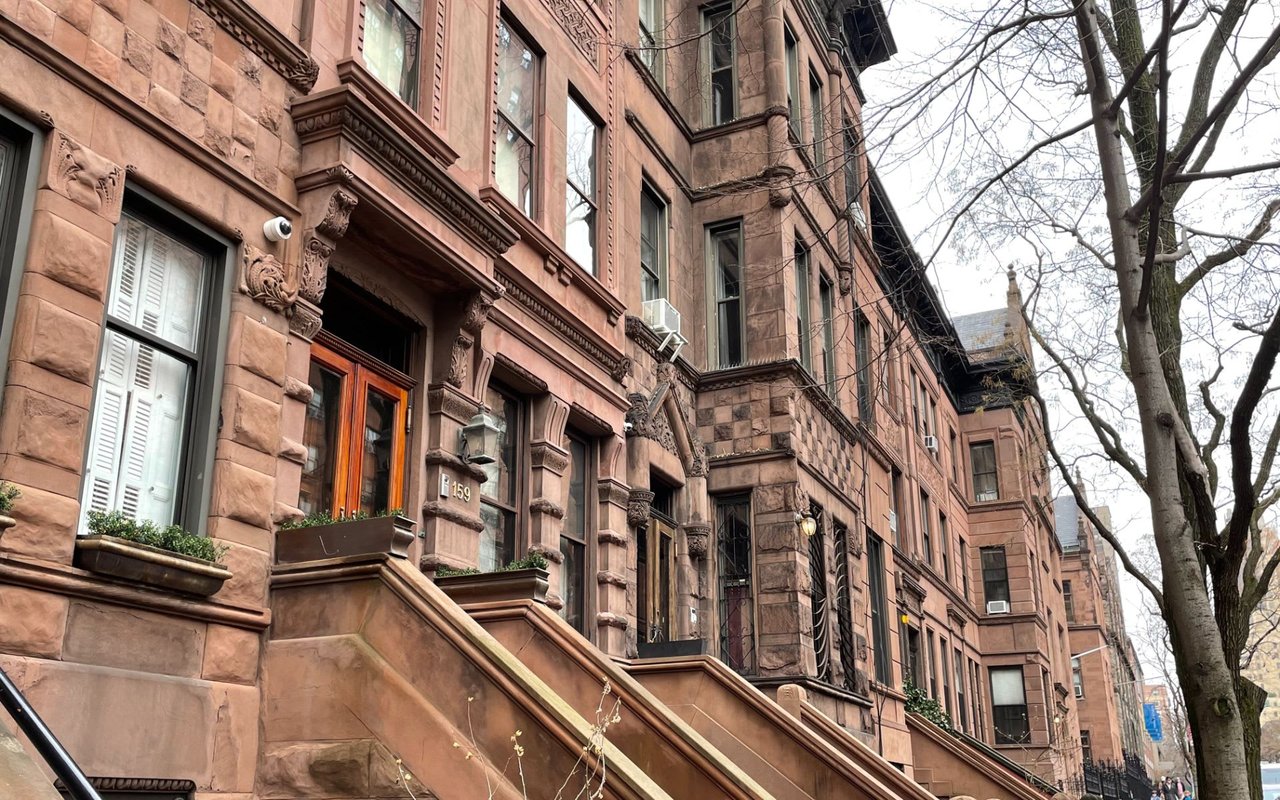
Prewar walk-ups and rowhouses are the neighborhood's backbone — four- to six-story brick and brownstone buildings from the late 19th and early 20th centuries. Interiors tend toward studios and intimate one-bedrooms with exposed brick, decorative or working fireplaces, and original hardwood. There's no doorman and usually no elevator, which is precisely why the pricing works. These buildings attract first-time buyers, young professionals, and people who would rather have a fireplace and a stoop than a package room.
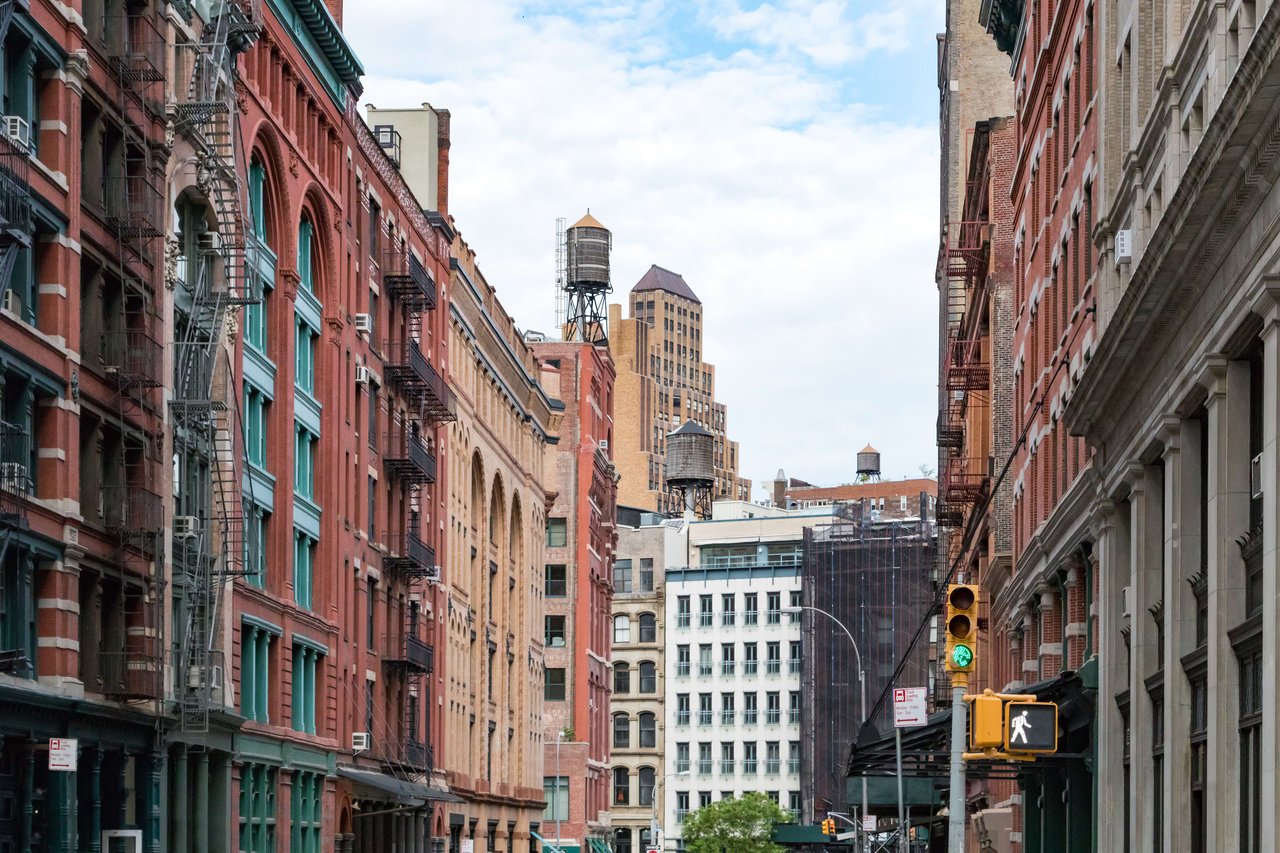
Converted lofts trace Chelsea's industrial past. Former printing houses, manufacturing plants, and warehouses along Sixth Avenue, Seventh Avenue, and through West Chelsea were carved into residences with 11- to 14-foot ceilings, cast-iron columns, oversized picture windows, and heavy timber framing intact. The Chelsea Mercantile at 252 Seventh Avenue and Loft 25 at 420 West 25th Street are the reference points. Loft buyers should look carefully at window exposure and column placement — the raw square footage on a loft floor plan doesn't always translate into usable rooms, and bedroom configurations in converted spaces can be windowless or awkwardly interior.
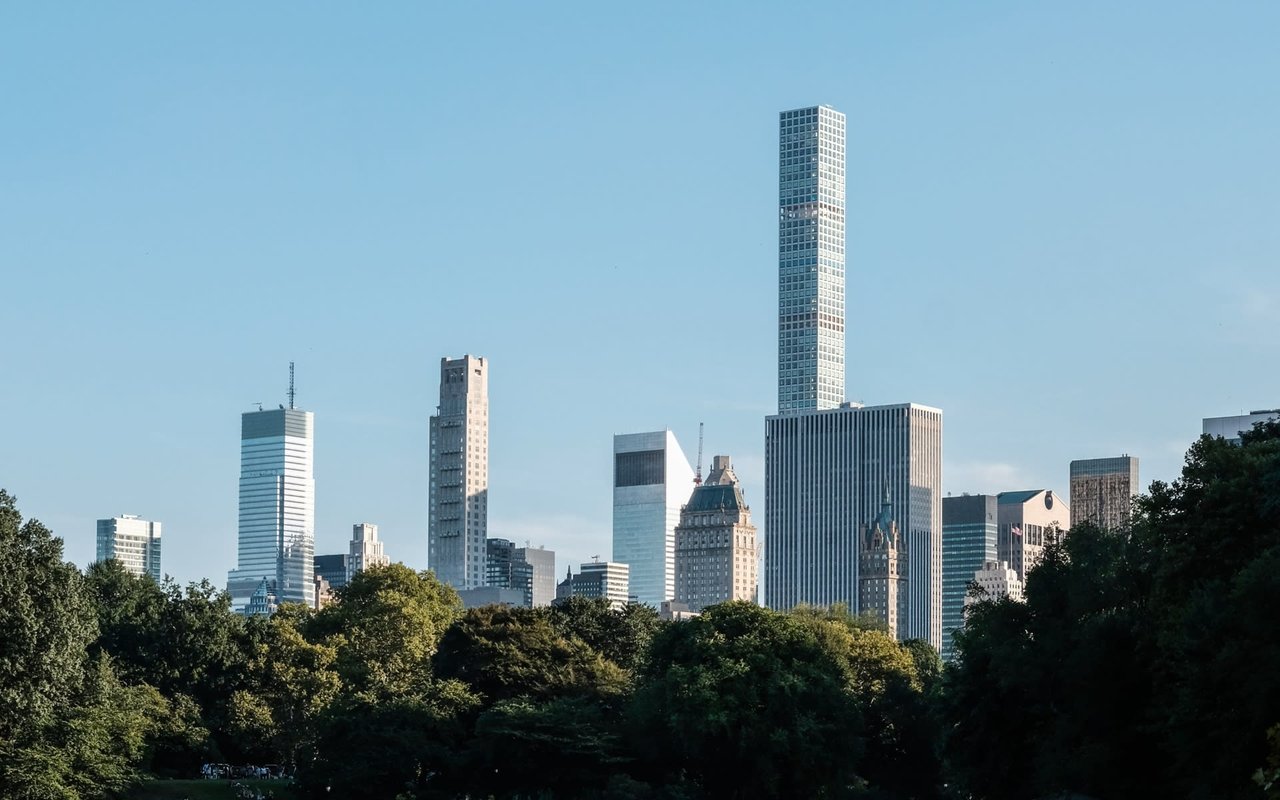
Luxury condominiums and starchitect towers are the post-2000 layer, built almost entirely along the High Line corridor and the West Chelsea waterfront by architects with global name recognition — Frank Gehry, Jean Nouvel, Zaha Hadid. Expect full-time door staff, wellness centers, indoor pools, private terraces, direct-entry elevators, and floor-to-ceiling glass framing the Hudson. These are the buildings that set Chelsea's price records, and they're also where resale competition is most intense, because a buyer at that price point is choosing among a dozen comparable units.
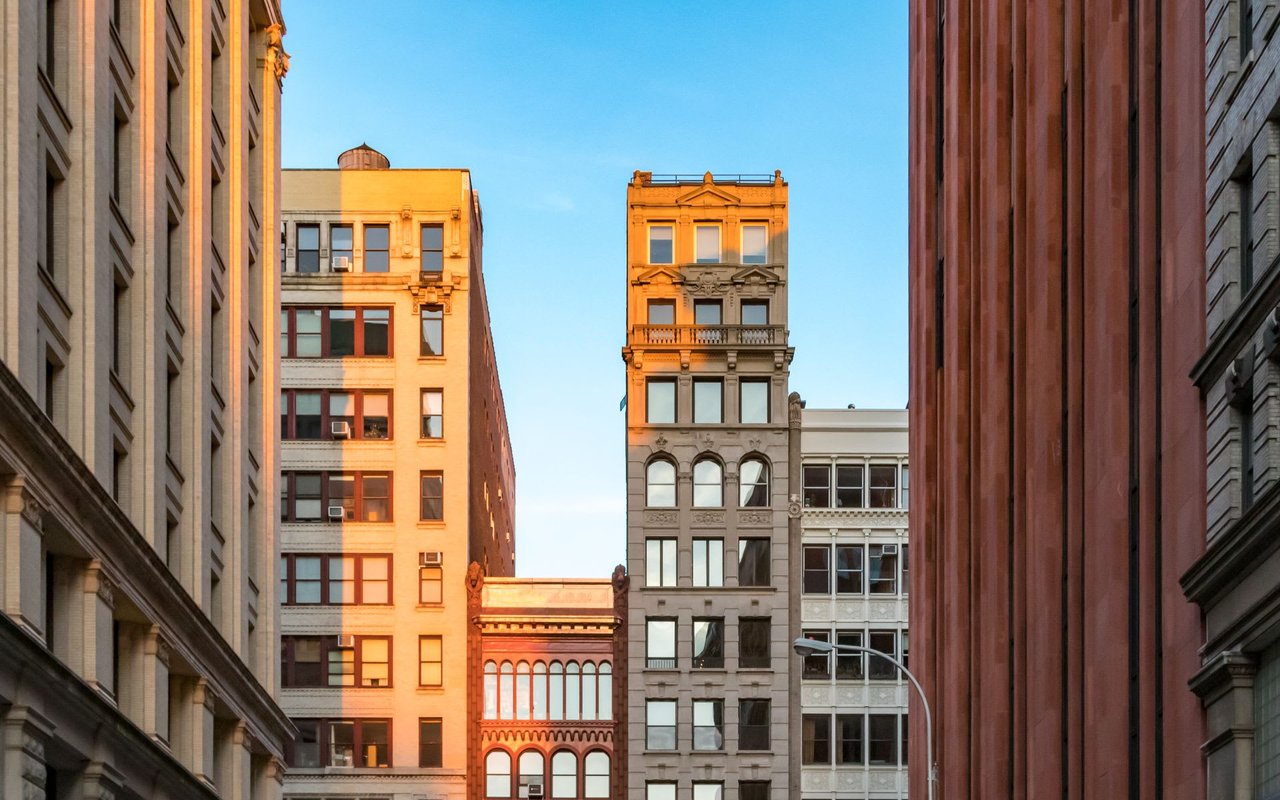
Chelsea's built environment is unusually legible — you can read the neighborhood's history off its facades.
Chelsea Market at 75 Ninth Avenue was the National Biscuit Company factory, the building where the Oreo was invented. It now holds a food concourse, retail, and tech office space, and it anchors the southern end of the neighborhood.
London Terrace Towers at 405 West 23rd Street spans a full city block between 23rd and 24th Streets, Ninth to Tenth Avenues. When it opened in 1930 with 1,700 units, it was the largest apartment building in the world. It remains one of the most reliable sources of prewar inventory in Chelsea, and worth knowing that it operates as two separate entities — the co-op "Towers" and the rental "Gardens."
The General Theological Seminary at Chelsea Square, built in the 1820s on land donated by Clement Clarke Moore, is a Gothic Revival block of brownstone buildings, quads, and stone arches. It's the quietest place in the neighborhood.
The Starrett-Lehigh Building at 601 West 26th Street, a full-block International Style landmark from 1931, is famous for its ribbon windows and freight elevators sized to lift full semi-trucks to the upper floors.
On the new-development side, four buildings define the current era. 520 West 28th Street, completed in 2017, was Zaha Hadid's only New York residential building — 11 stories of hand-crafted stainless-steel curves along the High Line. 100 Eleventh Avenue by Jean Nouvel wraps its facade in roughly 1,700 individually angled window panes that read differently by the hour as light comes off the Hudson. Lantern House at 515 West 18th Street, by Thomas Heatherwick and completed in 2020, straddles the High Line with three-dimensional bay windows shaped like lanterns. And the IAC Building at 555 West 18th Street was Frank Gehry's first major New York commission, a white glass facade curved like unfurling sails.
If you're buying High Line–adjacent, one practical note: the park is directly outside those windows, and the sight lines run both ways. Ask which floors and exposures the crowds can see into.
The NYC Landmarks Preservation Commission designated the Chelsea Historic District in 1970. It centers on West 20th, 21st, and 22nd Streets between Eighth and Tenth Avenues, and it's the most intact stretch of pre–Civil War residential architecture on the West Side.
The district exists because of one man's zoning instincts. Clement Clarke Moore — the author of "A Visit from St. Nicholas" — owned the land and planned its development in the 1830s with deed restrictions that specified deep front yards, building setbacks, and height limits, all to preserve sunlight and green space. Nearly two centuries later, those restrictions are why these blocks still feel open. The housing stock runs Greek Revival, Italianate, and French Second Empire.
Cushman Row, at 406–418 West 20th Street, is the district's centerpiece and arguably the finest run of Greek Revival townhouses in New York City. Merchant Don Alonzo Cushman built these seven red-brick houses in 1840 as a uniform set, and that uniformity is what makes them extraordinary. Details worth noticing on a walk-through: ten-foot-deep front yards behind ornate wrought-iron fencing, brownstone stoops with carved pineapples on the newel posts — a 19th-century symbol of hospitality — recessed wooden doorways framed by classical columns, and carved wooden wreath surrounds encircling the small attic windows beneath the roofline.
Buying in a landmarked district comes with obligations. Exterior alterations require Landmarks approval, which adds time and cost to any renovation touching the facade, windows, or roofline. It's manageable, but it should be priced into a renovation budget from the start rather than discovered mid-project.
In the late 1990s, commercial galleries began migrating north out of SoHo, pushed by rising retail rents and pulled by West Chelsea's supply of cavernous, high-ceilinged warehouse space. That migration reshaped the neighborhood. Today the corridor between Tenth and Eleventh Avenues from 18th to 28th Streets holds more than 300 galleries and functions as one of the world's primary markets for contemporary art.
The blue-chip "mega-galleries" operate at museum scale, in multi-level spaces designed by well-known architects, with programming that rivals institutions. Gagosian at 555 West 24th Street, David Zwirner at 525 West 19th Street, Pace Gallery at 540 West 25th Street, and Hauser & Wirth at 548 West 22nd Street are the flagships. Alongside them, non-profit and alternative spaces do the more experimental work — Dia Chelsea at 537 West 22nd Street and The Kitchen at 512 West 19th Street mount site-specific installations, avant-garde performance, and conceptual work.
Something buyers frequently don't realize: all of this is free and open to the public, generally Tuesday through Saturday, 10 a.m. to 6 p.m. Thursday evenings often bring opening receptions with doors propped open along entire blocks. Living here means having a rotating roster of world-class exhibitions within a few hundred feet of your door, at no cost, changing every six to eight weeks. It is the single most undersold amenity in the neighborhood.
Chelsea's western edge holds three connected public assets that together give the neighborhood more accessible recreation than almost anywhere else in Manhattan.
The High Line is a 1.45-mile elevated linear park built on an abandoned freight rail viaduct, running from Gansevoort Street in the Meatpacking District north to 34th Street at Hudson Yards. James Corner Field Operations, Diller Scofidio + Renfro, and planting designer Piet Oudolf built it around self-seeding wild vegetation, wooden loungers, rotating public art, and overlooks cut into the street grid below. Its effect on real estate was immediate and dramatic — the High Line turned West Chelsea from a warehouse district into one of the most architecturally ambitious residential corridors in the country.
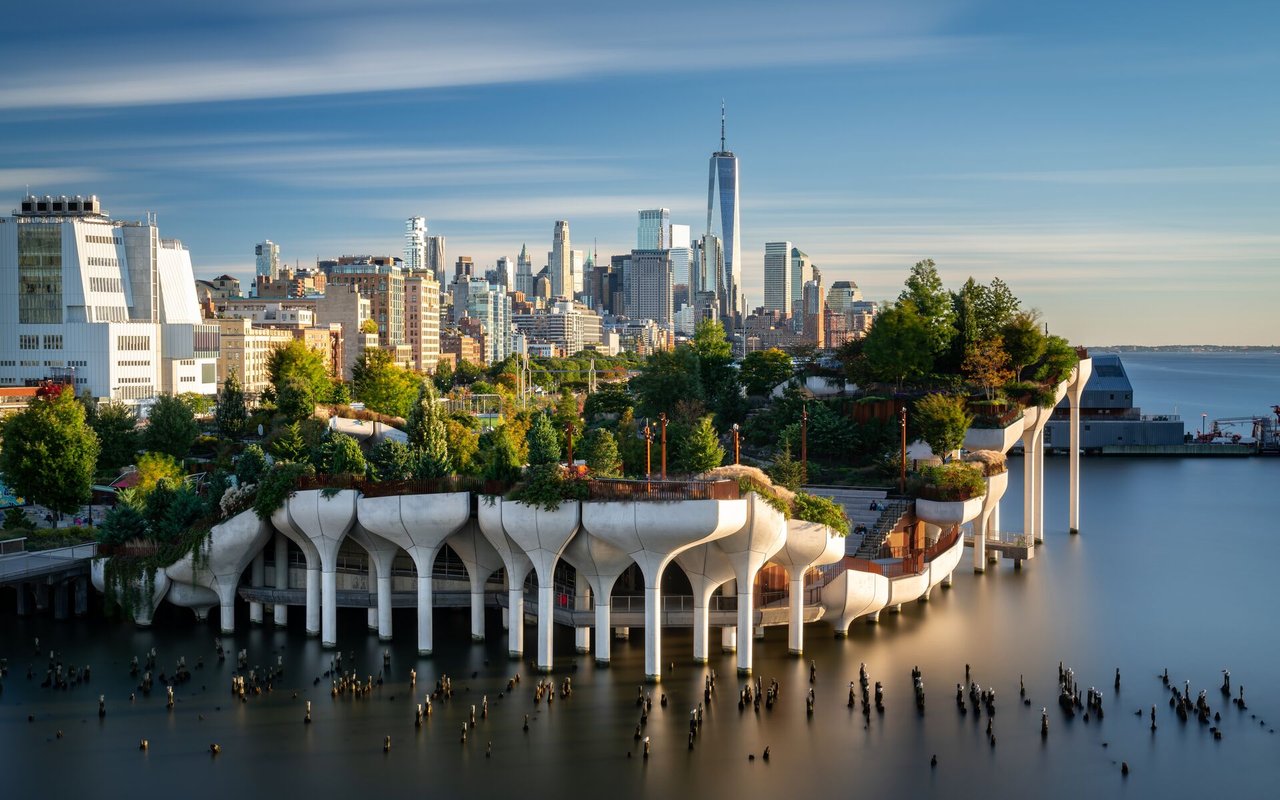
Hudson River Park runs 550 acres along the waterfront from Battery Park to 59th Street, and Chelsea's stretch is among its best developed. Pier 57 houses Market 57, a food hall curated with the James Beard Foundation, plus community space and an 80,000-square-foot rooftop park. Piers 62 and 63 offer lawns, a skate park, a carousel, and gardens with views toward New Jersey and Lower Manhattan. Just past Chelsea's southern border, Little Island at Pier 55 sits on 132 tulip-shaped concrete stilts above the water.
Chelsea Piers occupies 28 acres across Piers 59, 60, and 61 — the historic ocean liner terminals built in 1910, where the RMS Carpathia landed Titanic survivors in 1912. The complex now runs a multi-tier climate-controlled golf driving range over the river, twin indoor ice rinks, a 150,000-square-foot fitness club with an indoor track and Olympic-size pool, a gymnastics center, a bowling alley, film production studios, and private boat charters.
The practical implication for buyers: the western third of Chelsea has park access that residents of most Manhattan neighborhoods pay a premium in commute time to reach on weekends.
Chelsea Market occupies a full block on Ninth Avenue between 15th and 16th Streets, and with more than 40 vendors it is a genuine daily-use resource rather than only a tourist stop — though it is certainly that too, and locals learn to shop it before noon.
The seafood counter at The Lobster Place handles raw bar and steamed lobster; its companion stand Los Mariscos does Baja-style fish tacos, and Los Tacos No. 1 down the hall pulls the market's longest line for street tacos on fresh tortillas. On the global side, Miznon serves Israeli pita street food, Very Fresh Noodles hand-pulls biang biang noodles to order, and mŏkbar works the Korean-ramen intersection. For pantry shopping: Amy's Bread, Seed + Mill for halva and tahini, and Li-Lac Chocolates, Manhattan's oldest chocolatier.
Beyond the market, the neighborhood's dining splits between destination and everyday. Buddakan does dramatic multi-level Asian fusion in West Chelsea, and Cookshop on Tenth Avenue has been the neighborhood's farm-to-table standard-bearer for years — it's also the most reliable weekend brunch reservation in the area. Pastis, technically on the Meatpacking border, and Café D'Alsace cover the French bistro register. Eighth Avenue functions as the everyday commercial strip, dense with outdoor patios, international storefronts, and neighborhood cafés — the street you actually eat on when you live here.
Retail in Chelsea is concentrated rather than continuous. West Chelsea's Tenth and Eleventh Avenues carry high-end fashion boutiques and independent design shops that grew up alongside the galleries, plus bookshops and vintage dealers. Artists & Fleas inside Chelsea Market spotlights local artisans and independent designers. Limelight Marketplace, housed in an 1840s Episcopal church on Sixth Avenue, is worth visiting for the building alone.
Nightlife has three modes. Cocktail and speakeasy culture is well established — The Tippler sits directly beneath Chelsea Market, and Raines Law Room on 17th Street is the low-lit, velvet-curtained standard. Eighth Avenue has been a heart of New York's LGBTQ+ nightlife for decades, dense with gay bars, lounges, and comedy venues including Barracuda Lounge, with The Duplex just south. And the West Chelsea club district along 27th and 28th Streets runs high-energy and late, with rooftop lounges along Tenth Avenue and the High Line taking the more scenic approach.
That last point is worth flagging for buyers. The 27th and 28th Street club corridor generates real late-night noise and street activity on weekends. If you're sensitive to it, tour those blocks on a Friday night before you commit, not on a Tuesday afternoon.
On fitness, Chelsea is arguably the densest concentration in Manhattan. Chelsea Piers Fitness runs 150,000 square feet with an Olympic-size saltwater pool, a quarter-mile indoor Mondo track, an 11,000-square-foot climbing wall, and Hudson-facing sundecks. Around it sit Barry's Bootcamp, SoulCycle, multiple Equinox locations including 19th Street and the High Line, S3 Fitness, and a deep bench of Pilates and yoga studios. Buyers who use boutique fitness heavily often find they can drop a building's gym amenity from their must-have list here.
Chelsea has among the best transit coverage of any Manhattan residential neighborhood, with major lines running down all three of its interior avenues.
The A, C, and E on Eighth Avenue stop at 14th Street and 23rd Street, providing the primary north-south spine and direct service to Penn Station, Port Authority, and Lower Manhattan. The 1 and 2 on Seventh Avenue stop at 14th, 18th, and 23rd Streets, running through the residential center. The F and M on Sixth Avenue stop at 14th and 23rd, useful for Midtown and for Brooklyn via the Rutgers tunnel. The L terminates at 14th Street and Eighth Avenue, putting Union Square and Williamsburg within a short ride. And the PATH stops at 14th and 23rd Streets along Sixth Avenue for commutes to Jersey City and Hoboken.
The gap is Eleventh Avenue and the far west blocks, where the nearest subway can be a ten- to twelve-minute walk. Buyers looking at West Chelsea condos should walk that route once in bad weather before deciding it doesn't matter.
Above ground, the M23-SBS runs rapid crosstown service on 23rd Street and the M14A/D-SBS covers 14th, with the M11 and M20 running north-south on Ninth and Eighth Avenues. Citi Bike docks are dense along the High Line, Chelsea Piers, and the Hudson River greenway, which is the fastest bike commute in Manhattan. The flat grid makes daily errands genuinely walkable in a way that hillier or more irregular neighborhoods aren't.
Chelsea's reputation for galleries and nightlife obscures how well it works for families. The neighborhood sits in NYC School District 2, one of the highest-performing districts in the city, and it has real depth in both public and private options.
On the public side, P.S. 33 Chelsea Prep is known for strong academics, a gifted and talented track, and heavy parent involvement. P.S. 11 William T. Harris draws families for its progressive curriculum, arts programming, and community garden. For older students, M.S. 260 Clinton School offers an International Baccalaureate program at the middle and high school levels, and the NYC Museum School on West 18th Street is a specialized public high school built around partnerships with the city's museums — a genuinely unusual model.
Private options include Avenues: The World School on Tenth Avenue, an elite Pre-K–12 school with a global immersion curriculum and a modern campus, plus Corlears School and Chelsea Day School for progressive early childhood and elementary education.
Day-to-day family infrastructure holds up. Clement Clarke Moore Park at Tenth Avenue and 22nd Street has play equipment and water features. Chelsea Waterside Park carries play areas, a dog run, and sports turf. The lawns at Piers 62 and 63 absorb weekend crowds without feeling packed. And Chelsea Piers runs year-round youth athletic leagues, gymnastics, skating, and summer camps — which for many families is the deciding amenity, because it eliminates the cross-town shuttling that defines childhood in other parts of Manhattan.
Because District 2 admissions and zoning can shift, verify current zoning for any specific address before making a school-driven purchase decision.
Buyers almost never look at Chelsea in isolation. Here's how it compares against the three neighborhoods it most often loses and wins against:
Neighborhood | Character | Real Estate Profile | Defining Assets |
|---|---|---|---|
Chelsea | Arts-driven, historic and modern in balance, highly walkable with waterfront access | Prewar co-ops ($900K–$1.1M median) alongside starchitect condos ($2.2M+) | High Line, Chelsea Market, 300+ galleries, Chelsea Piers |
Meatpacking District | Trendy, high-energy, nightlife and fashion retail | Thin residential inventory; luxury rentals and ultra-exclusive condos | Whitney Museum, luxury boutiques, rooftop lounges, cobblestones |
Flatiron District | Commercial and tech hub, grand architecture, park-centered | Historic commercial lofts converted to high-ceilinged condos and co-ops | Madison Square Park, Flatiron Building, Eataly, tech campuses |
Hudson Yards | Futuristic, master-planned, corporate high-rise | Ultra-luxury towers, often $3M–$10M+, with mega-amenity packages | The Vessel, The Shed, Edge, luxury mall |
The way it usually breaks down in practice: buyers who want Chelsea's location but more nightlife and less residential feel go to Meatpacking, and pay for scarcity. Buyers who want more square footage per dollar and loft-scale ceilings often land in Flatiron, trading waterfront access for park-front. Buyers who want brand-new construction and hotel-grade service go to Hudson Yards and give up neighborhood texture — Hudson Yards has amenities, but Chelsea has streets.
Chelsea's advantage is that it's the only one of the four with genuine range. It has an entry point under $1 million and a ceiling above $12 million, and it has both an 1840 townhouse block and a 2020 Heatherwick building. That's rare, and it's why the neighborhood retains value through market cycles that hit single-tier neighborhoods harder.
Is Chelsea a good neighborhood for families? Yes, and more so than its reputation suggests. Chelsea sits in high-performing NYC School District 2 with strong public elementary options in P.S. 11 and P.S. 33 Chelsea Prep, elite private schooling at Avenues: The World School, neighborhood playgrounds including Clement Clarke Moore Park, and a full youth athletics program at Chelsea Piers. The nightlife concentrates on specific corridors, which means you can choose a block that's quiet without giving up access.
How much does it cost to rent in Chelsea? Median rents run roughly $5,400 to $6,000 per month. Studios average around $4,100 to $4,500, one-bedrooms fall between $5,700 and $6,200, and two-bedrooms start near $7,200 and run past $8,000 depending on building services and amenities.
What's the difference between buying in East Chelsea and West Chelsea? It's the neighborhood's most consequential decision. East and Central Chelsea, from Sixth to Ninth Avenue, offers prewar character, historic rowhouses, tree-lined co-op blocks, and subway access at the door, generally at $1,100 to $1,500 per square foot. West Chelsea, from Tenth to Eleventh Avenue, is post–High Line development: starchitect condos with river views, doormen, and full amenity packages, frequently exceeding $1,800 and reaching past $2,500 per square foot. You're choosing between character with convenience and design with views.
How do co-op board approvals work in Chelsea? Co-ops make up a large share of Chelsea's more attainable prewar stock, and the boards vet thoroughly. Expect a 20% to 30% minimum down payment, post-closing liquidity equal to one to two years of maintenance plus mortgage payments, personal and professional reference letters, a detailed financial package, and a formal board interview. The process typically adds four to eight weeks to a closing timeline. It's navigable with preparation, and preparing the package properly is where representation earns its keep.
Are sublet rules flexible in Chelsea co-ops? Generally not. Most Chelsea co-op boards restrict subletting — a common structure permits two years of subletting out of every five, and only after the owner has occupied the unit as a primary residence for one to two years. If you need immediate or unrestricted rental flexibility, whether for investment or because your plans may change, condominiums are the right category to focus on from the start.
Is Chelsea a good investment market? The fundamentals are sound: deep rental demand from Midtown South's tech employment base, irreplaceable waterfront and park access, and a landmarked core that limits new supply on the historic blocks. The constraint is structural — the co-op stock that offers the best price per square foot is largely closed to investors, so investment activity concentrates in condominiums where pricing is already competitive. Underwrite carefully at the higher price point rather than assuming Chelsea's median figures apply to the investable inventory.
Chelsea rewards buyers and sellers who understand its internal divisions — the difference between an east-side co-op block and a West Chelsea condo corridor, what a landmarked facade means for a renovation timeline, which co-op boards move quickly and which will scrutinize every line of a financial package. Carol Staab has spent decades helping clients navigate exactly these distinctions across Manhattan. A Licensed Associate Real Estate Broker with Sotheby's International Realty, she has been ranked among the top agents nationally by RealTrends, has closed some of the market's most notable transactions, and publishes The Pulse, her market intelligence report tracking the data and trends that actually move Manhattan pricing. Whether you're weighing a first purchase, positioning a property for sale, or simply trying to understand what your options look like at a given number, Carol is a resource worth having in your corner. Reach out to start the conversation — there's no obligation, and the earlier you have good information, the better every subsequent decision gets.
There's plenty to do around Chelsea, including shopping, dining, nightlife, parks, and more. Data provided by Walk Score and Yelp.
Explore popular things to do in the area, including Wine Merchants By Ana, Craft and Savor, and International Terminal Operation Co.
| Name | Category | Distance | Reviews |
Ratings by
Yelp
|
|---|---|---|---|---|
| Dining | 0.38 miles | 0 reviews | 0/5 stars | |
| Dining | 0.43 miles | 0 reviews | 0/5 stars | |
| Dining | 0.43 miles | 0 reviews | 0/5 stars | |
| Dining | 0.53 miles | 0 reviews | 0/5 stars | |
| Shopping | 0.2 miles | 0 reviews | 0/5 stars | |
| Shopping | 0.43 miles | 0 reviews | 0/5 stars | |
| Shopping | 0.49 miles | 0 reviews | 0/5 stars | |
| Shopping | 0.5 miles | 0 reviews | 0/5 stars | |
| Active | 0.4 miles | 0 reviews | 0/5 stars | |
| Active | 0.43 miles | 0 reviews | 0/5 stars | |
| Active | 0.43 miles | 0 reviews | 0/5 stars | |
| Active | 0.49 miles | 0 reviews | 0/5 stars | |
| Active | 0.5 miles | 3 reviews | 3.3/5 stars | |
| Beauty | 0.4 miles | 0 reviews | 0/5 stars | |
| Beauty | 0.42 miles | 0 reviews | 0/5 stars | |
| Beauty | 0.43 miles | 3 reviews | 5/5 stars | |
| Beauty | 0.43 miles | 0 reviews | 0/5 stars | |
| Beauty | 0.43 miles | 0 reviews | 0/5 stars | |
| Beauty | 0.43 miles | 2 reviews | 5/5 stars | |
| Beauty | 0.45 miles | 0 reviews | 0/5 stars | |
| Beauty | 0.47 miles | 0 reviews | 0/5 stars | |
| Beauty | 0.47 miles | 0 reviews | 0/5 stars | |
| Beauty | 0.54 miles | 0 reviews | 0/5 stars | |
|
|
||||
|
|
||||
|
|
||||
|
|
||||
|
|
||||
|
|
Chelsea has 31,717 households, with an average household size of 2. Data provided by the U.S. Census Bureau. Here’s what the people living in Chelsea do for work — and how long it takes them to get there. Data provided by the U.S. Census Bureau. 56,634 people call Chelsea home. The population density is 93,376 and the largest age group is Data provided by the U.S. Census Bureau.
Total Population
Population Density Population Density This is the number of people per square mile in a neighborhood.
Median Age
Men vs Women
Population by Age Group
0-9 Years
10-17 Years
18-24 Years
25-64 Years
65-74 Years
75+ Years
Education Level
Total Households
Average Household Size
Average individual Income
Households with Children
With Children:
Without Children:
Marital Status
Blue vs White Collar Workers
Blue Collar:
White Collar:
October 8, 2026

Pulse
Carol Staab | August 31, 2026
August 13, 2026
August 27, 2026
September 17, 2026
October 1, 2026
September 24, 2026
October 15, 2026
August 20, 2026
September 10, 2026
September 3, 2026
Pulse
Carol Staab | October 14, 2026
Pulse
Carol Staab | October 7, 2026
May 21, 2026
Pulse
Carol Staab | September 16, 2026
May 14, 2026

Carol Staab | September 9, 2026
Understanding Mortgage Pre-Approval Before You Buy in the Manhattan Real Estate Market.

Carol Staab | April 17, 2024
‘80s throwback design and natural materials are just two exciting trends to try out in your New York City home.
Pulse
Carol Staab | September 8, 2026
Carol Staab | October 4, 2024
The strategic tips for your success.
Carol Staab | September 2, 2026
On Manhattan’s Most Interesting Art Museums and Galleries.

Carol Staab | August 26, 2026
Green Space Becomes the Ultimate Manhattan Luxury: How Outdoor Gardens and Rooftops Shape Life in Manhattan Homes.
Pulse
Carol Staab | August 24, 2026
Pulse
Carol Staab | August 18, 2026
Pulse
Carol Staab | August 9, 2026
Carol Staab | August 10, 2026
A Loose Outline of How You Might Spend a Day Here.

Carol Staab | August 10, 2026
Simple Color Choices That Reshape How Your Space Feels.
August 6, 2026
August 6, 2026

Carol Staab | August 5, 2026
Design a Reading Retreat That Fits Your Manhattan Home.
Pulse
Carol Staab | July 24, 2026
Carol Staab | July 23, 2026
Manhattanites Have a Special Relationship with Space and Time.

Carol Staab | October 4, 2024
Discover the excitement.
July 23, 2026
Carol Staab | May 5, 2025
Scouring Manhattan’s cafes, from corner shops to well-known chains.
July 16, 2026
July 9, 2026
Carol Staab | July 8, 2026
Your Insider Guide to Buying One of New York City's Most Coveted Properties.
Carol Staab | July 8, 2026
Preserving the Past While Living in the Present.
Pulse
Carol Staab | July 8, 2026

Carol Staab | May 5, 2025
Accomplish your fitness goals efficiently at a Manhattan gym near you.
July 2, 2026
Pulse
Carol Staab | July 1, 2026
Carol Staab | May 5, 2025
Delve into nine of Manhattan’s world-class residential areas.
June 25, 2026

Carol Staab | April 16, 2024
Where you should go when you feel the need for retail therapy.
Pulse
Carol Staab | June 15, 2026
June 18, 2026
Pulse
Carol Staab | June 11, 2026
June 11, 2026
June 4, 2026

Carol Staab | October 4, 2024
Planning your timeline effectively.
Pulse
Carol Staab | May 29, 2026
May 28, 2026
Pulse
May 18, 2026
Pulse
Carol Staab | April 30, 2026

Carol Staab | October 30, 2024
Experience the melting pot of structural design in Manhattan.
Blog
Carol Staab | May 8, 2026
Setting the Stage for a Faster, More Profitable Sale.
Pulse
Carol Staab | April 30, 2026

Pulse
Carol Staab | March 31, 2026
Pulse
Carol Staab | March 23, 2026

Pulse
Carol Staab | February 19, 2026
Pulse
Carol Staab | February 11, 2026
Pulse
Carol Staab | September 3, 2025
Pulse
Carol Staab | September 15, 2025
Pulse
Carol Staab | September 25, 2025
Carol Staab | April 17, 2024
Read on to learn more about creating a compelling space in preparation to sell.
Carol Staab | April 17, 2024
Plan for your retirement with sound real estate and financial choices today.

Carol Staab | October 4, 2024
A Culinary Journey Through Manhattan's Finest Dining Establishments.
Pulse
Carol Staab | September 9, 2025
Pulse
Carol Staab | August 27, 2025
Pulse
Carol Staab | July 29, 2025
Pulse
Carol Staab | August 2, 2025
Pulse
Carol Staab | August 17, 2025
Pulse
Carol Staab | August 10, 2025
Pulse
Carol Staab | July 7, 2025
Pulse
Carol Staab | June 16, 2025

Pulse
Carol Staab | June 18, 2025

Pulse
Carol Staab | June 10, 2025
Pulse
Carol Staab | June 3, 2025
Pulse
Carol Staab | May 14, 2025

Pulse
Carol Staab | May 28, 2025
Pulse
Carol Staab | May 8, 2025

Carol Staab | May 5, 2025
Manhattan’s real estate market offers high potential, but smart investing requires solid strategy, research, and the right connections.
Carol Staab | May 5, 2025
Transform your Manhattan home into a space that blends style and function effortlessly.
Carol Staab | May 5, 2025
Your next chapter awaits.
Carol Staab | May 5, 2025
2025 is your chance to reimagine luxury living in Manhattan. What will your dream space look like?
Carol Staab | May 5, 2025
Your dream Manhattan home awaits.

Carol Staab | May 5, 2025
Winter in Manhattan is just the beginning of your adventure — get ready to embrace the magic.
Carol Staab | May 5, 2025
Breathe easier and live better in your Manhattan home by making air quality a top priority.
Pulse
Carol Staab | April 2, 2025

Pulse
Carol Staab | February 18, 2025

Pulse
Carol Staab | December 30, 2024

Pulse
Carol Staab | December 23, 2024
Pulse
Carol Staab | December 18, 2024

Pulse
Carol Staab | December 10, 2024
Pulse
Carol Staab | December 3, 2024

Pulse
Carol Staab | November 26, 2024
Pulse
Carol Staab | November 20, 2024
Pulse
Carol Staab | November 12, 2024
Carol Staab has an innovative luxury real estate practice that provides an elite level of concierge service through unparalleled world-class marketing and a hands-on business approach. Her mission is to give her clients an exceptional experience while helping them achieve the best results possible.